
Medical virtual assistant lab results communication is a task with real nuance, because how and when you tell a patient about their results matters almost as much as the result itself. Done carelessly, it can cause unnecessary panic over a normal finding or, worse, delay a patient learning something they genuinely need to act on quickly. Done well, it builds trust and keeps a practice's workflow moving smoothly.
The Golden Rule: Provider Review Comes First
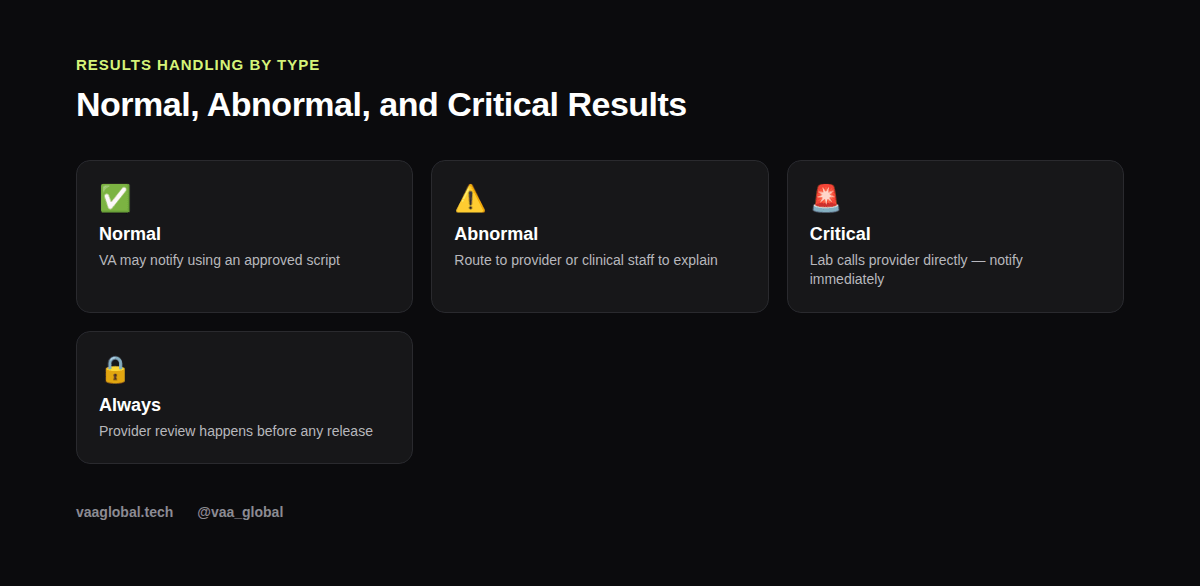
No lab result should reach a patient before a provider has reviewed it, no exceptions. This isn't just a courtesy; it protects patients from receiving confusing or alarming numbers without context, and it protects the practice from a notification going out before the provider has had a chance to flag something urgent. A medical VA's job is to manage the notification process after review happens, never before.
Can a Medical VA Share Lab Results With a Patient?
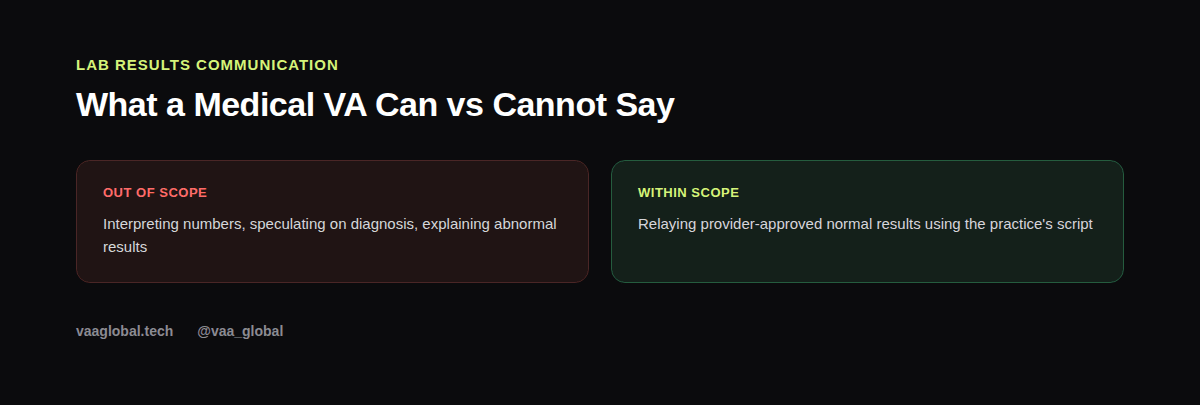
Generally, yes, but only for results the provider has already reviewed and approved for release, and usually only the normal or routine ones. Most practices draw a clear line: normal results within the expected reference range can often be communicated by a trained medical VA using a pre-approved script or portal message, while anything abnormal, borderline, or clinically significant gets routed to the provider or a clinical staff member to explain directly. Always follow your specific practice's policy rather than assuming, since this varies by employer and by state regulation.
A Sample Normal-Results Script (For Training Purposes Only)
Here's a simplified, fictional example: "Hi [patient name], this is [your name] from [practice name]. Dr. [provider] has reviewed your recent bloodwork and everything came back within normal range. No further action is needed right now, but please reach out if you have any questions." Notice this script avoids reading out specific numbers unless the practice's policy explicitly allows it, and it always credits the provider's review rather than implying you interpreted the result yourself.
How Are Critical Lab Values Handled?
A critical value is a result so far outside the normal reference range that it could indicate an urgent, even life-threatening, situation. Labs are required to notify the ordering provider's office immediately for critical values, often by direct phone call rather than routine fax or portal message. If you're the one answering the phone when a lab calls with a critical value, the only appropriate response is to get that information to the provider immediately, by whatever method your practice has designated for urgent messages, and to never attempt to relay or explain the result to the patient yourself.
Using the Patient Portal for Results Release
Many EHR systems now support automatic patient portal results release, sometimes with a delay built in so the provider has time to review before the patient sees it themselves online. A medical VA often manages the settings and timing of this release, and should understand that even an automated release doesn't eliminate the provider's responsibility to review first; it simply changes who clicks the final button. If a patient calls confused or alarmed about something they saw release automatically before anyone called them, a calm, honest acknowledgment that you'll get the provider to follow up quickly is far better than guessing at an explanation.
Why Tone and Timing Matter So Much Here
Lab results, even normal ones, often carry real anxiety for a patient who's been waiting. A quick, clear, and warm notification reduces that anxiety far more than a delayed or overly clinical one. This connects closely to the skills covered in VA Global's guide on phone etiquette on patient calls and difficult patient calls, since a patient who's anxious about results needs the same calm, patient tone you'd use in any emotionally charged call.
Staying Within Scope and Protecting Patient Data
Never interpret a result, speculate about a diagnosis, or offer reassurance beyond what the provider has explicitly approved you to say. This overlaps directly with the practices covered in VA Global's guide to patient data protection, since results communication involves some of the most sensitive information a patient shares with a practice. For broader context on how labs and providers are required to handle results under federal law, the CDC's CLIA program overview is a useful authoritative reference. VA Global's Medical Virtual Assistant Training course covers telehealth support and healthcare administration across its six beginner-level modules, building the foundation needed for this kind of sensitive communication work.
The Bottom Line
Medical virtual assistant lab results communication is built on one firm rule: provider review always comes first, and your role is accurate, warm notification within whatever boundaries the practice sets. Respect that boundary consistently, and you'll handle one of the more sensitive parts of patient communication with real confidence.
Documenting Every Notification
Finally, document every result notification you send, including the date, time, method, and exactly what was communicated. Because results communication can become a compliance question later, especially if a patient claims they were never told, a brief note in the chart logging that normal lab results notification happened on a specific date protects both the patient and the practice. This habit is simple to build: most EHR systems have a quick-note or communication-log field designed exactly for this purpose, and using it consistently takes only seconds once it becomes routine.



