Knowing how to network in the GRC field matters more than most beginners expect, mostly because so many GRC roles get filled through referrals and warm introductions before they're ever posted publicly. The good news is that GRC networking doesn't require being naturally extroverted — it requires being specific, consistent, and genuinely curious about the work.
Is Networking Really Necessary to Get a GRC Job?
Is networking really necessary to get a GRC job, or is this just generic career advice repeated everywhere? In GRC specifically, it genuinely matters more than average, because the field is relatively small, relationship-driven, and full of roles that get filled quietly through someone's existing network before a formal posting ever goes live. That doesn't mean applications don't work — they do — but skipping networking entirely puts you at a real disadvantage.
Start With ISACA Local Chapters
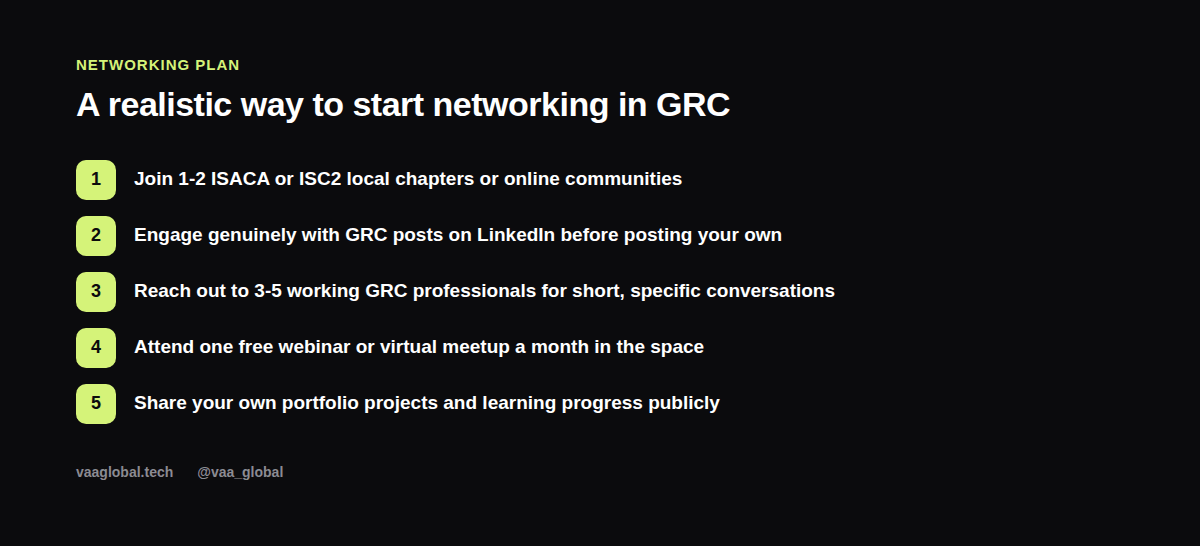
An ISACA chapter exists in many cities and runs regular events, study groups, and networking sessions, often free or low-cost for members and sometimes open to non-members too. Checking isaca.org for a chapter near you is one of the simplest first moves, and chapter events are specifically designed for exactly this kind of relationship-building, so nobody there will think it's strange that you're new. If there isn't an active chapter near you, many run virtual events too, so geography is less of a barrier than it used to be. The same applies to ISC2 chapters, which run similar programming for the broader security and GRC community.
Where Do GRC Professionals Hang Out Online?
Where do GRC professionals hang out online beyond ISACA's own channels? LinkedIn is the dominant platform, followed by niche subreddits and Slack or Discord communities focused on risk, audit, and compliance topics. Search for GRC-specific hashtags and groups, follow a handful of practitioners who post regularly, and spend real time reading before you start posting yourself.
How to Message Someone on LinkedIn About GRC
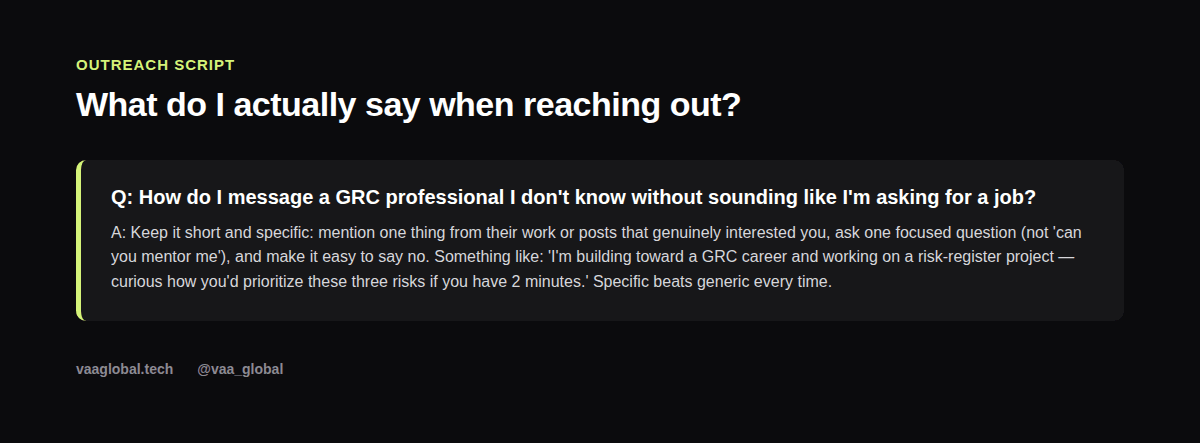
How to message someone on LinkedIn about GRC without it feeling like a cold job ask: reference something specific from their recent post or background, ask one narrow, answerable question, and explicitly make it easy for them to say no or ignore it. A generic 'can we connect, I'm interested in GRC' message gets ignored constantly; a specific question about a risk-prioritization approach or a tool they mentioned gets responses far more often.
How Do I Find GRC Mentors?
How do I find GRC mentors when you don't know anyone in the field yet? Don't ask for a formal mentor relationship upfront — that's a big ask from a stranger. Instead, request a single informational interview: a 15-20 minute conversation where you ask about their path into the field and one or two specific questions about your own situation. Have several of these small, specific conversations with different people rather than seeking one perfect mentor. Some of those naturally evolve into longer-term mentorship once there's mutual trust and a track record of you following through on advice.
Show Your Work Publicly, Consistently
If you're building a GRC portfolio with no experience, sharing pieces of that work publicly — a short post about your risk-register project, a lesson learned from a mock audit checklist — does double duty: it demonstrates competence and it gives people a natural reason to engage with you. Consistency over months beats one viral post; most relationships in this field build slowly.
Networking Works Differently Once You're Employed
Once you land a role, networking shifts from 'trying to get noticed' to 'building a durable professional reputation.' Attend industry conferences when your employer supports it, stay active in your ISACA or ISC2 community, and keep contributing (not just consuming) in whatever GRC spaces you're part of. For broader context on building relationships as a remote professional generally, see our guide on networking online as a remote professional, and our piece on LinkedIn tips for graduates for platform-specific tactics. If your employer belongs to an industry association, ask whether they'll cover membership or event fees for a relevant chapter; many will, especially once you can show how it supports your development in the role.
Avoid These Common Networking Mistakes
Common mistakes include asking for a job in the very first message, following up too aggressively when someone doesn't respond, and only reaching out when you need something. Treat each relationship as genuinely two-sided from the start — ask what people are working on, not just what they can do for you. It's also worth remembering that professional community building is slow by nature; a single informational interview rarely leads anywhere on its own, but a dozen of them, spread over a few months, often does.
The Bottom Line
Learning to network in the GRC field isn't about mastering some special trick — it's about showing up consistently in the right small number of places (an ISACA chapter, a focused LinkedIn presence, a handful of genuine one-on-one conversations) and being specific about what you're working on and curious about. Do that steadily for a few months and the relationships that matter will build themselves.