You can absolutely build an SEO portfolio with no clients yet, and in fact most people break into SEO this exact way, because real paid clients almost always want to see proof of skill before they'll hire a beginner. The trick is treating your own practice work with the same seriousness as paid work, and documenting it properly.

Why Hiring Managers Care About Portfolios, Not Just Resumes
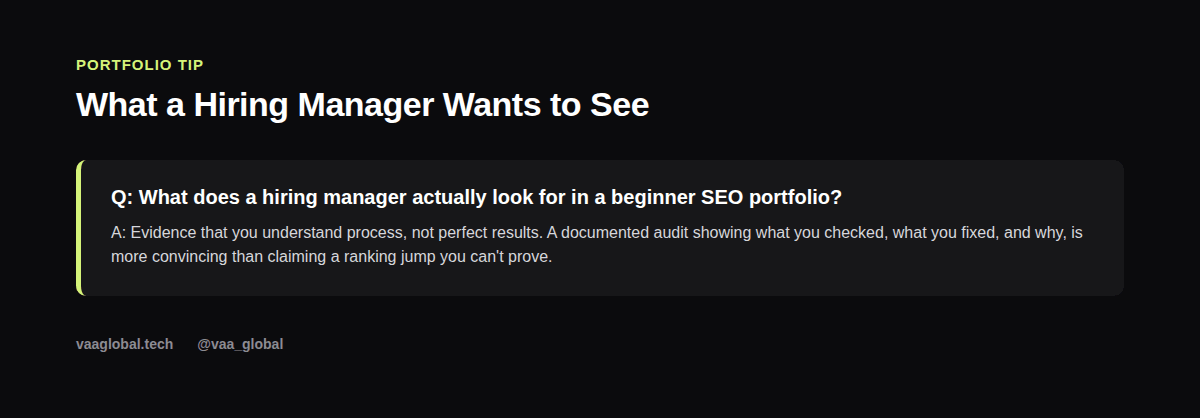
A resume tells someone what you claim to know. A portfolio shows them. Because SEO results take time to show up, hiring managers for entry-level SEO roles have learned to focus on process over outcomes — can you explain what you checked, what you changed, and why, even if the "client" was just your own practice site? That's exactly what a strong portfolio project demonstrates.
Project 1: Audit and Fix Your Own Website or Blog
If you don't already have a personal website or blog, start one — it costs very little and gives you a sandbox with zero risk. Then run a full SEO audit on it: check keyword research, on-page SEO (titles, headers, internal links), technical issues (speed, mobile usability), and content depth. Document every problem you find and every fix you make. This single project, done thoroughly, is often enough to answer most SEO interview questions about process. For the research step specifically, see how to do keyword research as a beginner.
Project 2: Write a Free Audit for a Local Business
Pick a small, local business with a website — a restaurant, a salon, a small shop — and write them a free, unsolicited SEO audit. You don't need their permission to analyze a public website. Structure it clearly: what's working, what's broken, and three specific recommendations. Even if they never respond, you now have a real, specific, publicly-verifiable case study to show in interviews.
Project 3: Run a Before-and-After Keyword Case Study
Pick one page (yours or a practice project) with no SEO applied, screenshot its current ranking position or lack of indexing, then apply proper on-page SEO and keyword targeting, and track the change over 4-8 weeks using Google Search Console. This before-and-after keyword research narrative is one of the most compelling things you can show, because it proves you understand cause and effect, not just vocabulary.
Project 4: Package Everything as Short Case Studies
Raw screenshots scattered across folders don't impress anyone. Instead, write each project up as a one-page case study: the situation, what you did, what changed, and one honest lesson learned. Keep each one to 300-500 words with 2-3 screenshots. This structure works whether you publish it on a personal site, LinkedIn, or a simple document you send directly to a hiring manager.
How Do I Get SEO Experience With No Clients?
Beyond the four projects above, you can get SEO experience with no clients by volunteering for a nonprofit's website, offering a heavily discounted first project to a friend's small business, or contributing to an open community project that needs content optimized. The goal at this stage isn't income — it's a verifiable, specific story you can tell about real work you did.
What Should Go in an SEO Portfolio Beyond the Case Studies?
Alongside your case studies, include a short bio explaining how you learned SEO, any relevant coursework or certifications, and links to content you've written or optimized yourself. If you're also building skills in content marketing versus content writing, mention that too, since the two skill sets reinforce each other and make you more hireable for hybrid remote roles.
Can I Do SEO on My Own Website for a Portfolio?
Yes, and in many ways it's the best place to start, because you control everything and can experiment without risking anyone else's traffic. Use your own site to practice freelance SEO as a beginner from end to end: pick a keyword, write content around it, apply on-page SEO, build a few internal links, and track movement in Google Search Console over time. A sample SEO audit you write for your own site, with specific before-and-after screenshots of rankings, is a legitimate deliverable you can show any future client or employer.
Turning Your Portfolio Into Interviews
Once your portfolio exists, the next challenge is getting it in front of the right people. Apply directly to remote marketing roles, reach out to small agencies that hire junior SEOs, and be ready to walk through your case studies confidently — see SEO interview questions and answers for exactly how these conversations tend to go, and common SEO mistakes beginners make so your portfolio projects don't repeat them.
The Bottom Line
You don't need a paying client to build an SEO portfolio with no clients yet — you need a handful of real, documented projects that show your process clearly. Audit your own site, audit a local business for free, run one before-and-after case study, and package it all cleanly. If you want a structured path that builds these exact skills from the ground up, VAA Global's 10-week SEO Optimization course covers keyword research, on-page SEO, technical SEO, and analytics and reporting.