Preparing for an SEO job interview gets much easier once you've seen the most common SEO interview questions and answers in advance, because most interviewers — whether for an entry-level SEO specialist role or a remote marketing position — ask variations of the same ten or so core questions. Instead of memorizing scripts, the goal is to understand the logic well enough to explain it naturally.
Why SEO Interviews Follow a Predictable Pattern
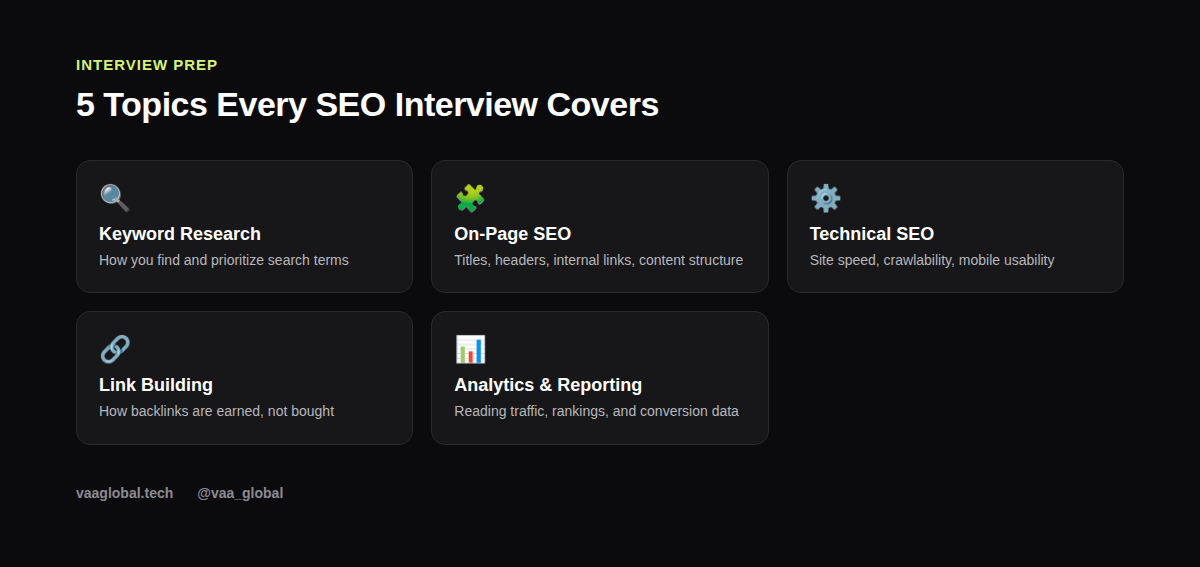
Because SEO specialist interview questions tend to map directly onto the actual job, hiring managers usually move through the same five areas: keyword research, on-page SEO, technical SEO, link building, and analytics. If you prepare one solid talking point for each area, you'll be ready for roughly 80% of what comes up. That said, scenario questions are where candidates most often freeze, so we'll cover those in detail too.
Question 1: "What Is SEO, and Why Does It Matter?"
This sounds basic, but interviewers use it to check whether you can explain things simply. A strong answer: "SEO is the process of making a website easier for search engines to understand and rank, so it shows up when people search for relevant terms. It matters because organic search is usually the highest-intent, lowest-cost channel a business has, compared to paid ads."
Question 2: "Walk Me Through How You'd Do Keyword Research for a New Client"
Here, interviewers want your process, not a perfect answer. Example response: "First, I'd list seed topics based on the client's offerings. Then I'd expand those using free tools and look at search intent for each phrase. Finally, I'd prioritize long-tail keywords where we can realistically rank, instead of chasing high-volume terms we have no chance against." If you want the full process behind this answer, see how to do keyword research as a beginner.
Question 3: "What's the Difference Between On-Page and Technical SEO?"
On-page SEO covers what's visible — titles, headers, content, internal links. Technical SEO covers what search engines see under the hood — site speed, crawlability, mobile usability, and structured data. A clean answer: "On-page is about the content and keywords, technical SEO is about making sure search engines can actually crawl and index that content without problems."
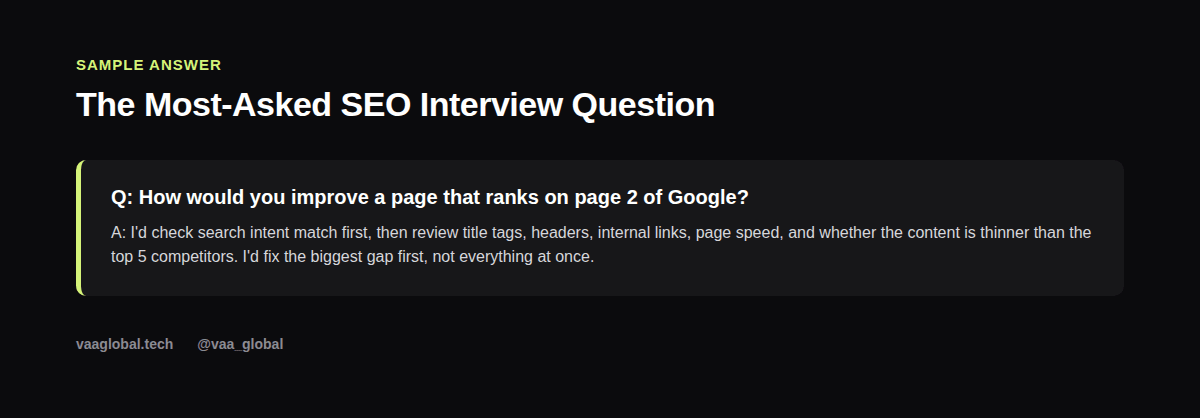
Question 4: "How Would You Improve a Page That's Ranking on Page 2?"
This scenario question tests problem-solving. Walk through your checklist out loud: check search intent match, review the title and headers, compare content depth against the top five competitors, check internal links pointing to the page, and look at page speed. Fix the biggest gap first instead of trying to change everything at once.
Question 5: "What Do You Know About Link Building?"
Interviewers are often testing whether you understand that link building should be earned, not bought cheaply. Example: "Backlinks from relevant, trustworthy sites signal to Google that your content is credible. I'd focus on creating content worth linking to, guest posts on relevant sites, and outreach, rather than buying links, which can get a site penalized."
Question 6: "Which SEO Tools Have You Used, and Which Metrics Matter Most?"
If you've only used free tools, say so honestly — it's completely fine for an entry-level SEO job. Mention Google Search Console, Google Analytics, and whichever free keyword tool you've practiced with. On metrics, mention organic traffic, keyword rankings, click-through rate, and conversions, because these show you understand that rankings alone don't matter if they don't translate into real outcomes.
Question 7: "How Do You Stay Updated on SEO Changes?"
Google changes its algorithm constantly, so this question checks whether you're a self-learner. A good answer references genuinely following Google's Search Central blog, testing changes on your own practice site, and not panicking over every minor update.
Questions to Ask the Interviewer Back
Strong candidates ask questions too. Try: "What does success look like for this role in the first 90 days?" or "What SEO tools does the team currently use?" These questions signal that you're thinking about real contribution, not just passing the interview.
What to Do If You Have No Paid SEO Experience
If you're applying with zero paid experience, lean on practice projects. Build a small blog, do real keyword research for it, document your process, and bring screenshots. This is exactly the approach covered in the skills needed to become an SEO specialist and in building a digital marketing portfolio with no experience. It's also worth reviewing common resume mistakes remote job seekers make before you even get to the interview stage.
General Interview Habits That Still Apply
Beyond SEO-specific knowledge, general interview preparation still matters. Practice explaining a career gap if you have one using how to explain a career gap on your CV, and prepare for the salary question with how to answer the expected salary question. These aren't SEO-specific, but they come up in almost every remote job interview, including SEO roles.
What an SEO Specialist Actually Does, Day to Day
Beyond interview prep, it helps to know what does an SEO specialist do day to day once hired. In practice, a typical day mixes keyword research, writing or editing content briefs, checking Google Analytics and Search Console for ranking movement, reviewing where pages sit on the SERP, and flagging technical issues to a developer. Because of this, interviewers often ask about your comfort with routine, repetitive checking, not just big strategic ideas.
The Bottom Line
The best way to handle SEO interview questions and answers isn't to memorize scripts — it's to understand the five core areas well enough to explain your reasoning out loud, and to have at least one real or practice project to point to. If you want structured, hands-on training that covers all five areas properly before your next interview, VAA Global's 10-week SEO Optimization course walks through keyword research, on-page SEO, technical SEO, link building, local SEO, and analytics and reporting.