Doing keyword research as a beginner feels intimidating at first, but it really comes down to figuring out what words real people type into Google and then writing content that answers those searches better than what's already ranking. Because this is the foundation of SEO, getting it right early saves you months of writing articles nobody searches for.
Why Keyword Research Matters Before You Write a Single Word
So how do you find keywords for SEO in the first place? It's tempting to open a blank document and just start writing about whatever interests you. However, if nobody is actually searching for that exact phrase, your article will sit on page five of Google with zero traffic. Keyword research flips the process around: you find out what people are already searching for, then you create the best possible answer. As a result, you're writing for demand that already exists instead of hoping demand shows up later.
Step 1: Start With Seed Topics, Not Keywords
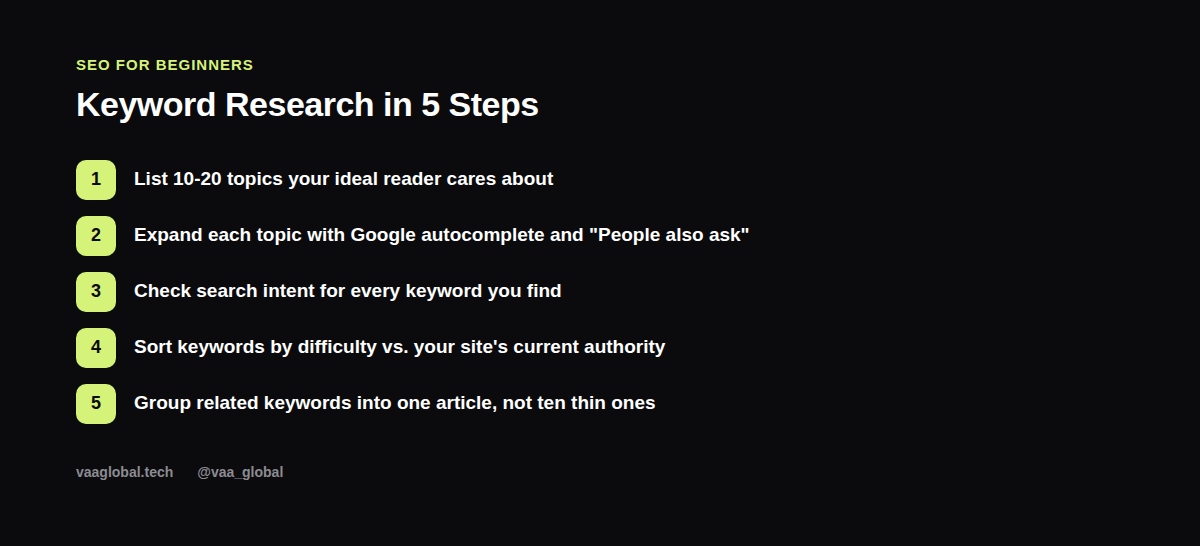
Before you touch any keyword research tools, write down 10 to 20 broad topics your ideal reader cares about. If you run a blog about remote work in Nigeria, your seed topics might include "remote job interviews," "CV writing," or "freelancing platforms." These aren't keywords yet — they're just the subject areas you'll expand in the next step.
Step 2: Expand Seeds Using Free Tools
Once you have seed topics, Google itself becomes your first keyword research tool. Type a seed topic into the search bar and look at the autocomplete suggestions that appear. Then scroll to the bottom of the results page to see "related searches," and check the "People also ask" box in the middle of the page. These three free sources alone will usually give you 20-30 long-tail keywords per seed topic. Google's own Search Console is also free and shows you which queries are already bringing traffic to your site, which is gold for finding keywords you're almost ranking for.
Step 3: Understand Search Intent Before You Pick a Keyword
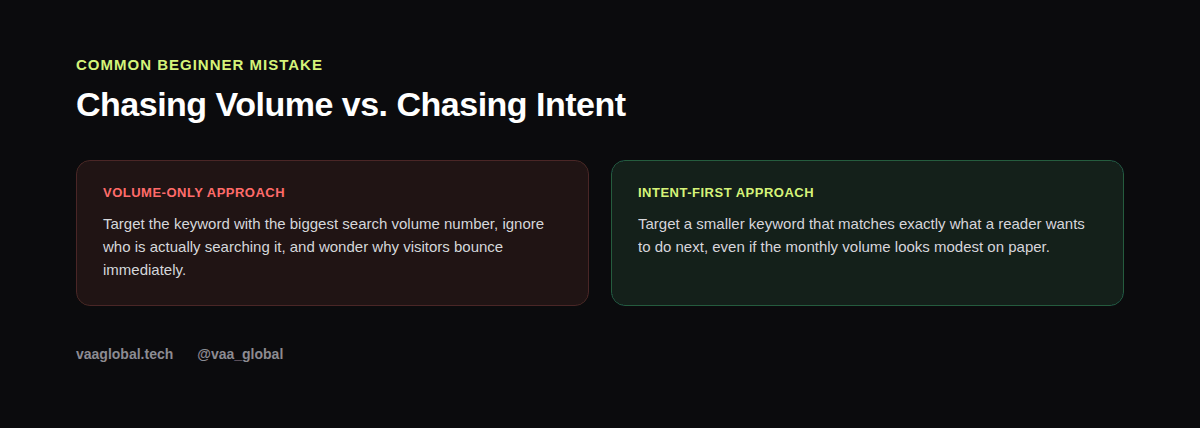
Search intent is the real reason someone typed a phrase into Google, and it matters more than the literal words. There are generally four types: informational (someone wants to learn something), navigational (they want a specific site), commercial (they're comparing options), and transactional (they're ready to act or buy). For example, "what is SEO" is informational, while "best SEO course Nigeria" is commercial. If you write a hard-sell page for an informational keyword, visitors will bounce immediately because the content doesn't match what they expected. Matching intent is, therefore, more important than matching exact words.
Step 4: Learn to Read Keyword Difficulty
Keyword difficulty is a score (usually 0-100) that estimates how hard it would be to rank for a phrase, based on how strong the sites currently ranking are. As a brand-new beginner or a new website, you should generally avoid keywords above 30-40 difficulty and focus on long-tail keywords instead — longer, more specific phrases like "how to do keyword research as a beginner" rather than just "keywords." Long-tail keywords get less search volume individually, but they convert better because the searcher's intent is much more specific, and they're far easier to rank for when you're starting out.
Step 5: Group Keywords Into Clusters, Not Separate Articles
A common beginner mistake is writing a separate thin article for every keyword variation. Instead, group closely related keywords — for example, "keyword research tools," "free keyword research," and "keyword research for beginners" — into one comprehensive article that naturally covers all of them. This is called keyword clustering, and it signals to search engines that your page is a thorough resource rather than one of many shallow pages competing against each other.
Free and Low-Cost Keyword Research Tools Worth Trying
Beyond Google's own free tools, Google Keyword Planner (built for ads but usable for free research), Ubersuggest, and AnswerThePublic all have usable free tiers. Paid tools such as Ahrefs and SEMrush give deeper competitive data, but they're not required to publish your first ten articles. What matters more at the beginner stage is consistency: building the habit of checking search intent and difficulty before you write, every single time.
A Simple Beginner Workflow You Can Copy Today
Here's a workflow that works without any paid software. First, pick one seed topic. Second, pull 15-20 related phrases from autocomplete and "People also ask." Third, sort them by whether they're informational, commercial, or transactional. Fourth, pick one primary focus keyword plus three to five secondary keywords that share the same intent. Finally, outline your article around the questions real searchers are actually asking, not around what you assume they want to know. This approach also pairs well with reading up on the difference between content marketing and content writing, since both disciplines lean on the same research.
How This Connects to the Rest of SEO
Keyword research doesn't exist in isolation. It feeds directly into on-page SEO (where you place the keyword in your title, headers, and body), content strategy (which topics you tackle and in what order), and even link building. Good content naturally earns backlinks over time, and backlinks remain one of the strongest ranking signals, alongside where your page actually lands on the SERP, which is simply the search engine results page itself. If you're exploring SEO as a career path rather than a one-off skill, it helps to see the bigger picture of what SEO is and how you build a career in it, and to compare it with the wider field in digital marketing versus social media marketing.
Building Proof You Know What You're Doing
Once you've done keyword research for a handful of real topics, document it. Screenshots of your keyword lists, your intent categorization, and the resulting articles make excellent portfolio pieces, especially if you're trying to land freelance or remote SEO work with no paid experience yet. For a structured approach to that, see how to build a digital marketing portfolio with no experience. You can also compare general strategies in how to learn SEO and get remote marketing jobs and the skills needed to become an SEO specialist.
Two Questions Beginners Always Ask
So, which keyword research tool is free and actually worth using? Google Search Console, Google itself, and Ubersuggest's free tier cover almost everything a beginner needs before spending any money. And how many keywords should a blog post target? One primary focus keyword plus three to five closely related secondary keywords is a safe target for a single post. Cramming in more than that usually dilutes the content instead of helping it rank.
The Bottom Line
Keyword research as a beginner isn't about mastering expensive software — it's about building a repeatable habit of listing seed topics, expanding them with free tools, checking search intent, and grouping related phrases into thorough articles. Nail this process, and every article you publish afterward starts with a real chance of ranking, instead of being a guess. If you want structured, hands-on practice with this and the rest of SEO, VAA Global's 10-week SEO Optimization course covers keyword research, on-page SEO, technical SEO, and content strategy from the ground up.