
SEO, short for search engine optimization, is the practice of improving a website so it ranks higher in search engine results and attracts more free, organic traffic. It combines keyword research (figuring out what people actually search for), on-page optimization (structuring content and pages to match that intent), technical fixes (making sure search engines can crawl and index the site properly), and link building (earning credibility signals from other sites). Every business with a website needs SEO, which is exactly why it's one of the most consistently in-demand digital skills.
The Four Pillars of SEO
SEO breaks down into four connected areas. Keyword research identifies what your audience is searching for and how competitive those terms are. On-page SEO covers optimizing individual pages, titles, headers, content structure, internal links, so they match what searchers and search engines expect. Technical SEO deals with the site's infrastructure: page speed, mobile responsiveness, site architecture, and making sure search engines can actually crawl and index everything correctly. Off-page SEO, primarily link building, is about earning backlinks and signals from other credible sites that boost a site's authority.
A well-rounded SEO specialist doesn't need to be an expert in all four immediately, but understanding how they connect is what separates someone who can actually move rankings from someone who just knows the vocabulary.
Why SEO Skills Are So Valuable to Employers
SEO directly affects revenue. Higher rankings mean more free traffic, which means more leads or sales without paying for every visitor through ads. That direct line to business results is why companies are willing to pay for SEO expertise even during budget cuts, when paid advertising is often the first thing slashed.
It's also a skill that scales well with experience. Unlike some digital skills that plateau quickly, SEO specialists who understand search algorithms, data analysis, and content strategy together become genuinely hard to replace.
The Tools You'll Actually Use
Working SEO professionals use tools like Google Search Console and Google Analytics (both free, and essential), plus paid platforms like Ahrefs or Semrush for keyword and competitor research, and site audit tools to catch technical issues. Learning to read and act on the data from these tools, not just navigate their interfaces, is the real skill being tested when you apply for SEO roles.
Google's own Search Central documentation is a genuinely reliable, free resource to keep learning from once you understand the fundamentals, since it comes directly from the search engine you're optimizing for.
How VAA Global's SEO Course Builds Practical Skills
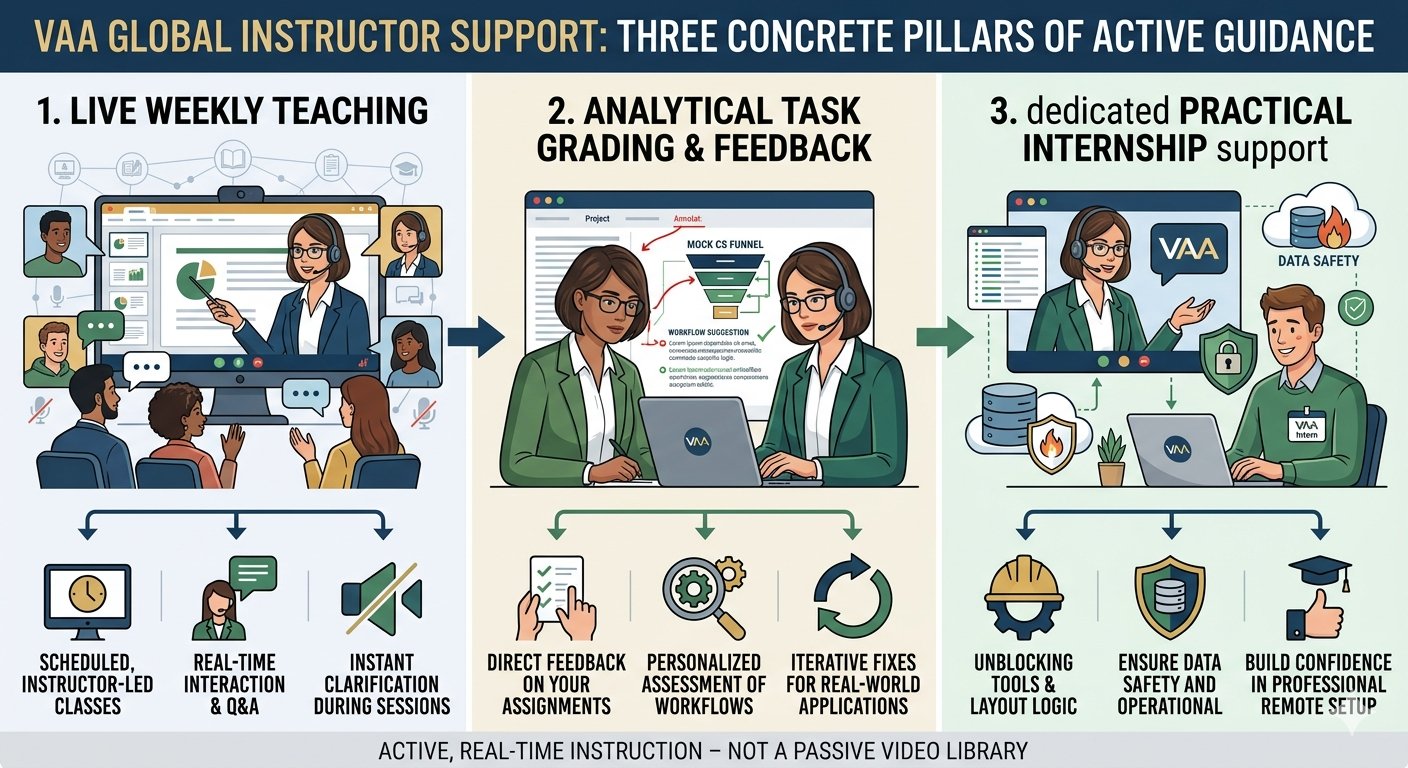
VAA Global's SEO course is built around hands-on application rather than theory alone: keyword research using real tools, on-page optimization practice, an introduction to technical SEO audits, and reporting on results the way an agency or in-house team would expect. It's delivered as live, instructor-led training, which matters in a field where tools and best practices shift and having someone to ask questions of in real time speeds up how fast the fundamentals actually click.
Students also receive the full VAA Global support package: certificate, job placement assistance and interview coaching, access to remote job opportunities, job matching through VAA Global Talent, a 2-month internship, mentorship from industry experts, portfolio building, and LinkedIn and personal branding support.
Building Proof of Skill Before Your First Client
SEO is one of the easier skills to demonstrate with real proof, since you can run a site audit, optimize a blog post, or do keyword research on a sample website and show the before-and-after. Building two or three of these case-study style samples during and after training gives you something concrete to show, far more convincing than simply listing 'SEO' as a skill on a CV.
The VAA Global portfolio builder is designed to help students package this kind of proof-of-work cleanly once they've completed their certificate.
Where the Remote SEO Jobs Are
SEO roles exist at digital marketing agencies, in-house at any company with a website driving business (which is most companies), and heavily on freelance platforms where clients need ongoing SEO maintenance. Agencies in particular often hire remote SEO specialists from Africa because the work is entirely deliverable-based and doesn't require any physical presence or specific timezone overlap for most tasks.
SEO rewards curiosity, patience, and a willingness to test and measure, and it's one of the most transferable digital skills you can build. Check out VAA Global's SEO course or apply now to start building a skill set that stays relevant as long as people keep using search engines.