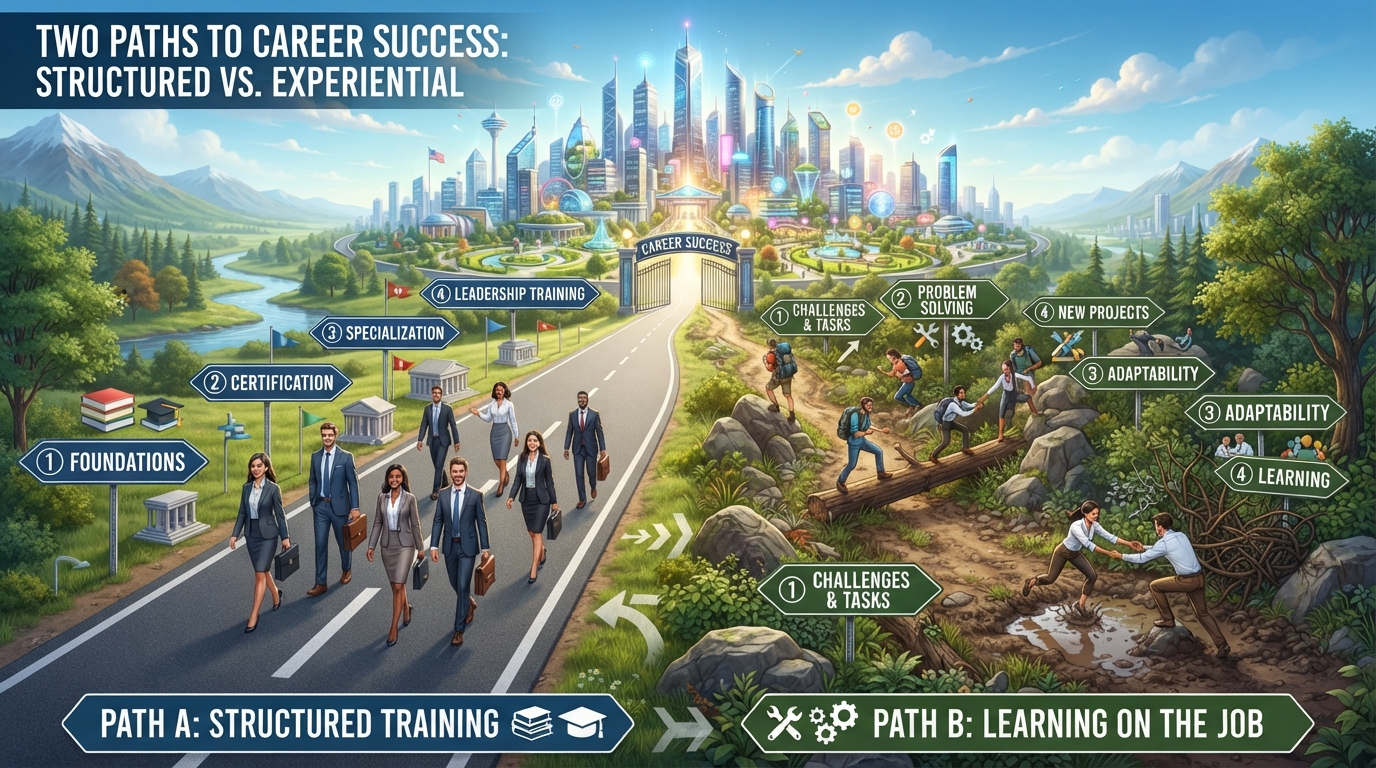
“Can't I just learn by doing” is a reasonable instinct, so it's worth honestly examining whether that path is actually realistic.
The Appeal of Learning on the Job
In theory, getting hired and figuring things out as you go sounds efficient, no upfront course cost, immediate income, and learning tied directly to real work from day one.
Why This Rarely Works as a Starting Point
The catch is the first step: getting hired at all. Most remote, skills-based roles expect some demonstrated baseline competence before an employer is willing to take a chance on you, which makes “learn entirely on the job” a genuinely difficult door to open without some prior preparation.
Where Structured Training Actually Fits In
This is exactly the gap a structured course closes. VAA Global's model builds the baseline skill and a portfolio-ready project during the ten weeks, then adds a 2-month internship that provides the applied, real-world practice on-the-job learning would otherwise offer, but with training and support built in rather than being thrown in unsupported.
The Best of Both, Not a Trade-Off
Rather than choosing between structured learning and applied, hands-on practice, VAA Global's course-then-internship structure is built to give you both, the fundamentals taught properly, followed by real, supervised application, rather than forcing a choice between theory and practice.
When Learning Entirely on the Job Does Work
It's not impossible, some roles and some employers are genuinely open to hiring on potential alone. But relying on that as your primary strategy is a considerably higher-risk approach than building demonstrable skill first, especially in a competitive remote job market.
A Practical Way to Decide
If you can point to real evidence of the skill already, projects, freelance work, anything concrete, on-the-job learning becomes more realistic. If you're starting from genuinely zero, structured training that builds that initial evidence first is the more reliable path into the field.
A Common Misconception Worth Addressing Directly
Some assume experienced professionals in a field learned entirely through unstructured, on-the-job trial and error. In practice, most had some form of structured foundation first, formal education, a course, mentorship, before the on-the-job learning that followed built on that base.
Why This Combination Tends to Outperform Either Extreme
Pure theory with no application rarely produces genuine job-readiness. Pure on-the-job learning with no foundation is genuinely difficult to access as a starting point. The combination, structured training followed by real applied practice, consistently outperforms either extreme on its own.
Why This Question Matters More in a Remote Context Specifically
On-the-job learning is often easier to access in person, where a manager can informally mentor someone day to day. Remote roles frequently lack that same informal mentorship structure, which is part of why demonstrated skill before hiring matters even more in remote-specific contexts than it might in a traditional office setting.
What This Suggests About How to Spend Your Time Right Now
If you're currently weighing whether to keep applying for roles you're not yet qualified for versus investing a few months in structured training first, the honest answer for most people is that the structured path tends to produce results faster, precisely because it removes the core obstacle, the initial lack of demonstrable skill, standing in the way.
The Most Practical Way to Apply This Insight
If you're genuinely torn between applying blind to roles you're underqualified for and investing in structured training first, treating the training as the faster path, not the slower, more cautious one, is usually the more accurate way to frame the decision.
Reframing training as the fast path rather than the cautious, slow one changes how the whole decision feels, and often changes what someone actually chooses to do next.
Once framed this way, the earlier hesitation about “wasting time” on training tends to dissolve, since the training is actually what shortens the overall timeline, not what lengthens it.
Once you see training as the fast path rather than a slow detour, the entire decision looks different.
That reframing alone changes how the whole decision feels.
Once that reframing clicks, the decision tends to make itself.
The free Career Compass quiz can help clarify whether structured training or continued job searching is the more sensible next step for your specific situation.
Ready to Start?
If building real, demonstrable skill before you job search sounds like the safer bet, you can browse VAA Global's courses and apply.