Choosing where to actually find your first freelance clients can feel genuinely overwhelming with several platforms all claiming to be the best starting point, so here's a clearer, more honest comparison based on how each one genuinely works.
Upwork: Proposal-Based Bidding on Posted Jobs
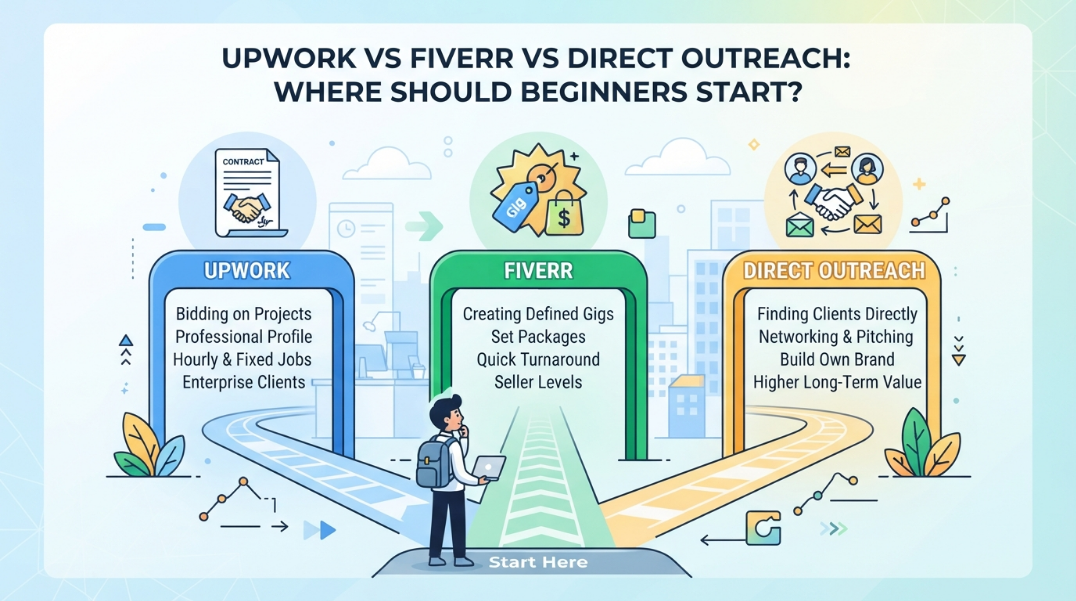
Upwork works through clients posting specific job listings, then freelancers submitting proposals explaining why they're the right fit. This model rewards genuinely tailored, specific proposals that directly address a client's stated need, making it well suited to beginners comfortable writing clear, persuasive pitches for defined, often custom projects.
The proposal-based model also means beginners have a genuine, direct opportunity to compete for real client attention through the quality of their pitch, not just their existing reputation, though building that initial reputation through your first few reviews still matters considerably for winning later proposals.
Fiverr: Packaged Services Clients Search For Directly
Fiverr works differently, freelancers create specific service listings ("gigs") at set price points, and clients search and purchase directly rather than a proposal-based bidding process. This model suits beginners who can clearly define and package a specific, repeatable service, since clients are actively searching for exactly that kind of offering rather than posting an open, custom job.
This structure can genuinely work well for more standardized services, a specific type of content edit, a defined design deliverable, where the packaged, fixed-price nature makes the buying decision simpler and faster for a client browsing available options.
Direct Outreach: Skipping the Platform Entirely
Direct outreach, contacting potential clients or companies directly rather than through an intermediary platform, avoids platform fees entirely but relies considerably more heavily on your own existing credibility and portfolio to convince a prospect, since you don't have platform-provided trust signals like built-in reviews to lean on.
This approach genuinely works better once you have some established track record and portfolio to point to, which is exactly why most beginners find it considerably more effective to start on a platform first, building genuine credibility, before adding direct outreach to their approach later.
A Reasonable Starting Sequence for Beginners
Many successful freelancers start on Upwork or Fiverr specifically to build initial reviews and a genuine portfolio with real, lower-friction access to a large existing pool of active clients, then gradually incorporate direct outreach once they have credible evidence, reviews, a track record, to make those direct pitches genuinely convincing.
How VAA Global's Freelancing Course Covers All Three
VAA Global's Freelancing course specifically focuses on Upwork as a practical, realistic starting point, while also building the proposal-writing and portfolio skills that transfer directly to Fiverr and eventual direct outreach as your career genuinely grows.
Building a Portfolio That Works Across Platforms
Regardless of which platform or approach you start with, building a portfolio you can genuinely reuse and adapt across Upwork, Fiverr, or direct outreach saves considerable duplicate effort. A well-organized, platform-independent portfolio, hosted somewhere you control, means you're not rebuilding your professional presentation from scratch each time you try a new channel.
This flexibility also means you can genuinely experiment with more than one platform simultaneously without significant additional overhead, since your core presentation materials transfer cleanly across all of them with only minor platform-specific adjustments.
Why Reputation Ultimately Matters More Than Platform Choice
Regardless of which specific platform or channel brings in your first clients, your genuine reputation, built through reliable delivery, clear communication, and real quality, is what ultimately determines your longer-term success, considerably more than any single platform's specific algorithm or search ranking.
This is worth remembering when a specific platform feels frustrating or slow to produce results early on, the underlying skills you're building, professional communication, clear proposals, reliable delivery, transfer directly across every platform and approach you might ever use throughout a freelance career.
This underlying skill set is genuinely the more durable, transferable asset, platforms come and go, but strong communication and reliable delivery remain valuable regardless of where you happen to be finding clients at any given time.
Investing in that skill set directly serves you no matter which platform you eventually rely on most.
If you're still weighing this against other paths, the free Career Compass quiz at vaaglobal.tech/career-compass can help you figure out which course genuinely fits your goals.
Once you're genuinely job-ready, VAA Global Talent at talent.vaaglobal.tech connects graduates directly with employers actively hiring for exactly this kind of skill.
VAA Global's free CV and LinkedIn review tool at vaaglobal.tech/cv-review can also help you present this experience clearly once you're ready to apply.
This isn't just anecdotal either, LinkedIn Global Talent Trends Report has published findings that point in exactly the same direction.
Gallup Workplace Research has tracked this pattern closely, and their findings reinforce exactly the point made here.
According to Buffer State of Remote Work Survey, this trend has held steady across multiple years of tracking, not just a short-lived shift.
Choosing Your Starting Point
Whichever platform you start with, the underlying skills, clear proposals, a strong portfolio, professional client communication, transfer across all three. You can apply to VAA Global's Freelancing course to build that foundation.