Nobody hands new remote workers an explicit etiquette manual, yet these unwritten norms genuinely shape how colleagues and clients perceive your professionalism, sometimes more than the actual quality of your work itself.
Response Time: The Most Consistently Noticed Norm
In an office, presence itself signals availability and engagement. Remotely, that signal disappears entirely, replaced by how quickly and reliably you respond to messages. A reasonable general norm is acknowledging messages within the same working day, even briefly, "got this, will have a full answer by tomorrow morning", rather than leaving someone wondering whether their message was even received.
This matters disproportionately in remote settings specifically because the alternative, genuine silence, is genuinely ambiguous, a colleague or client can't tell whether you're simply busy, have missed the message entirely, or are avoiding a difficult conversation, and that ambiguity itself creates real anxiety and erodes trust over time.
Proactive Communication About Problems
When something is going to be late, or a genuine problem has come up, communicating this proactively, as soon as you're aware, rather than waiting silently until a deadline has already passed, is one of the clearest signals of remote professionalism. Most people respond far better to "this will be a day late because X, here's my plan" than to silence followed by a missed deadline with no explanation.
This proactive habit genuinely builds trust over time, even when the news itself isn't good, since it demonstrates you're actively managing your responsibilities rather than hoping problems will somehow resolve themselves without anyone noticing.
Video Call Presence and Preparation
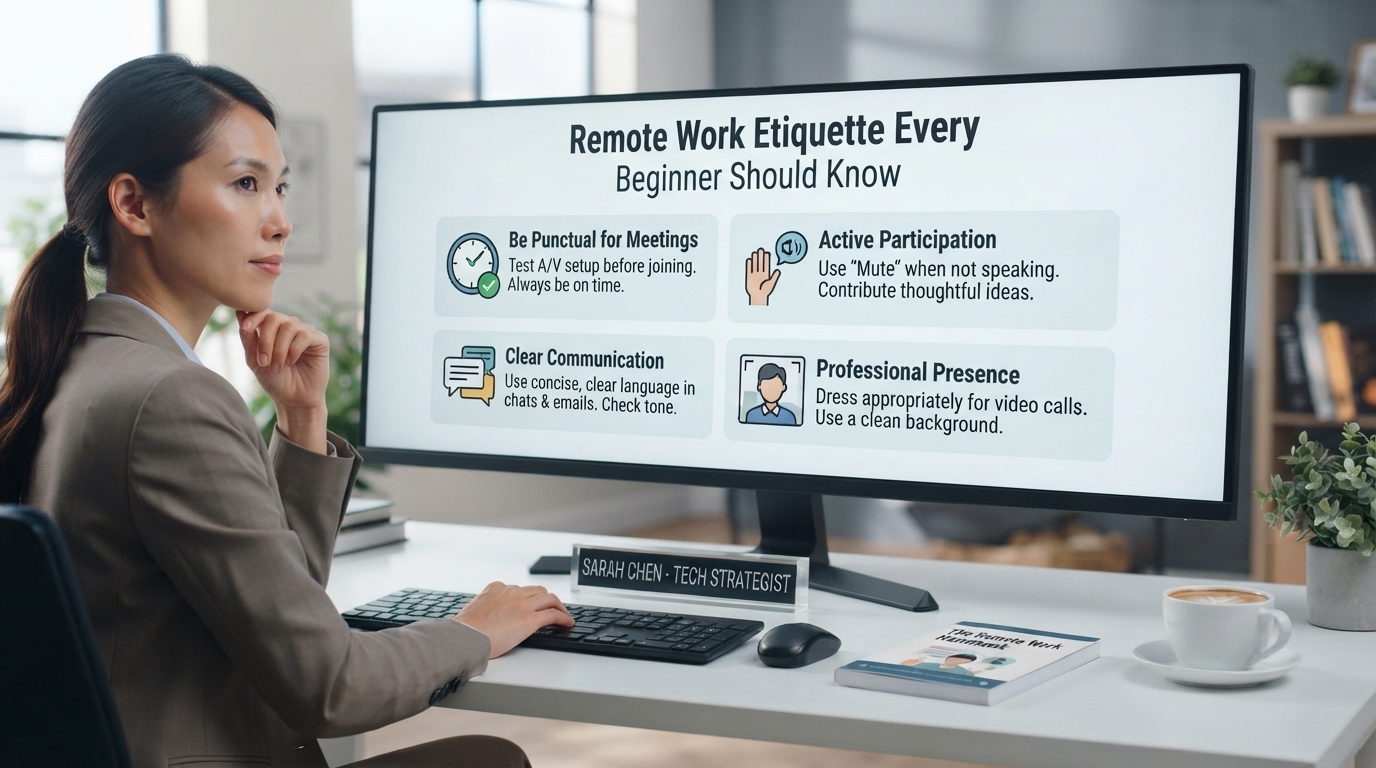
Showing up to a video call genuinely prepared, having reviewed relevant material beforehand, being in a quiet space with a working connection, signals respect for everyone else's time in a way that's immediately noticeable when it's absent. Small habits, muting when not speaking in larger calls, being on time, genuinely add up to a real impression over multiple interactions.
Camera etiquette specifically varies by company culture, but when genuinely unsure, defaulting to camera-on, or simply asking directly what's expected, is a safer starting position than assuming camera-off is universally acceptable.
Respecting Time Zones and Working Hours
Sending a message that implies urgency outside someone's normal working hours, without genuine cause, or scheduling a call without checking someone's actual time zone first, are small but genuinely noticed etiquette lapses. Being explicit about time zones in scheduling, and being thoughtful about when you expect a response, signals real consideration for colleagues working across different locations and schedules.
How VAA Global Builds These Habits Into Training
These etiquette norms are woven directly into how VAA Global's courses are run, live classes with real expectations around participation and communication, so you're practicing genuine remote professionalism from week one, not learning it awkwardly on your first real job.
The 2-month internship included with every course gives you real, practical experience navigating these norms in a genuine working context, with real feedback, before you're navigating them entirely on your own in a first paid role.
Building These Habits Gradually, Not All at Once
Trying to adopt every etiquette norm perfectly from day one often feels overwhelming, a more sustainable approach is focusing on the one or two that matter most for your specific role first, response time and proactive communication typically, then layering in the others gradually as they become genuine habit rather than conscious effort.
Watching how established, respected colleagues in a new remote role actually communicate, then adapting to match that observed standard, is often more useful than trying to apply a generic etiquette guide uniformly across every workplace, since real norms genuinely vary by company culture.
This gradual, observant approach tends to build genuinely stronger professional habits than trying to memorize and apply a generic etiquette checklist all at once.
Over time, these habits stop feeling like conscious effort entirely and simply become how you naturally work, which is precisely the goal.
Small, consistent professional courtesies like these accumulate into a genuinely strong reputation over the course of a career, far more than any single, dramatic gesture could.
If you're not yet certain this is the right direction for you, VAA Global's free Career Compass quiz at vaaglobal.tech/career-compass takes a few minutes and points you toward what actually fits.
When you're ready to start applying, VAA Global Talent at talent.vaaglobal.tech gives you direct access to real employers looking for graduates with this background.
Once you have real experience to show, the free CV and LinkedIn review tool at vaaglobal.tech/cv-review can help you present it in a way that actually gets noticed.
FlexJobs Remote Work Trends Report has published research specifically on this, and it lines up closely with what's described here.
This isn't just anecdotal either, Upwork Freelance Forward Research has published findings that point in exactly the same direction.
World Economic Forum Future of Jobs Report has tracked this pattern closely, and their findings reinforce exactly the point made here.
Building These Habits From the Start
These small, consistent habits genuinely compound into a strong professional reputation over time. If you're building toward a remote career, you can apply to VAA Global to build both the skills and these professional habits together.