A clear remote job search checklist for beginners can save you weeks of disorganized effort, scattered applications, and avoidable mistakes. Remote hiring moves differently from traditional in-person job hunting — you're competing with a wider pool of applicants, dealing with time zones, and often proving yourself without ever meeting anyone face to face — so having a structured approach from day one makes a real difference.
What Do I Need Before Applying for Remote Jobs?
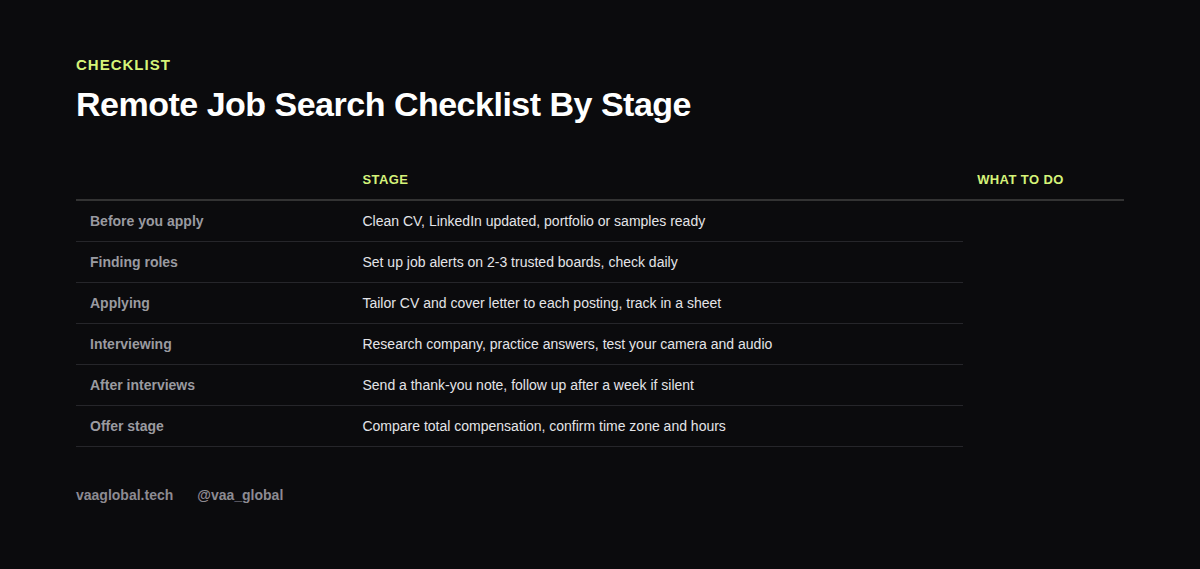
Before you send a single application, get your foundation in place: a clean, updated CV, a LinkedIn profile that matches it, a simple portfolio or work samples if your field uses them, and a reliable remote work setup.
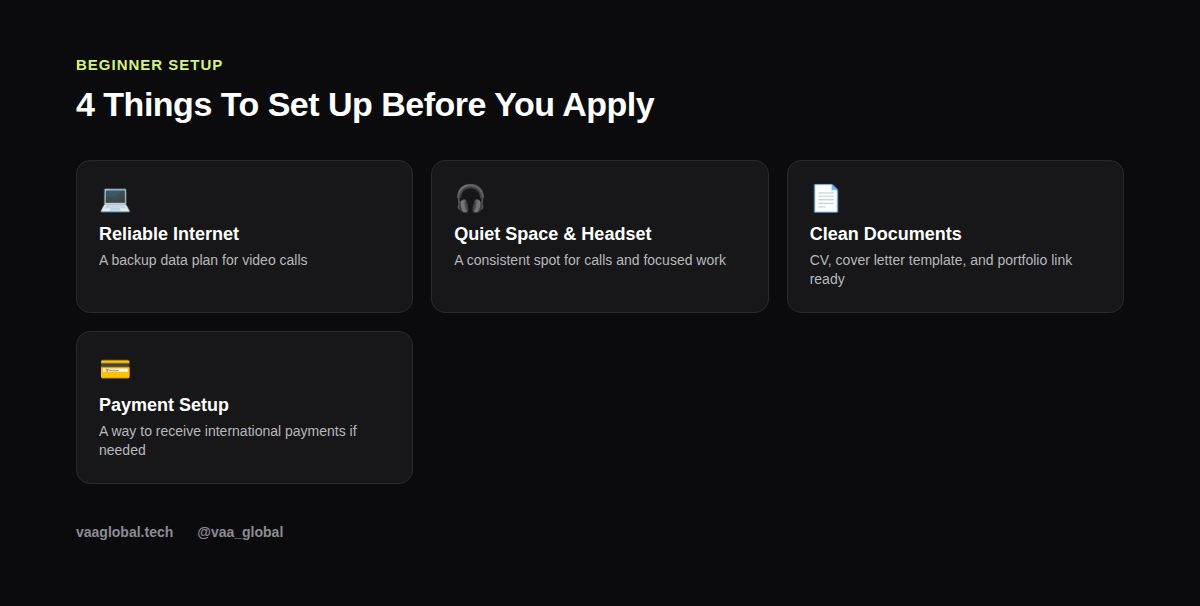
A backup internet option (mobile data as a fallback), a quiet space for calls, and a working headset matter more than people expect — technical hiccups during an interview leave a worse impression than most candidates realize.
Finding the Right Remote Job Boards
Not all remote job boards are equally useful. Pick two or three that are known to be legitimate and relevant to your field rather than scattering effort across a dozen generic sites. Set up job alerts so new postings come to you, and check them daily during an active search rather than sporadically, since remote roles — especially good ones — can fill quickly.
How Do I Organize My Job Search?
Use a simple job search tracker, even just a spreadsheet, with columns for company, role, date applied, status, and follow-up date. This sounds basic, but once you're juggling ten or more applications, it's easy to lose track of who you've heard from and who you haven't. A tracker also helps you notice patterns, like which types of roles are getting responses and which aren't.
Tailoring Every Application
Avoid sending the exact same CV and cover letter to every posting. Adjust your CV's top summary and most relevant bullet points to match each specific role, and write a short, specific cover letter rather than a generic one. This takes more time per application but meaningfully increases your response rate — see our full guide on how to write a cover letter for a remote job for a repeatable structure.
How Many Remote Jobs Should I Apply to Per Day?
Quality matters more than volume. Three to five well-tailored applications a day is more effective than twenty rushed, generic ones. If you're applying to dozens of roles with no responses, it's worth pausing to review whether signs your remote job search strategy isn't working are showing up, rather than just applying faster.
Preparing for Interviews Properly
Once interviews start coming in, shift your checklist toward preparation: research the company, practice your answers out loud, and test your camera, microphone, and internet connection well before the actual call. Remote interviews carry extra technical risk that in-person ones don't, so a quick test run removes one entire category of possible mishaps.
What Should Beginners Know About Remote Work Before Accepting an Offer?
Before accepting, clarify the time zone and working hours expected, confirm whether you'll be an employee or independent contractor (which affects taxes and benefits significantly), and understand the full compensation picture, not just the base figure. If anything about an offer feels rushed, overly generous, or vague on these details, it's worth reviewing signs a remote job offer is too good to be true before signing anything.
Following Up Without Being a Pest
Send a brief thank-you note within 24 hours of any interview, and if you haven't heard back after a week on a role where they gave you a timeline, one polite follow-up is appropriate. Beyond that, trust your tracker to tell you when it's time to move your attention elsewhere rather than refreshing your inbox all day.
Staying Organized Over a Longer Search
Remote job searches, especially for a first remote job, can take longer than people expect. Build in small routines — a weekly review of your tracker, a short list of new roles to apply to each day, a standing time block for interview prep — so the process stays manageable rather than overwhelming over several weeks or months.
Avoiding Common Beginner Mistakes
First, double-check that any posting you apply to is legitimate, since remote job scams specifically target newcomers who are eager and less familiar with warning signs. Therefore, before sending any personal or banking information, review red flags in remote job postings so you can spot a scam early rather than after you've shared sensitive details. Additionally, resources like the Federal Trade Commission publish general guidance on job scam warning signs that applies well beyond the US. Meanwhile, don't let scam-awareness make you overly suspicious of every legitimate opportunity either; most remote postings on reputable boards are perfectly genuine.
Building Momentum Over Time
Finally, remember that your first remote job search is also a learning process. Each application you tailor, each interview you sit through, and each rejection you process makes the next round faster and less stressful. As a result, many beginners find their second or third job search goes noticeably smoother than the first, simply because the checklist habits are already in place.
The Bottom Line
A good remote job search checklist for beginners isn't about doing more, it's about doing the right things in the right order: prepare your setup, apply with intention, interview with real preparation, and evaluate offers carefully. Work through it stage by stage, and the whole process feels far less chaotic than tackling it all at once.