
Knowing what to do after a HIPAA mistake matters because almost every medical virtual assistant makes some kind of privacy-related error at some point, whether it's sending a message to the wrong patient or misreading a permission setting in the EHR. What separates a manageable situation from a serious one usually isn't the mistake itself, it's how quickly and honestly it gets reported.
First, Take A Breath: Mistakes Happen Even In Careful Practices
Every healthcare practice, no matter how well run, deals with privacy errors occasionally. A misdirected fax, a message sent to the wrong patient, a document attached to the wrong chart. These things happen to experienced staff too, not just new MVAs. Panic makes the situation worse, so the first useful step is simply slowing down enough to think clearly.
Document What Actually Happened, Factually
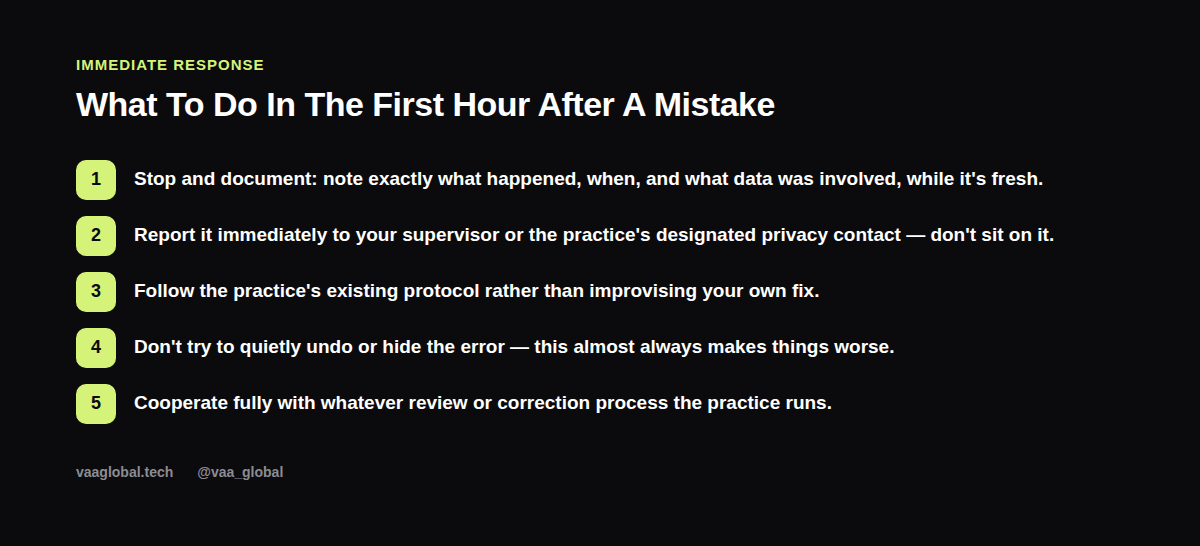
Write down exactly what occurred: what data was involved, who it went to or was seen by, and roughly when it happened. Stick to facts rather than speculation about consequences. This record is useful both for reporting the honest disclosure healthcare practices expect and for your own clarity about what actually went wrong.
Report It Immediately, Don't Sit On It
Reporting a HIPAA violation, or even a near-miss, should happen as soon as you notice it, not after you've tried to quietly fix it yourself. Tell your supervisor or the practice's designated privacy officer directly. Delaying a report, even out of embarrassment, is almost always worse than reporting it right away, since the practice needs time to assess and respond appropriately.
Follow The Practice's HIPAA Breach Protocol
Every HIPAA-covered practice is required to have some form of HIPAA breach protocol, even if it's informal. Follow whatever process they lay out rather than improvising your own correction, since there may be specific notification requirements or review steps you're not aware of. If you genuinely don't know whether a practice has a formal protocol, ask directly rather than guessing.
Why Hiding A Mistake Makes Everything Worse
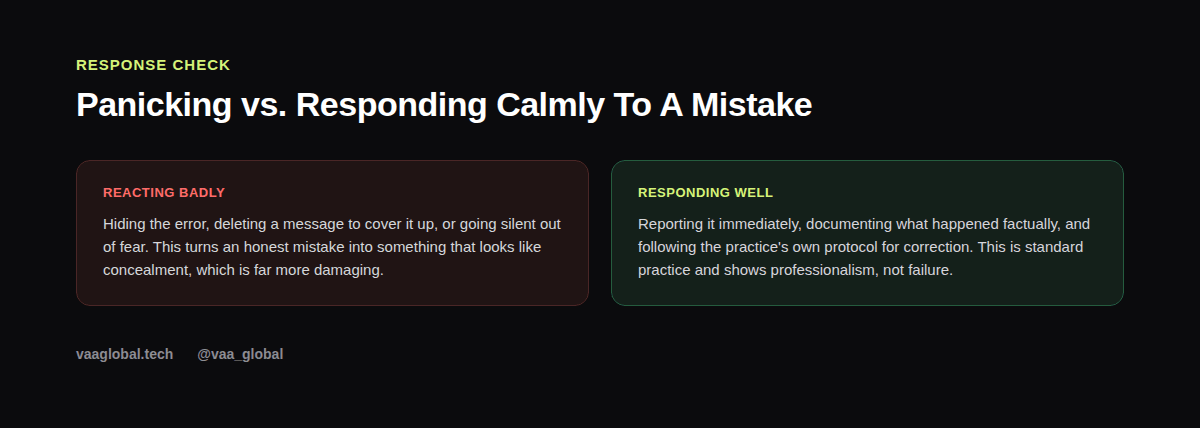
The instinct to quietly undo or hide an error is understandable, but it almost always turns a manageable mistake into a trust problem. A practice can usually work through a genuine error that's reported honestly. What's much harder to recover from is discovering later that something was covered up. Transparency, even when it's uncomfortable, protects you far more than silence does.
Correcting A Privacy Error Going Forward
Correcting a privacy error is usually the practice's responsibility once it's reported, which might involve notifying an affected patient, updating access permissions, or adjusting a workflow. Your job is to report accurately and cooperate with whatever review follows, not to manage the correction process yourself unless asked to.
Learning From It Without Spiraling
One mistake, handled honestly, doesn't define your career. Treat it as a reminder to slow down on high-risk tasks, double-check recipient details before sending anything patient-related, and revisit your own understanding of patient data protection basics. Our beginner-friendly explainer on what HIPAA actually is is worth revisiting even if you've seen it before.
Preventing A Repeat Mistake
Build small habits that catch errors before they happen: a second look at the recipient field before sending anything sensitive, and a clear understanding of your medical coding boundaries and scope so you're not guessing in gray areas. Reviewing your skills checklist periodically also helps catch gaps before they become real errors. For authoritative information on HIPAA compliance and breach procedures, the U.S. Department of Health and Human Services maintains detailed official guidance; see their breach notification guidance for the full picture. VAA Global's Medical Virtual Assistant Training course covers HIPAA compliance fundamentals as part of its 6-module, beginner-level curriculum, which helps build the habits that prevent these situations in the first place.
What Happens If I Accidentally Send Patient Information To The Wrong Person?
So what happens if I accidentally send patient information to the wrong person, specifically? First, don't panic. Note the time, the recipient, and exactly what was included. Then report it right away. The practice will likely assess the risk and may need to notify the patient involved. Your part is simple: report fast and report honestly. The rest is usually the practice's process to run.
Should I Tell My Supervisor About A HIPAA Mistake?
Should I tell my supervisor about a HIPAA mistake even if it feels minor? Yes, every time. Small errors can reveal gaps in a workflow that affect more than just you. A supervisor would rather hear about a small issue early than discover a pattern later. Reporting small things builds trust, not the opposite.
How Do I Report A Privacy Error At Work?
How do I report a privacy error at work when you're not totally sure of the process? Ask. Ask your supervisor, ask HR, or ask whoever manages compliance. If nobody has clearly told you who to contact, that's worth raising on its own, since every practice should have a clear answer ready before an error ever happens.
The Bottom Line
What to do after a HIPAA mistake comes down to a few calm, honest steps: document it, report it immediately, follow the practice's protocol, and never try to hide it. Handled this way, a single privacy error is a learning moment, not a career-ending event.



