
Phone calls remain one of the busiest channels in healthcare, so medical virtual assistant VOIP phone systems come up constantly for anyone applying to remote roles that involve answering a practice's main line. VOIP, short for voice over internet protocol, lets phone calls travel over the internet instead of a traditional phone line, which is exactly what makes it possible for a remote assistant in Nigeria to answer calls for a clinic in another country. Understanding how these systems generally work helps you sound confident the moment phone duties come up in an interview.
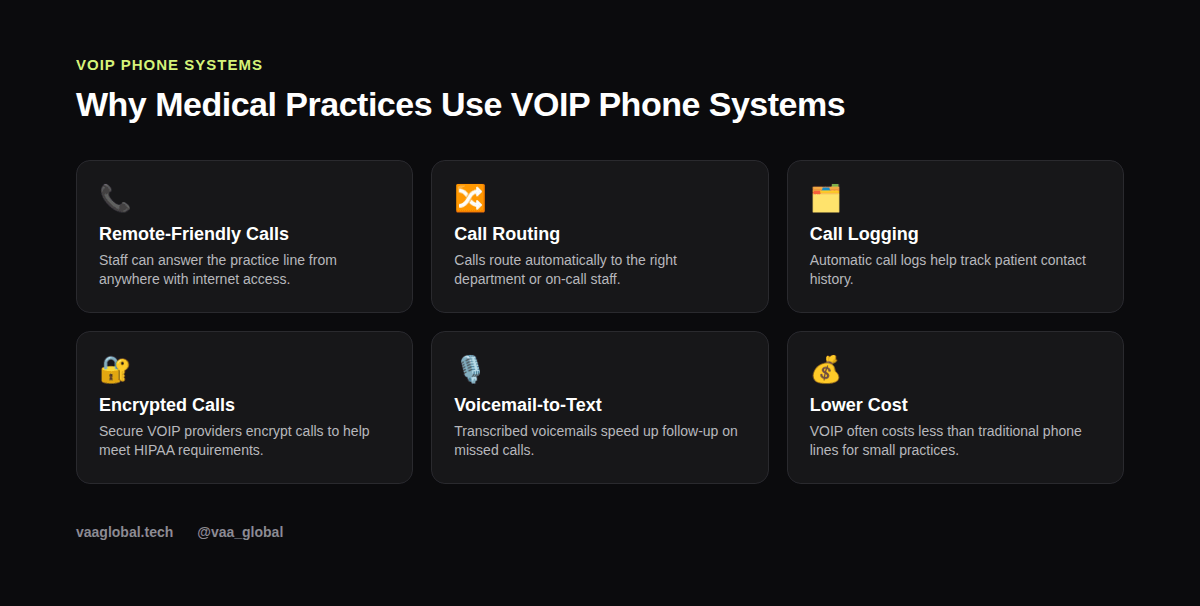
Why Practices Switch to VOIP
Traditional phone lines tie calls to a physical location, which doesn't work well for a practice that wants remote administrative support. VOIP phone systems solve that problem by letting any authorized device with internet access make or receive calls through the practice's main number, regardless of where the person answering is physically located.
What Is a VOIP Phone System, Exactly?
So, what is a VOIP phone system in plain terms? It's software that turns your voice into data, sends it over the internet, and reconnects it on the other end as a normal phone call. From a caller's perspective, nothing feels different; from a remote assistant's perspective, it means the practice's phone number can live on a laptop or app instead of a physical desk phone.
How Does VOIP Work for Medical Practices Specifically?
How does VOIP work for medical practices beyond the basic technology? Usually, the practice sets up a main line with extensions, call routing rules, and sometimes a shared voicemail box. Staff, including remote assistants, log into a desktop app or browser portal, and calls come through exactly as they would on a traditional office phone.
What an MVA Actually Does With It
Day to day, an MVA using a VOIP system answers incoming calls, transfers them to the right department or provider, and takes messages when no one is available. Many systems also offer voicemail transcription, which makes it faster to scan missed calls and follow up without listening to every message individually.
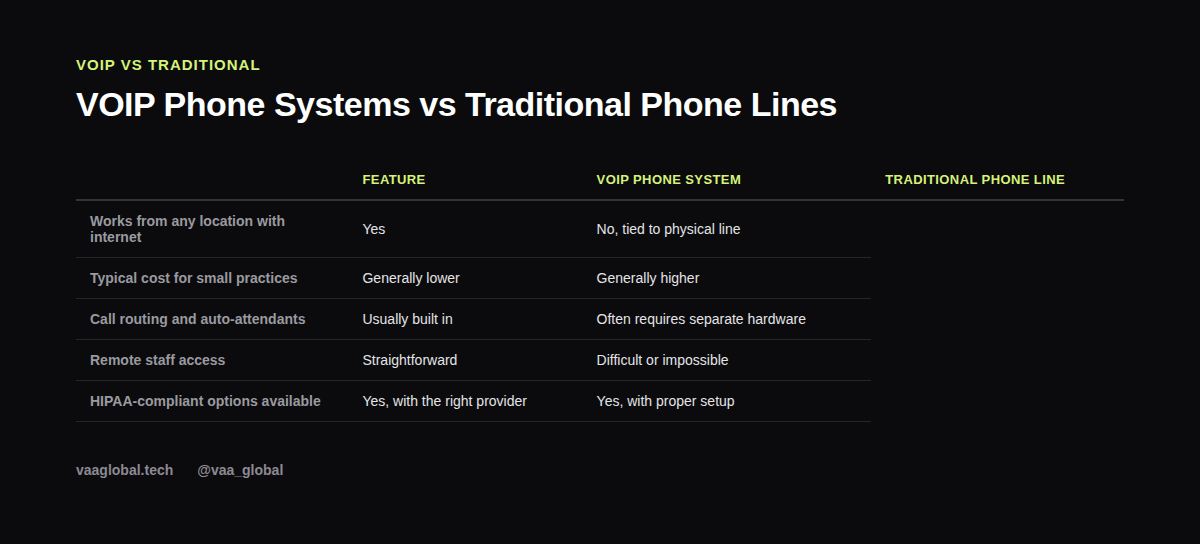
How VOIP Compares to a Traditional Line
The biggest practical difference is flexibility. A VOIP system can be accessed from a laptop or a mobile app, while a traditional line generally can't. Many practices also find VOIP systems cheaper to run, since they don't require the same physical infrastructure as older phone networks.
Call Routing and Prioritization
VOIP systems often include automated routing, sending calls to the right team based on the option a caller selects. However, an MVA still needs to use good judgment: recognizing an urgent call and escalating it quickly matters more than any automated menu. Our article on phone etiquette for patient calls covers the communication side of this skill in more depth.
Why HIPAA Still Applies to Phone Calls
It's easy to think of HIPAA as something that only applies to written records, but phone conversations about patients fall under the same rules. That means taking calls in a private space, never discussing patient details where others can overhear, and using only approved, secure VOIP tools rather than a personal phone line for practice business. The official HIPAA overview at HHS.gov is a solid reference for the underlying rules.
Working the Phone Alongside Other Tools
Phone work rarely happens in isolation. While on a call, an MVA often needs to pull up a patient's record in the EHR or check the schedule at the same time. If you want a refresher on how these pieces fit together, our broader guide on daily tasks gives a fuller picture of a typical workday.
What Equipment Do I Need for VOIP Phone Work?
A common beginner question is what equipment is needed for VOIP phone work. Most VOIP systems just need a reliable internet connection, a decent headset, and a quiet space to work. You generally don't need to buy specialized equipment or a dedicated desk phone. Our guide on choosing an internet connection for remote work in Nigeria is useful if you're setting up a home office for the first time, since a stable connection matters more here than almost any other remote healthcare task.
Is VOIP Hard to Learn for a Beginner?
Generally not. Most VOIP software is built to feel familiar, similar to any messaging or calling app you've already used. Employers usually provide a short walkthrough of their specific setup, so prior experience with that exact provider isn't a hard requirement for most entry-level roles.
The Bottom Line
Medical virtual assistant VOIP phone systems really come down to flexibility, good call judgment, and consistent HIPAA-aware habits, not mastering any particular brand of software. Get comfortable with the general concept, and any specific VOIP platform will feel manageable once you're actually on the job. VAA Global's Medical Virtual Assistant Training is a 6-module, beginner-level course covering HIPAA compliance, healthcare administration, and communication skills, with no prior medical background required, plus job assistance after graduation.



