
Medical virtual assistant release of information requests, often shortened to ROI requests, involve some of the most legally sensitive paperwork you'll touch in this role, because getting the process wrong can mean sending a patient's private health information to the wrong place or the wrong person. Learning the proper verification steps isn't optional nice-to-have knowledge here; it's the difference between a routine task and a serious compliance problem.
What Is Needed to Release Medical Records?
Before anything goes out, you need a properly completed authorization form signed by the patient (or their legal representative), specifying exactly what records are being requested, who they're going to, the date range covered, and the purpose of the request. A request without a valid, specific authorization should never be fulfilled, regardless of who is asking or how reasonable the request sounds over the phone.
How Do You Process a Release of Information Request? Step by Step
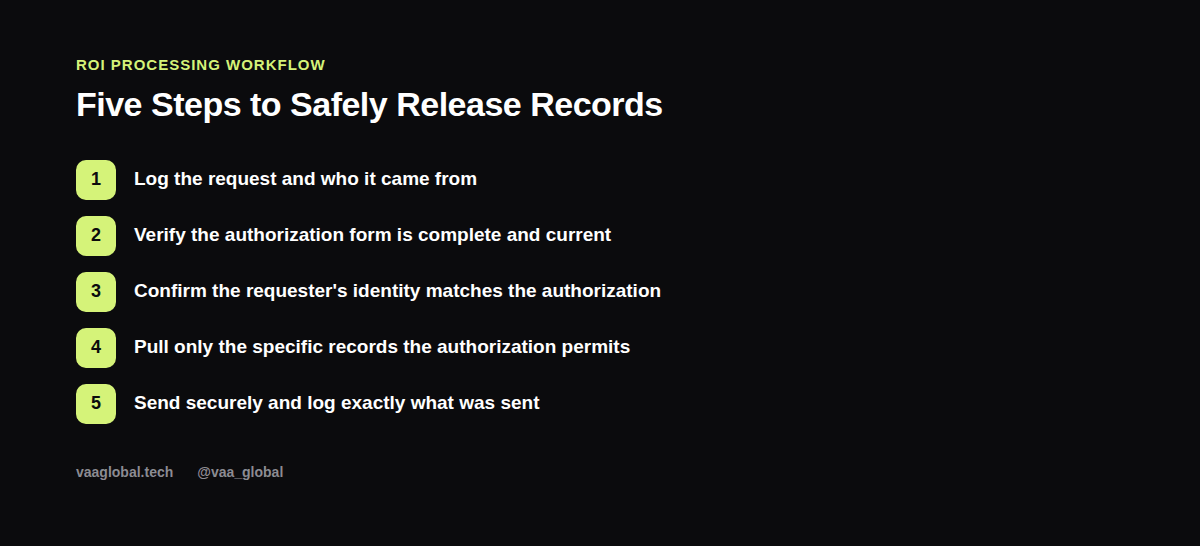
A reliable process looks like this: first, receive and log the request, noting who requested it and through what channel; second, verify the authorization form is complete, properly signed, and not expired (many authorizations have a defined validity window); third, confirm the requester's identity matches who the authorization names as the recipient; fourth, pull only the specific records described, not the entire chart by default; and fifth, send the records through a secure, approved method and log exactly what was sent and when. Skipping the verification step because a request feels urgent is one of the most common and risky shortcuts in this task.
The "Minimum Necessary" Principle
Even with a valid authorization, you should generally share only the specific information the request actually calls for, not the patient's entire history just because it's easier to export. For example, if an authorization covers only lab results from a defined date range, sending the full chart including unrelated visit notes goes beyond what was authorized. This minimum necessary standard protects patient privacy even within an otherwise valid, approved disclosure.
Can a Medical VA Send Patient Records to Another Provider?
Yes, this is actually one of the more routine forms of record release, since providers coordinating a patient's care often need each other's notes. However, the same rule applies: a proper authorization (or, in some cases, documentation establishing that it falls under treatment-related sharing permitted without separate authorization) still needs to be confirmed before sending anything. When in doubt about whether a specific exception applies, always check with the practice's compliance lead rather than guessing, since the rules around treatment, payment, and operations sharing have real nuance.
Handling Requests From Attorneys, Insurers, and Patients Themselves
A patient requesting their own records is generally entitled to them promptly and doesn't need the same authorization scrutiny as a third party, though identity verification still matters. Attorney and insurance company requests almost always require a specific, signed authorization naming them directly, and often come with their own cover letters and deadlines that need careful tracking. Treating every request type with the same checklist, adjusted for who's asking, keeps the process consistent and defensible.
Common Mistakes That Create Real Risk
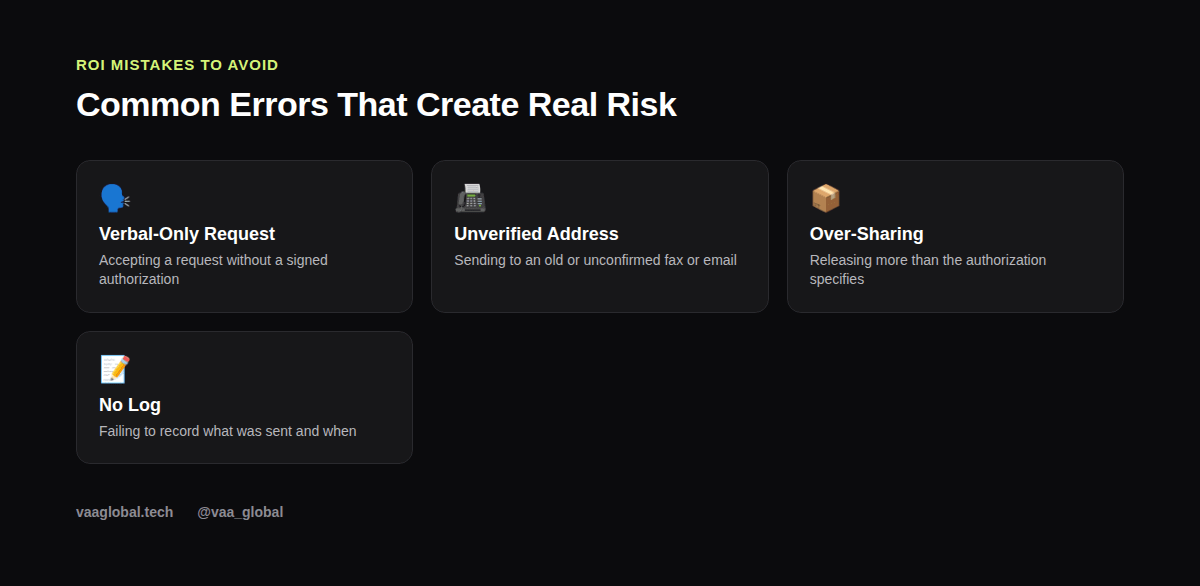
The most frequent ROI processing mistakes include accepting a verbal request without a signed authorization, sending records to an old or unverified fax number or email address, releasing more information than the authorization specifies, and failing to log what was sent and when. Each of these seems small in the moment but can create a genuine HIPAA violation, which is why consistent documentation at every step matters so much in this specific task.
Why This Task Deserves Extra Caution as a New Medical VA
Unlike many administrative tasks where a small error is easily corrected, an improper records disclosure can't be fully undone once information has left the practice. That's exactly why new medical VAs should always have ROI requests reviewed by a supervisor or compliance lead during their first weeks in the role, until the verification habits become second nature. For authoritative guidance on protected health information and permitted disclosures, the U.S. Department of Health and Human Services HIPAA Privacy Rule resources are the standard reference. This connects closely with VA Global's existing guides on patient data protection and business associate agreements, both of which cover related compliance ground. VA Global's Medical Virtual Assistant Training course covers HIPAA compliance across its six beginner-level modules, building this exact kind of careful habit from the start.
The Bottom Line
Medical virtual assistant release of information requests demand more caution than almost any other administrative task in the role: verify the authorization, confirm identity, share only what's specified, and log everything. Build that discipline early, and you'll handle one of the most compliance-sensitive parts of the job with real confidence.
Keeping Track of the Records Custodian Role
Someone at the practice is formally responsible for medical records, often called the records custodian, even when a medical VA handles the day-to-day processing. Knowing who that person is, and knowing when a request is unusual enough to need their direct sign-off, matters just as much as the standard checklist. For example, a subpoena for records is a completely different animal from a routine third-party request, and it should always go straight to the records custodian or practice's legal contact rather than being processed through the normal workflow. Recognizing that difference quickly is part of what separates a confident ROI processor from someone just following steps mechanically.
Setting Realistic Turnaround Expectations
Patients and requesting parties often ask how long a release will take, so it helps to have a clear, honest answer ready. Many practices aim for a turnaround of a few business days for straightforward requests, though complex or high-volume requests may take longer. Communicating that timeline upfront, rather than leaving a requester guessing, reduces follow-up calls and keeps the whole process feeling organized and professional.



