
Medical virtual assistant prescription refill requests arrive constantly in a typical practice's inbox and phone queue, often multiple times a day, and handling them quickly and correctly is one of the clearest ways a remote assistant earns a provider's trust. Get the process right, and patients get their medications on time without unnecessary gaps; get it wrong, and you risk either a frustrated patient or, worse, a genuine safety issue.
Where Refill Requests Actually Come From
Refill requests reach a practice through several channels: a direct pharmacy callback or electronic request through the e-prescribing system, a patient phone call, a patient portal message, or occasionally a fax (still common with some older pharmacy systems). Each channel requires slightly different handling, but the underlying rule never changes: every request needs provider review before anything goes back to the pharmacy, regardless of how routine it looks.
Step-by-Step: Handling a Standard Refill Request
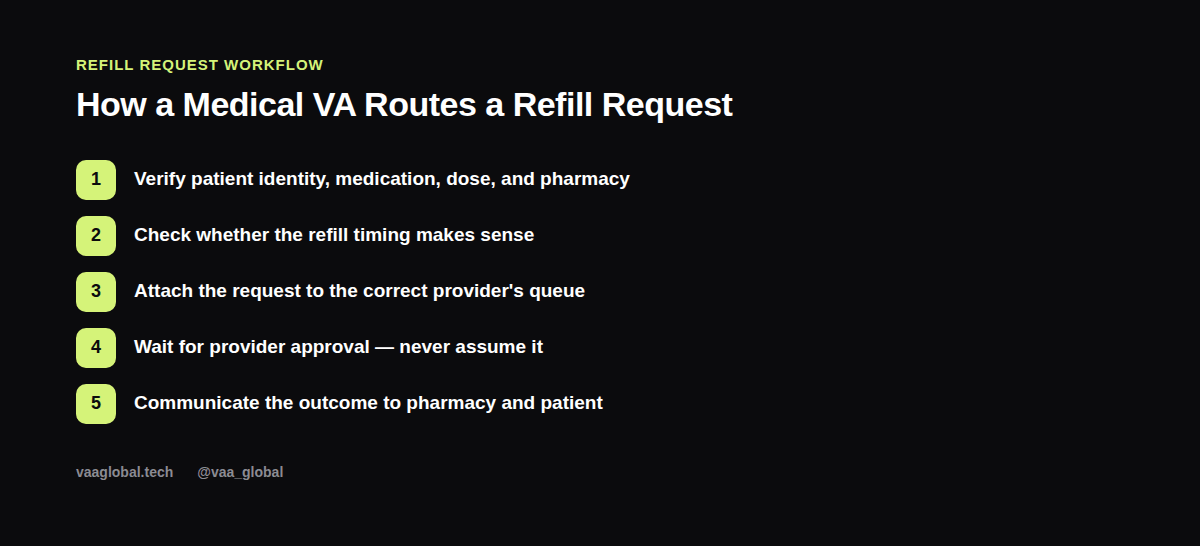
A typical process looks like this: first, verify the patient's identity and confirm the medication, dose, and pharmacy match what's on file; second, check when the medication was last filled and whether the patient is actually due, since early refill requests sometimes signal a problem worth flagging; third, pull up the patient's chart and attach the request to the correct provider's queue; fourth, wait for provider approval or denial, never assuming approval because a request "looks routine"; and fifth, communicate the outcome back to the pharmacy or patient promptly once the provider has responded.
A Sample Patient Message (For Training Purposes Only)
Here's a simplified, fictional example of how you might communicate a refill status update: "Hi [patient name], this is [your name] from [practice name]. Dr. [provider] has approved your refill for [medication name] and it's been sent to [pharmacy name]. It should be ready within 24 hours. Please let us know if you have any questions." If the refill was denied instead, that message should always come from or be reviewed by the provider's team, never phrased by you as a clinical explanation of why.
Controlled Substances Require Extra Care
Refill requests for controlled substances (certain pain medications, stimulants, and some anti-anxiety medications) carry extra regulatory requirements and extra scrutiny. A medical VA should never process or communicate about a controlled substance refill as routine, and should always confirm the practice's specific protocol, since many require the patient to be seen in person at defined intervals before a controlled substance refill can even be considered. When in doubt on a controlled substance request, escalate rather than guess.
Red Flags Worth Flagging to the Provider
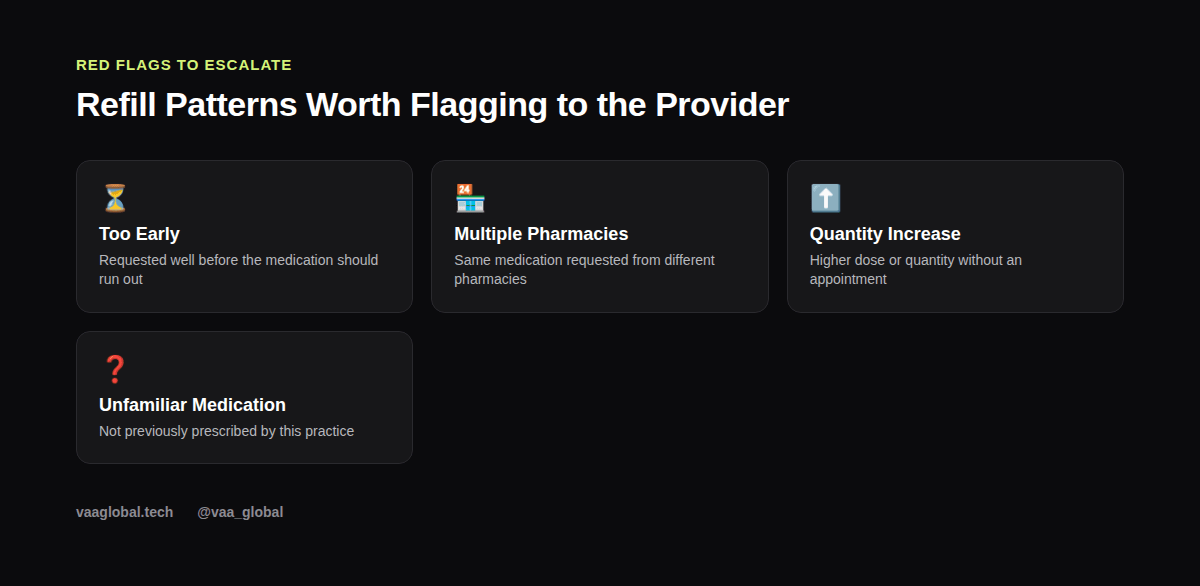
Certain patterns deserve a second look before you simply forward the request: a refill requested significantly earlier than the prescription should have run out, multiple pharmacies being used for the same medication, a patient requesting an increased quantity without an appointment, or a request for a medication the patient hasn't been prescribed before by this practice. None of these automatically mean something is wrong, but they're exactly the kind of pattern a provider wants flagged rather than silently processed.
Why Timing Matters
Most practices aim to turn around a routine refill request within 24 to 48 business hours, though this varies. Patients running low on a medication reasonably expect a timely response, and delays can mean a missed dose or, for certain conditions, a genuine health risk. Setting clear expectations with patients upfront (through a portal message, a recorded phone greeting, or a sign at check-in) about typical refill turnaround time reduces frustrated follow-up calls considerably.
How This Connects to Other Medical VA Tasks
Refill handling overlaps with broader skills like phone etiquette on patient calls and understanding prior authorization, since some medications require insurance approval before a pharmacy will fill them even after provider sign-off. It's also closely tied to good patient data protection habits, since you're handling sensitive medication information constantly in this role.
Staying Within Scope
A medical VA should never approve, deny, or alter a refill request's dosage or quantity, and should never offer clinical advice about whether a patient should take a different medication instead. For official guidance on prescription drug regulation, including controlled substances, the U.S. Food and Drug Administration (FDA) is the authoritative federal resource. VA Global's Medical Virtual Assistant Training course covers medication-related workflows as part of its six beginner-level modules, giving new VAs a safe foundation before they take on this responsibility.
The Bottom Line
Medical virtual assistant prescription refill requests come down to careful intake, honest escalation of anything unusual, and strict adherence to the rule that only a provider approves a refill. Handle that loop reliably, and you become one of the most trusted people on a remote care team.
Keeping the Medication List Accurate Along the Way
Every refill request is also a quiet chance to double-check the patient's medication list for accuracy. If a pharmacy callback references a dose that doesn't match what's in the chart, that mismatch needs resolving before anyone assumes which one is correct. Similarly, a request involving a controlled substance should always be cross-checked carefully against what the provider has actually authorized, because refill requests and medication lists tend to drift out of sync over time without someone paying close attention. A quick, consistent review habit here catches small errors long before they become a bigger problem for the patient or the practice.



