

Medical virtual assistant no-show management is one of those tasks that sounds minor until you see the actual numbers: a practice that loses even a handful of appointment slots a week to no-shows is losing real revenue and real access for other patients who could have used that slot instead. Because of that, handling no-shows well is a core skill for any medical VA supporting a clinic's front desk or scheduling function.
Why No-Shows Matter More Than They Seem To
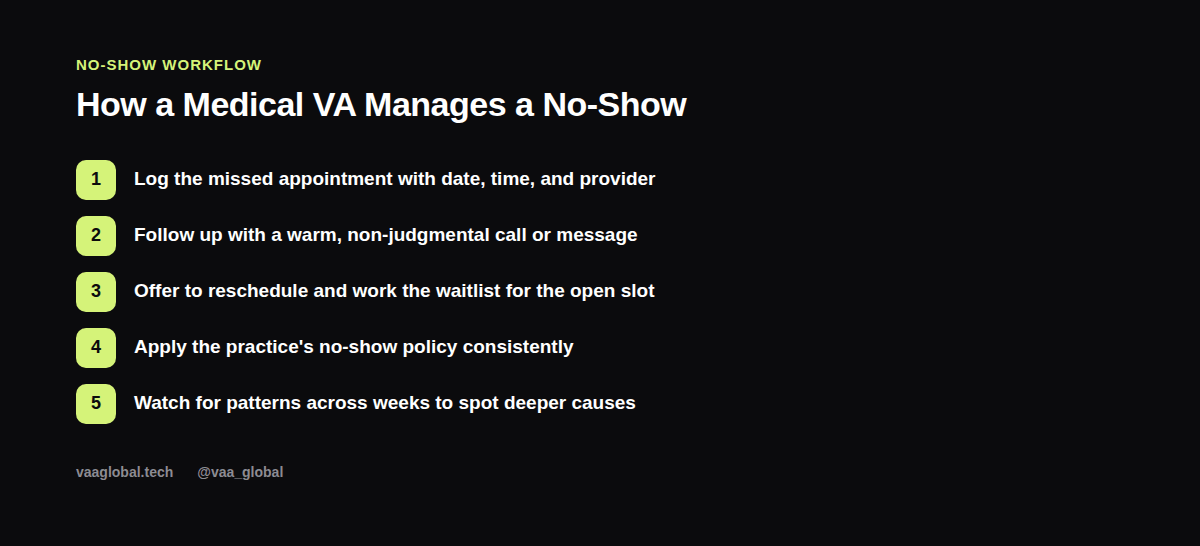
A single missed appointment doesn't just cost that one visit's revenue. It also means another patient who wanted that slot didn't get it, the provider's schedule has an unplanned gap, and staff time spent preparing for that visit was wasted. Practices with chronically high no-show rates often have a deeper issue, such as confusing reminder systems, long wait times for the next available slot, or a patient population facing transportation or work-schedule barriers. Spotting the real cause matters more than just logging the miss and moving on.
Step One: Track Every No-Show Consistently
Before you can fix a no-show problem, you need accurate records. That means logging the date, time, provider, and reason (if known) for every missed appointment, not just the ones that feel significant. Over a few weeks, patterns become visible: maybe Monday morning slots see more no-shows than any other time, or maybe one particular reminder method just isn't landing with patients. This kind of patient no-show tracking is tedious but it's exactly the kind of structured, repetitive task a remote medical VA is well suited to own.
A Sample Follow-Up Script (For Training Purposes Only)
Here's a simplified, fictional phone script for following up after a missed appointment: "Hi [patient name], this is [your name] calling from [practice name]. We noticed you weren't able to make your appointment on [date] and wanted to check in and see if everything's okay. Would you like to reschedule, and is there anything we can help with to make it easier to make your next visit?" Notice the tone: curious and helpful, not accusatory. Many practices find that a warm, non-judgmental follow-up actually improves attendance more than a strict penalty ever does.
Building or Supporting a No-Show Policy
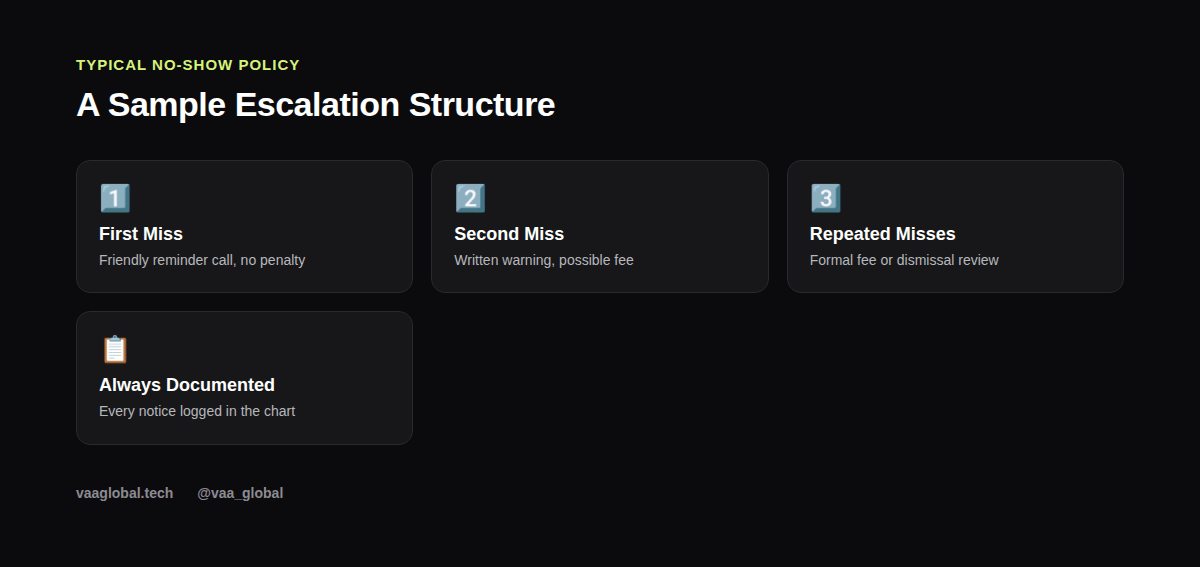
Most practices have some version of a formal no-show policy, often involving a warning after the first miss, a possible fee after a second or third, and sometimes dismissal from the practice after repeated no-shows without communication. As a medical VA, you likely won't write this policy, but you will often be the one applying it consistently: flagging accounts that have hit a threshold, sending the required notice, and documenting that the patient was informed. Consistency matters here because policies applied unevenly can create real fairness and even legal exposure for a practice.
Reducing No-Shows Before They Happen
Prevention beats follow-up every time. Sending a reminder through multiple channels (text, email, and a phone call for high-risk patients) cuts no-show rates noticeably in most practices. Confirming appointments 24 to 48 hours ahead and making same-day rescheduling genuinely easy also helps, because patients who know they can move an appointment without hassle are more likely to call instead of just not showing up. The Agency for Healthcare Research and Quality (AHRQ) publishes research on patient access and engagement that backs up exactly this pattern. This connects directly to the broader appointment scheduling guide and the appointment reminder scripts VA Global has covered elsewhere, both of which pair naturally with no-show management.
Using a Waitlist to Recover Lost Slots
A simple but underused tactic is keeping an active waitlist of patients who want an earlier appointment than what was available. The moment a no-show creates an opening, a medical VA can work through the waitlist by text or phone and often fill the slot same-day. This turns a lost appointment into recovered revenue and a happier patient who got in sooner than expected, which is a genuinely good outcome for everyone involved.
Where This Fits With Patient Experience Work
No-show management overlaps with broader patient experience tasks like task prioritization on a busy day and phone etiquette on patient calls, since every follow-up call is also a chance to reinforce trust with a patient who may already feel a little embarrassed about missing their visit. VA Global's Medical Virtual Assistant Training course covers healthcare administration tasks like this across its six beginner-friendly modules.
The Bottom Line
Medical virtual assistant no-show management is part data tracking, part patient communication, and part policy enforcement. Handle it with consistent tracking and a warm, non-judgmental follow-up approach, and you'll help a practice recover real revenue while keeping patients feeling supported instead of punished.
Tracking Your No-Show Rate Over Time
A missed appointment follow-up habit becomes much more powerful once you start reviewing the numbers monthly. Calculate your no-show rate by dividing missed appointments by total scheduled appointments for the period, then compare it month over month. A good no-show policy for a clinic usually targets a measurable drop in that rate within a quarter or two, not an overnight fix. If the rate stays stubbornly high despite consistent follow-up and a clear policy, that's usually a sign the root cause is something structural, like appointment availability or transportation access, rather than patient forgetfulness, and it's worth raising that observation with the practice manager directly.



