
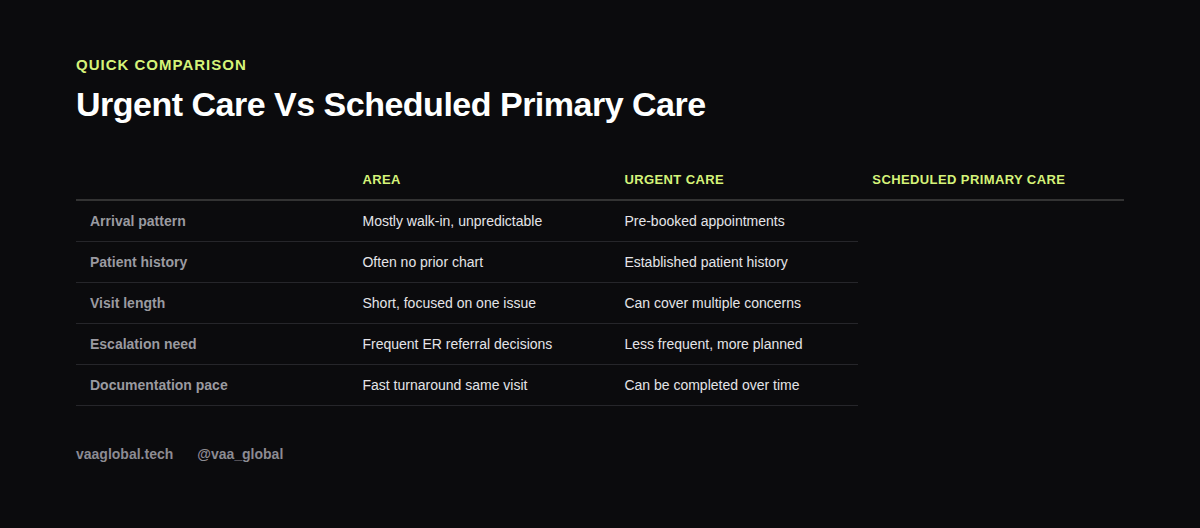
A medical virtual assistant for urgent care practices deals with a completely different rhythm than almost any other specialty, because most patients show up without an appointment, often with no prior history on file, and sometimes with a problem serious enough to need redirecting somewhere else entirely. If predictable scheduling is what you expect from medical VA work, urgent care will surprise you.
Walk-In Volume Replaces A Predictable Calendar
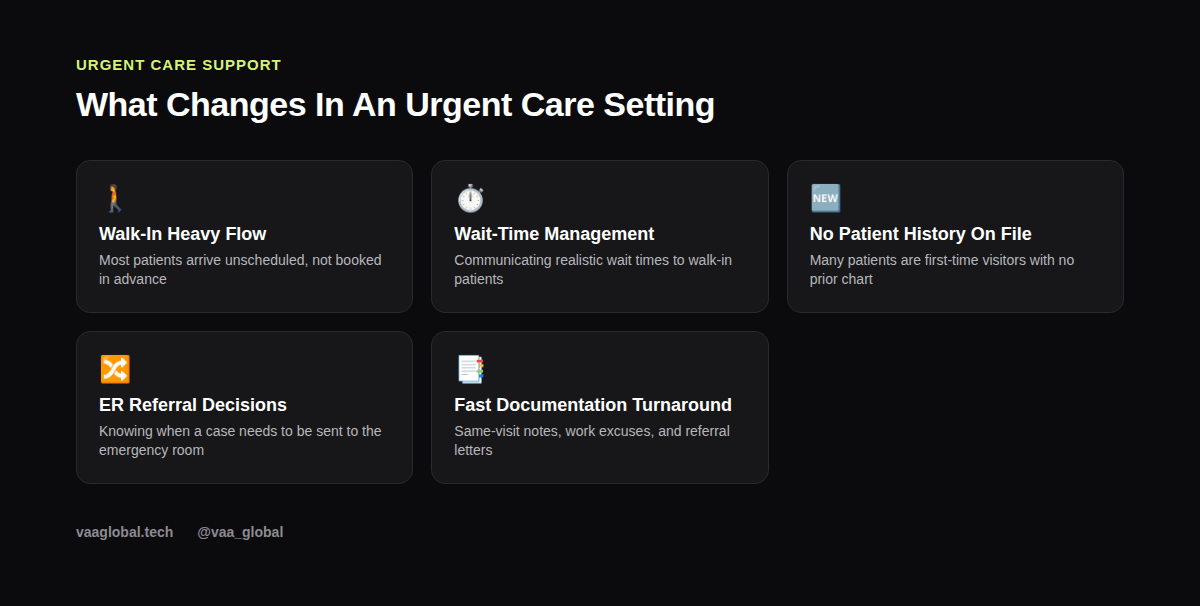
Most urgent care visits are unscheduled, which means the standard medical virtual assistant appointment scheduling guide only applies loosely here. As the medical virtual assistant for urgent care practices, your job shifts from booking slots to managing flow: keeping track of who is waiting, how long they have been waiting, and communicating that honestly rather than guessing or avoiding the question.
Wait-Time Communication Is A Skill Of Its Own
Patients in urgent care are often uncomfortable, worried, or in pain, and a vague "it shouldn't be too long" answer tends to frustrate people more than an honest estimate. Learning to give realistic wait-time updates, and knowing when to proactively check in with someone who has been waiting a while, builds directly on phone etiquette for patient calls, adapted for an in-the-moment, often anxious audience.
No Prior Chart Means Intake Has To Work Fast
Many urgent care patients are new to the practice entirely, with no existing medical record to reference. That means intake has to capture everything needed, basic history, allergies, current medications, quickly and accurately on the spot, since there is no earlier visit to fall back on. This is a faster-paced version of standard intake work that rewards clear, simple forms and efficient data entry.
Recognizing When A Case Needs The Emergency Room
Urgent care exists specifically to handle problems that are not quite emergencies, but some patients walk in with something more serious than they realize. Part of the front-line role in this specialty is recognizing red-flag symptoms that need a redirect to the ER, and doing that calmly without causing alarm. You are never making the final clinical call, but you are often the first person to notice something does not sound routine.
Documentation And Work Excuses Move Fast
Urgent care patients frequently need a same-visit work or school excuse note, and these requests cannot sit in a queue for days the way some paperwork can elsewhere. Processing these quickly, and routing them to the right provider for sign-off before the patient leaves, is a recurring same-day task that general medical virtual assistant daily tasks training does not fully prepare you for on its own.
Billing Gets Complicated By Walk-In Insurance Checks
Because patients are not scheduled in advance, insurance eligibility often needs to be verified on the spot rather than ahead of time. This real-time version of insurance verification has to happen fast enough not to hold up an already waiting patient, which is a noticeably different pace than verifying coverage days before a scheduled visit. The American College of Emergency Physicians offers public resources on when care is urgent versus emergent that are a useful reference for this distinction.
Common Questions New Hires Ask About This Specialty
People exploring this path often ask what does an urgent care medical virtual assistant do day to day, and the honest answer is mostly flow management, fast intake, and quick documentation rather than predictable scheduling. Others ask how urgent care handles patients without an appointment, and the short version is a walk-in queue managed with honest wait-time communication. A third common question is why urgent care sometimes sends patients to the ER, which comes down to recognizing symptoms that are more serious than the walk-in model is equipped to handle.
Why Wait-Time Management Deserves Its Own Process
Good urgent care wait time management is not just about giving an honest estimate once. It means checking in periodically, flagging when the estimate changes, and letting a patient know if something is taking longer than expected because a more urgent case came in ahead of them. Same-day documentation, from the visit note to a work excuse, also needs to keep pace with that same sense of urgency rather than lagging behind the patient's actual visit. ER referral decisions are the other side of this same urgency: when a walk-in case turns out to be more serious than urgent care is equipped to treat, a clear emergency room referral needs to happen quickly, and the intake form you filled out at check-in becomes the record that travels with the patient.
How This Differs From General Practice Support
If you have read about the differences between a specialty clinic and a general practice, urgent care is the clearest example of unpredictability itself becoming the main thing an MVA has to manage, rather than a specific body system or condition.
The Bottom Line
Working as a medical virtual assistant for urgent care practices means thriving in an unpredictable, fast-moving environment where wait-time honesty, quick intake, and knowing when to redirect a patient to the ER matter more than a tidy calendar. A beginner-friendly medical virtual assistant training course covering terminology, HIPAA, and EHR basics is still the right starting point before this faster pace becomes second nature.



