

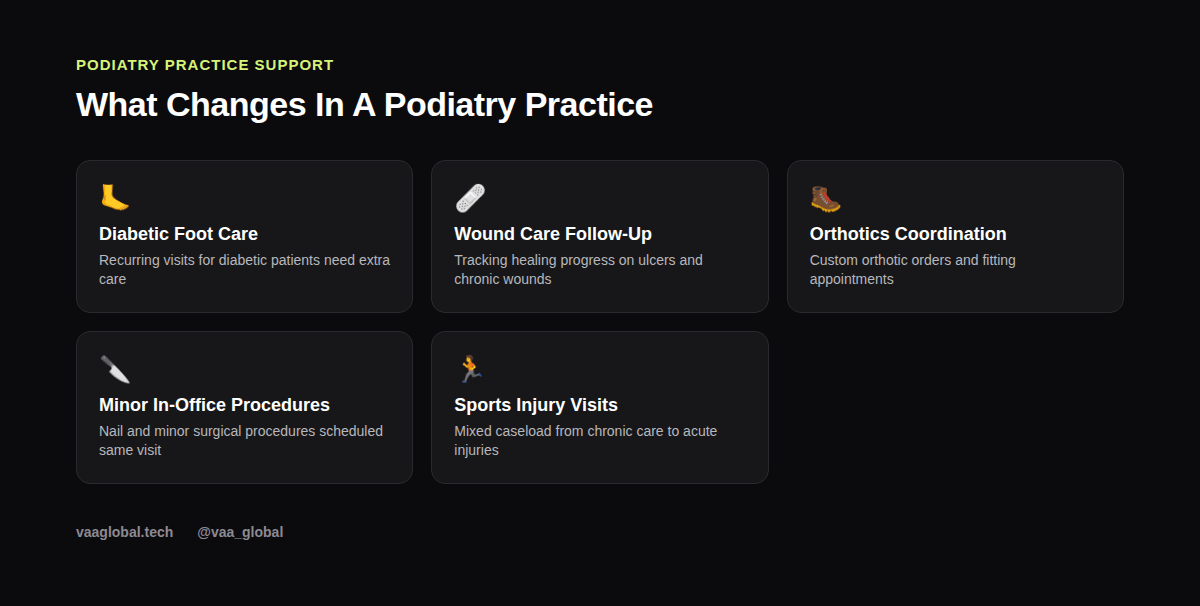
A medical virtual assistant for podiatry practices works with a more mixed patient caseload than you might expect, from diabetic patients needing recurring preventive foot care to younger patients coming in for a sports injury or an ingrown toenail. That mix is what makes the specialty interesting, and it changes how you schedule, document, and follow up with patients.
Diabetic Foot Care Runs On A Recall System, Not Just Requests
Diabetic patients are at higher risk of foot complications, so podiatry practices typically keep them on a recall schedule, routine visits every few months even when nothing seems wrong, to catch problems early. As the medical virtual assistant for podiatry practices, part of your job is proactively reaching out when a diabetic patient is overdue, rather than waiting for them to call in. This is a more preventive, outreach-driven version of the general medical virtual assistant appointment scheduling guide.
Wound Care Patients Need Closer, More Frequent Tracking
Patients with foot ulcers or other chronic wounds, often related to diabetes or poor circulation, are usually seen more frequently to monitor healing. Keeping a clear record of visit frequency and flagging when a wound care patient has gone too long without a check-in is an important safety net, since wound complications can escalate quickly if monitoring lapses.
Orthotics Add A Coordination Step Most Specialties Skip
Custom orthotics involve a multi-step process: a casting or scanning appointment, manufacturing time with an outside lab, and a fitting appointment once the orthotic arrives. A podiatry MVA often tracks where each patient's order is in that pipeline and schedules the fitting appointment proactively once the orthotic is ready, rather than leaving the patient to guess when to call back.
Minor In-Office Procedures Change The Visit Length
Podiatry includes a fair number of same-visit minor procedures, like ingrown toenail removal or wart treatment, which take longer than a standard checkup and need to be scheduled with that extra time in mind. Underestimating procedure time is an easy scheduling mistake that creates a backlog for the rest of the day.
Sports Injury Visits Bring A Different, Younger Caseload
Alongside the chronic-care patients, podiatry practices also see a steady stream of sports injuries, sprains, stress fractures, plantar fasciitis, often in younger, more active patients with different scheduling preferences and urgency than the diabetic recall population. A podiatry MVA has to switch comfortably between these two very different patient conversations in the same day.
Billing Spans Preventive, Medical, And Sometimes Cosmetic Care
Routine diabetic foot checks, wound care, and injury treatment are billed through standard medical insurance, but some podiatry services, like certain cosmetic nail procedures, fall outside typical coverage. This builds on the general medical billing tasks you would learn in any medical VA role, with an added awareness of what is and is not typically covered. The American Podiatric Medical Association publishes patient-facing foot health resources that are useful while learning this specialty's vocabulary.
Common Questions New Hires Ask About This Specialty
People exploring this path often ask what does a podiatry medical virtual assistant do day to day, and the honest answer is a mix of recall management, wound care tracking, and orthotic coordination rather than clinical foot care. Others ask why diabetic patients need such regular podiatry visits, and the short version is that early detection of foot problems prevents more serious complications. A third common question is how orthotic orders get coordinated, which comes down to tracking a multi-step process between the practice, the patient, and an outside manufacturing lab.
Patient Data Protection Still Matters Here Too
Diabetic status, wound history, and other podiatry records are health information covered by the same patient data protection rules that apply across every medical specialty. The main difference in podiatry is simply how often that information gets touched, since recall outreach and wound tracking mean you are referencing a diabetic patient's chart far more regularly than you would for a patient seen once a year.
How This Differs From General Practice Support
If you have read about the differences between a specialty clinic and a general practice, podiatry is a good example of a single specialty managing both preventive chronic care and acute injury visits side by side, which is different from the steadier pace of general medical virtual assistant daily tasks.
The Bottom Line
Working as a medical virtual assistant for podiatry practices means staying on top of recall schedules, wound care check-ins, and orthotic coordination while flexing to handle a mixed caseload of chronic and acute patients. A beginner-friendly medical virtual assistant training course covering terminology, HIPAA, and billing basics is a solid foundation before this specialty's rhythms become familiar.



