

A medical virtual assistant for physical therapy practices spends a lot of time tracking something most other specialties do not worry about as much: a hard cap on how many visits insurance will cover. Once you understand that constraint, most of the rest of this specialty's workflow makes sense.
Visit Caps Are The Defining Constraint

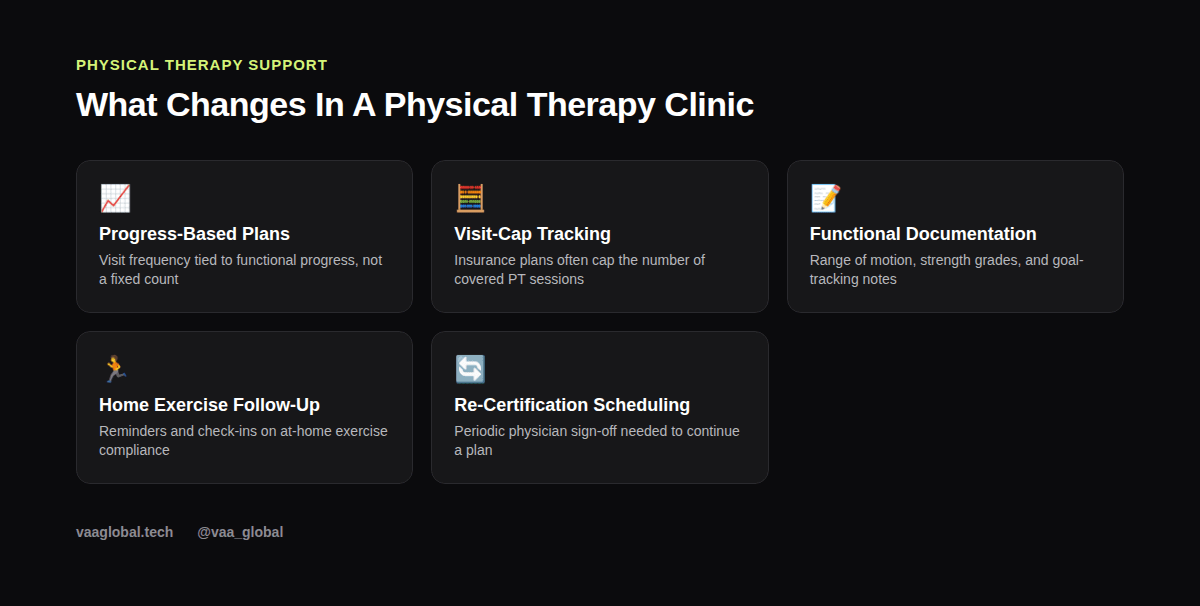
Most insurance plans authorize a specific number of physical therapy visits before requiring a renewal, and running out of authorized visits mid-treatment means the patient either pays out of pocket or pauses care. As the medical virtual assistant for physical therapy practices, one of your most valuable habits is keeping a running count against the authorized total and flagging it early, not when the patient is already at their last covered session. This builds directly on the general insurance verification process you would already know, with an added visit-counting layer.
Scheduling Follows Progress, Not A Fixed Count
Unlike a specialty with a predictable visit sequence, physical therapy plans are adjusted based on how the patient is actually progressing. A patient recovering faster than expected might be stepped down to fewer visits per week, while a slower recovery might need the opposite. This means the PT scheduling workflow needs more flexibility than the standard medical virtual assistant appointment scheduling guide describes, since the plan itself can change mid-course based on clinical judgment you are not making.
Home Exercise Follow-Up Is Part Of The Job
Physical therapy outcomes depend heavily on patients doing their prescribed exercises between visits, and clinics often want someone checking in on compliance, sending reminder messages, or following up after a missed home-exercise check-in. This is a softer, relationship-driven task that benefits from the same tone principles covered in phone etiquette for patient calls, adapted toward encouragement rather than scheduling logistics.
Functional Documentation Has Its Own Vocabulary
You will encounter terms like range of motion, strength grading, and functional goals in PT notes and progress reports. You are not measuring or recording these yourself, but recognizing the vocabulary helps you file documents correctly and understand what a "goals met" or "plan extended" note actually implies for scheduling going forward. The American Physical Therapy Association publishes patient education resources that are a useful plain-language reference for this vocabulary.
Physician Re-Certification Keeps The Plan Valid
Many insurance plans require a referring physician to re-certify a physical therapy plan after a set period, confirming continued medical necessity. Missing this step can interrupt coverage even when visits are still available under the cap, so a PT-focused MVA tracks re-certification deadlines just as closely as the visit count itself.
Billing And Coding Nuances Specific To PT
Physical therapy billing often involves time-based codes, where the length of treatment matters for what gets billed, alongside codes for specific modalities like manual therapy or therapeutic exercise. This sits on top of the general medical billing tasks you would learn in any medical VA role, with PT-specific detail layered in once you are working in the specialty.
Common Questions New Hires Ask About This Specialty
People exploring this path often ask what does a physical therapy medical virtual assistant do day to day, and the honest answer centers on visit-cap tracking, scheduling adjustments, and patient follow-up rather than clinical treatment. Others ask how do insurance visit limits work for physical therapy, and the short version is that most plans authorize a fixed number of sessions that needs renewal through re-certification. A third common question is why do physical therapy appointments change frequency, which comes down to the plan being adjusted as the patient's actual progress unfolds.
Documenting Visit Authorization Clearly Matters
Every approved plan comes with a visit authorization number and a set count of sessions, and that detail needs to be visible wherever scheduling and billing staff can see it, not buried in a separate note. A clear, shared record of the current visit authorization avoids the awkward situation of a patient arriving for a session that insurance will not actually cover, which is one of the fastest ways to damage trust with a patient already managing pain or an injury.
How This Differs From General Practice Support
If you have read about the differences between a specialty clinic and a general practice, physical therapy is a strong example of insurance rules, not just clinical need, driving the shape of the schedule. The underlying medical virtual assistant daily tasks stay familiar, but visit-cap awareness becomes a genuinely specialized skill here.
The Bottom Line
Working as a medical virtual assistant for physical therapy practices means becoming the person who keeps visit caps, re-certifications, and progress-based scheduling changes from quietly derailing a patient's plan. It is a specialty built on careful tracking rather than complex clinical knowledge, and a beginner-friendly medical virtual assistant training course gives you the terminology and billing foundation to start learning the rest.



