

A medical virtual assistant for pediatric practices has to think about the patient and the parent at the same time, because almost nothing in a children's clinic happens without a guardian involved. If you are building your skills toward this kind of work, understanding that dual relationship early will save you a lot of confusion later.
The Parent Is Your Primary Contact, Not The Patient
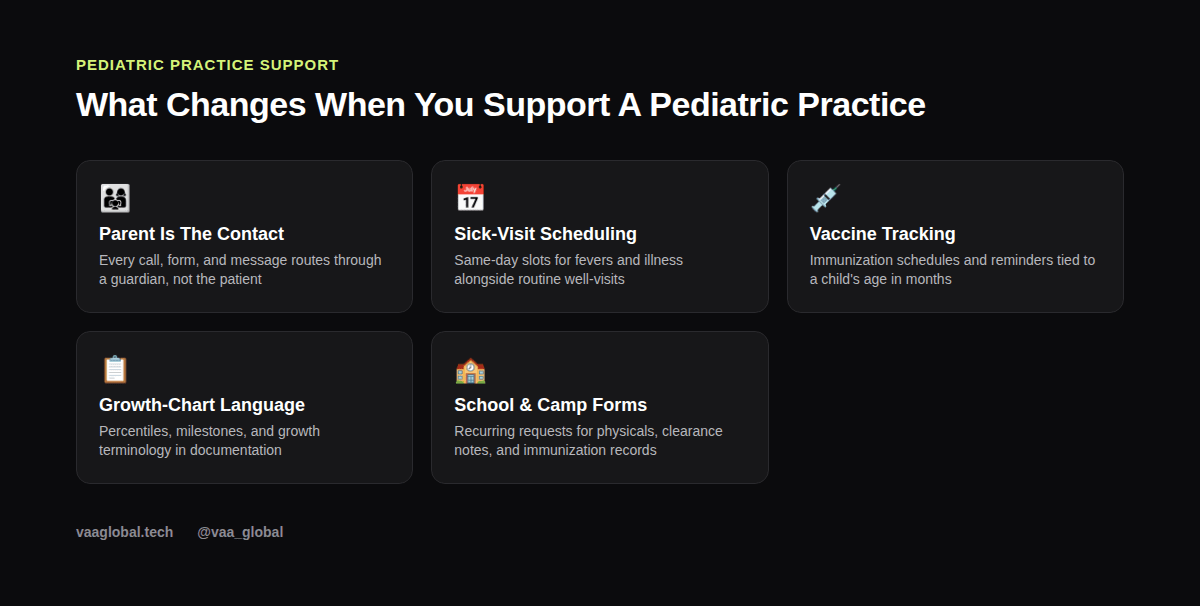
In adult practices, you are usually emailing or calling the patient directly. In a pediatric setting, that almost never happens with younger children. A parent or legal guardian books the appointment, answers the intake questions, receives the reminder, and gets the after-visit summary. As an MVA, you need to confirm who has legal authority to receive information about a child, especially in cases of divorced parents, foster care, or shared custody, before you share anything by phone or email. This is one of the more subtle parts of patient data protection that a new hire can miss if nobody walks them through it on day one.
Scheduling Is Built Around Sick Visits And Well Visits
Pediatric scheduling usually runs on two tracks. Well visits are the predictable, age-based checkups tied to a child's growth and vaccine schedule, and they can be booked weeks out. Sick visits are the opposite: a parent calls in the morning because their child has a fever or an earache and needs to be seen the same day. A pediatric virtual assistant has to protect same-day slots for sick visits without starving the well-visit calendar, which is a different balancing act than general appointment scheduling in an adult practice. Getting comfortable with this rhythm is easier if you have already worked through a general medical virtual assistant appointment scheduling guide and then layer the sick-visit logic on top.
Immunization Tracking Is A Core, Recurring Task
Vaccine schedules are tied to a child's age in months, not just their date of birth, and parents frequently ask whether their child is "on schedule" or whether a specific shot can be delayed or combined with another visit. You do not need to be a clinician to help here, but you do need to recognize vaccine names, understand that schedules are sequenced, and know when a question needs to be escalated to a nurse or provider rather than answered yourself. Many new MVAs underestimate how much of their inbox in a pediatric office is immunization-related.
Growth Charts And Milestone Language Show Up In Documentation
Pediatric charts reference percentiles, growth curves, and developmental milestones in a way adult charts simply do not. You will see terms like "weight for age percentile" or references to a child "meeting milestones" in visit notes you may be asked to summarize or file. You are not interpreting these clinically, but recognizing the vocabulary helps you file, route, and respond to requests correctly instead of flagging normal pediatric language as unusual or urgent.
School, Camp, And Sports Forms Are A Constant Request Stream
Expect a steady flow of requests for sports physicals, camp clearance forms, and school immunization records, often with a tight deadline attached because a parent needs the form before registration closes. These requests are rarely clinically complex, but they are time-sensitive and paperwork-heavy, and a pediatric MVA who builds a simple tracking system for them earns a lot of goodwill from both the front desk and the parents.
Communication Tone Needs To Be Reassuring, Not Just Efficient
A parent calling about their child's fever is often anxious, even when the situation is mild. The way you phrase a callback message or a reminder matters more in pediatrics than in most other specialties, because you are managing a worried adult's emotions on behalf of a patient who cannot advocate for themselves. This is a good place to revisit phone etiquette for patient calls and adapt it specifically for parent callers rather than adult patients describing their own symptoms. The American Academy of Pediatrics publishes family-facing guidance on common childhood illnesses that is worth skimming so you recognize the vocabulary parents use when they call in worried.
Consent And Confidentiality Get More Complicated As Kids Get Older
Once a patient reaches adolescence, some practices start carving out confidential space for certain topics, and consent rules can shift depending on state or regional policy and the practice's own protocols. As an MVA you are not making legal calls here, but you should know that "who can access this child's records" is not always a fixed answer, and when in doubt you escalate to the clinical or office manager rather than guessing.
How This Differs From General Practice Support
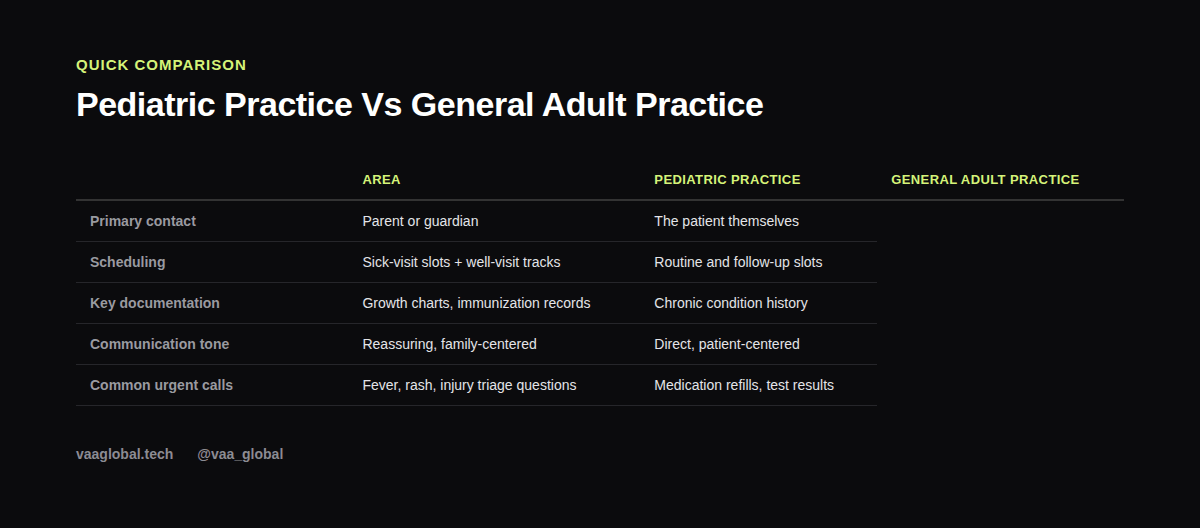
If you have already read about the differences between a specialty clinic and a general practice, pediatrics is a clear example of how a specialty reshapes nearly every task, from who answers the phone questions to what counts as a documentation-ready chart. The core medical virtual assistant daily tasks stay recognizable, but the context around them is entirely different.
What To Know Going In If You Want This Specialty
If you are specifically interested in medical virtual assistant for pediatric practices roles, focus your preparation on three things: comfort talking with worried parents, basic familiarity with vaccine schedule terminology, and strong organizational habits for recurring paperwork like school forms. None of this requires a clinical background. A structured medical virtual assistant training course that covers medical terminology, HIPAA, and EHR basics gives you the foundation, and pediatric-specific comfort builds quickly once you are handling real parent calls and messages. If you want a sense of how this specialty fits into the bigger career picture, the medical virtual assistant career path after two years is worth a read too.
The Bottom Line
Working as a medical virtual assistant for pediatric practices means getting comfortable being the calm, organized bridge between a worried parent and a busy clinical team, while keeping vaccine schedules, growth-chart language, and a constant stream of school forms moving without errors. It is a specialty with its own rhythm, but it is absolutely learnable with the right training and a genuine patience for parent communication.



