

A medical virtual assistant for orthopedic practices spends a surprising amount of time coordinating things that happen outside the exam room entirely, imaging centers, surgical facilities, employers, and insurers, because orthopedic care rarely stays contained to one visit or one provider. Understanding that web of coordination is what makes this specialty distinct.
Imaging Often Needs To Happen Before The Visit
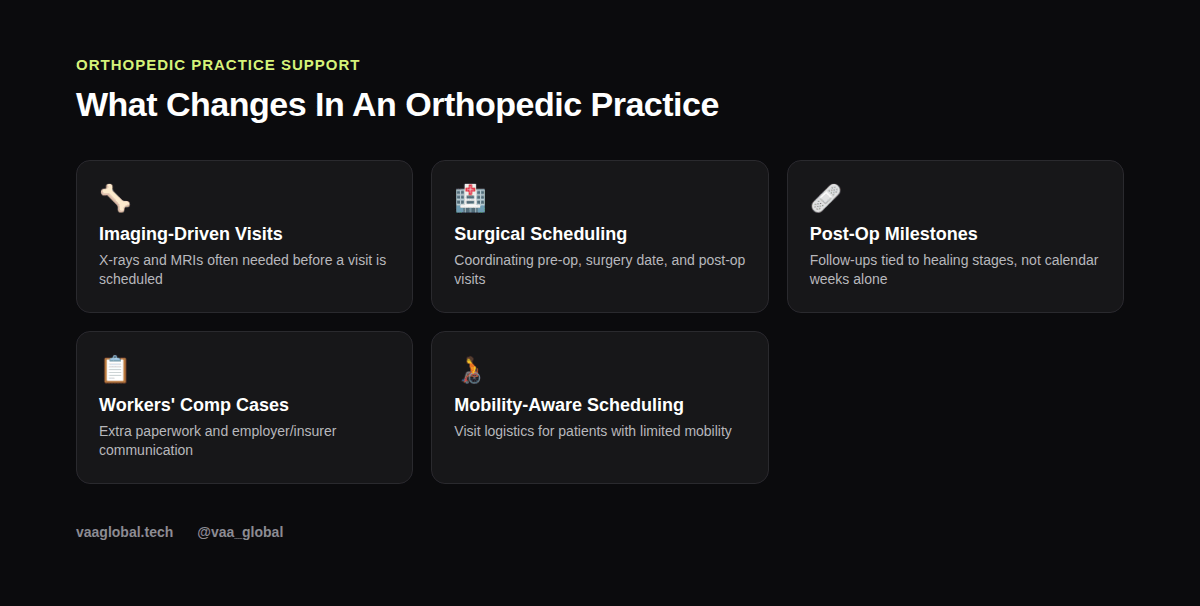
Unlike many specialties where the visit comes first and imaging follows if needed, orthopedic practices frequently want an X-ray or MRI completed before the appointment so the provider can review it during the visit itself. As the medical virtual assistant for orthopedic practices, part of your scheduling job is making sure imaging is booked and results are back in time, not treating imaging as an afterthought scheduled after the fact. This is a more sequence-dependent version of the general medical virtual assistant appointment scheduling guide.
Surgical Timelines Need Careful Coordination
When a patient needs surgery, there is a whole sequence to manage: pre-op clearance, the actual surgery date coordinated with a facility, and a series of post-op visits tied to healing milestones rather than fixed calendar weeks. Missing a step in this sequence can delay a surgery or leave a post-op patient without a needed follow-up, so orthopedic MVAs tend to build very deliberate tracking habits around each surgical case.
Workers' Compensation Cases Add A Distinct Paperwork Layer
A meaningful share of orthopedic patients are being treated for work injuries, which brings in employer communication, insurer-specific forms, and documentation requirements beyond standard medical billing. This sits on top of the usual medical billing tasks you would handle anywhere, with an added layer of third-party reporting that general practices rarely deal with at this volume.
Mobility Limitations Shape How You Schedule
Patients recovering from fractures or joint surgery often arrive on crutches, in a wheelchair, or with limited transportation options, which can affect how early they need to arrive, whether they need help checking in, or whether a visit should be scheduled for a more accessible time slot. Keeping this in mind when booking is a small but genuinely useful habit that general scheduling training does not always cover.
Documentation Leans On Injury And Recovery Language
Terms like fracture, reduction, range of motion, and weight-bearing status show up constantly in orthopedic notes. You are not interpreting these clinically, but recognizing the vocabulary helps you understand what a "non-weight-bearing" restriction note actually means for a patient's work release form or school excuse. The American Academy of Orthopaedic Surgeons publishes patient education resources that are a useful plain-language reference for this vocabulary.
Work And Activity Restriction Notes Are Frequent Requests
Orthopedic patients regularly need documentation for their employer or school confirming activity restrictions, like no lifting over a certain weight or no weight-bearing on an injured leg. Processing these requests promptly, and routing them to the right provider for sign-off, keeps patients from losing income or missing deadlines tied to their recovery.
Common Questions New Hires Ask About This Specialty
People exploring this path often ask what does an orthopedic medical virtual assistant do day to day, and the honest answer centers on imaging coordination, surgical timeline tracking, and paperwork management rather than clinical care. Others ask how workers' compensation cases are handled in orthopedics, and the short version is extra employer and insurer communication layered on top of standard billing. A third common question is why orthopedic visits often require imaging first, which comes down to the provider needing to see the X-ray or MRI to plan the visit effectively.
Durable Medical Equipment Requests Come Up Regularly
Braces, slings, walkers, and crutches often need to be ordered or authorized through insurance after an injury or surgery, and an orthopedic MVA frequently handles the paperwork that connects a provider's order to a durable medical equipment supplier. Confirming insurance coverage for this equipment ahead of time, instead of after the patient shows up expecting it, saves everyone a frustrating delay during an already difficult recovery period.
How This Differs From General Practice Support
If you have read about the differences between a specialty clinic and a general practice, orthopedics is a strong example of external coordination, imaging centers, surgical facilities, employers, reshaping the standard medical virtual assistant daily tasks into something more logistics-heavy.
The Bottom Line
Thriving as a medical virtual assistant for orthopedic practices means becoming comfortable coordinating imaging, surgical timelines, and paperwork across several outside parties at once, while keeping each patient's recovery on track. A beginner-friendly medical virtual assistant training course covering terminology, HIPAA, and billing basics is a strong foundation before this specialty's logistics become second nature.



