
A medical virtual assistant for ophthalmology practices has to understand a split that confuses a lot of new patients: the difference between a medical eye exam and a routine vision check for glasses or contacts. Getting this distinction right shapes scheduling, billing, and even which insurance a visit runs through.
Medical Versus Routine Vision Visits Need Different Handling
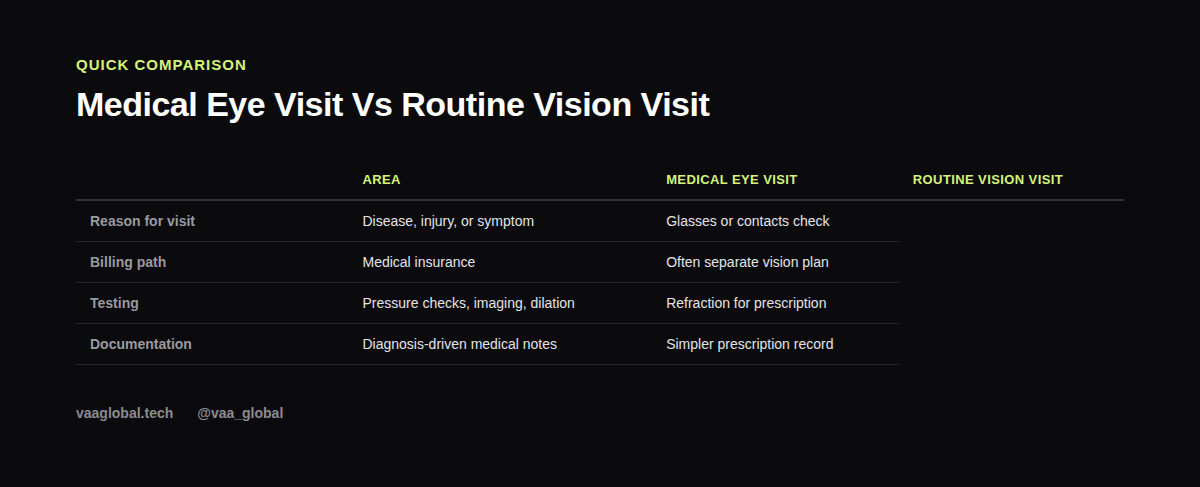
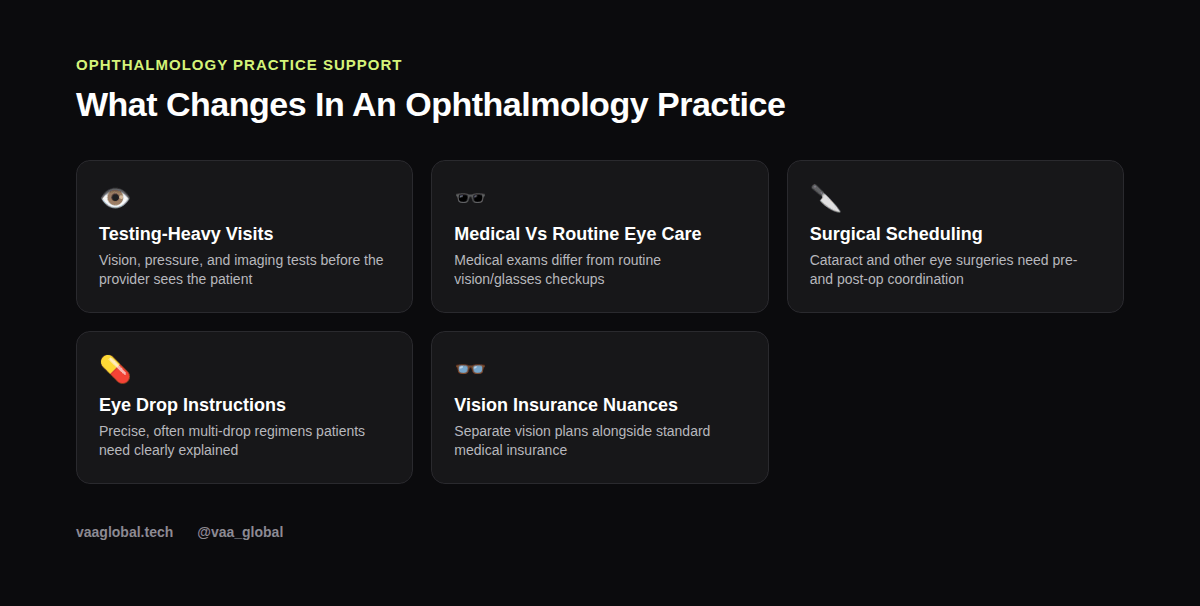
A patient coming in because of a medical concern, like sudden vision changes, eye pain, or a diagnosed condition such as glaucoma, is billed through standard medical insurance. A patient coming in just to update their glasses or contacts prescription is often billed through a separate vision plan instead. As the medical virtual assistant for ophthalmology practices, you need to ask the right triage question upfront, because booking the wrong visit type creates billing headaches later that are hard to untangle.
Visits Are Often Testing-Heavy Before The Provider Even Appears
Many ophthalmology visits start with a series of tests, visual acuity, eye pressure, sometimes imaging or dilation, all completed by technicians before the ophthalmologist sees the patient. Scheduling needs to account for this testing time, not just the time with the provider, which is a different calculation than the simpler single-block logic in a general medical virtual assistant appointment scheduling guide.
Surgical Coordination For Procedures Like Cataract Surgery
Cataract surgery and other eye procedures follow a similar coordination pattern to other surgical specialties: pre-op measurements and clearance, the surgery date itself, and post-op follow-ups at set intervals to check healing. Keeping this timeline organized, and making sure pre-op testing results are in the chart before the surgery date, is a recurring responsibility that rewards careful tracking over improvisation.
Eye Drop Instructions Need To Be Explained Clearly
Post-surgical and chronic condition patients are often prescribed multiple eye drops with different timing and sequencing requirements, which can be genuinely confusing. While the clinical team writes the actual instructions, an ophthalmology MVA frequently reinforces them in follow-up messages or appointment reminders, making sure a patient understands which drop goes in when rather than mixing up a regimen that was explained quickly during a busy visit.
Vision Insurance Adds A Layer Most Specialties Don't Have
Because routine vision visits can run through a separate vision insurance plan rather than standard medical coverage, an ophthalmology MVA needs comfort with two different verification processes rather than just one. This builds on general insurance verification skills, with an added branch depending on why the patient is actually being seen.
Terminology Specific To Eye Care Shows Up Constantly
Terms like intraocular pressure, dilation, refraction, and visual acuity appear regularly in notes and scheduling instructions. The American Academy of Ophthalmology publishes patient education materials that are a solid plain-language reference for learning this vocabulary before you encounter it on a live call or chart.
Common Questions New Hires Ask About This Specialty
People exploring this path often ask what does an ophthalmology medical virtual assistant do day to day, and the honest answer is a mix of visit-type triage, testing coordination, and surgical scheduling rather than clinical eye care. Others ask how vision insurance is different from medical insurance for eye visits, and the short version is that routine vision checks often run through a separate plan while medical eye concerns run through standard medical coverage. A third common question is why cataract surgery scheduling takes extra coordination, which comes down to the pre-op testing and post-op follow-up intervals that need to be tracked precisely.
Documentation And Patient Data Protection Still Apply
Eye care records are health information like any other specialty's charts, and the same patient data protection habits you would build anywhere apply here too. The twist in ophthalmology is simply that you are juggling two record types, medical and vision, and keeping them properly separated so billing and documentation line up with the correct insurance path for each visit, which avoids the rework that comes from a claim being submitted under the wrong coverage type.
How This Differs From General Practice Support
If you have read about the differences between a specialty clinic and a general practice, ophthalmology is a clear example of one specialty actually containing two different patient journeys, medical and routine vision, under a single roof.
The Bottom Line
Succeeding as a medical virtual assistant for ophthalmology practices means getting comfortable separating medical and routine vision visits, coordinating testing-heavy appointments, and keeping surgical timelines and eye drop instructions clear for patients. A beginner-friendly medical virtual assistant training course covering terminology, HIPAA, and billing basics is a solid place to start before this specialty's details become familiar.



