
A medical virtual assistant for oncology practices takes on a kind of emotional weight that most other specialties do not carry in the same way, because nearly every call touches a patient or family dealing with a cancer diagnosis. The logistics of the job, scheduling, lab coordination, insurance, matter just as much as in any other specialty, but the human side of each interaction needs a different level of care.
Emotionally Difficult Calls Are A Daily Reality
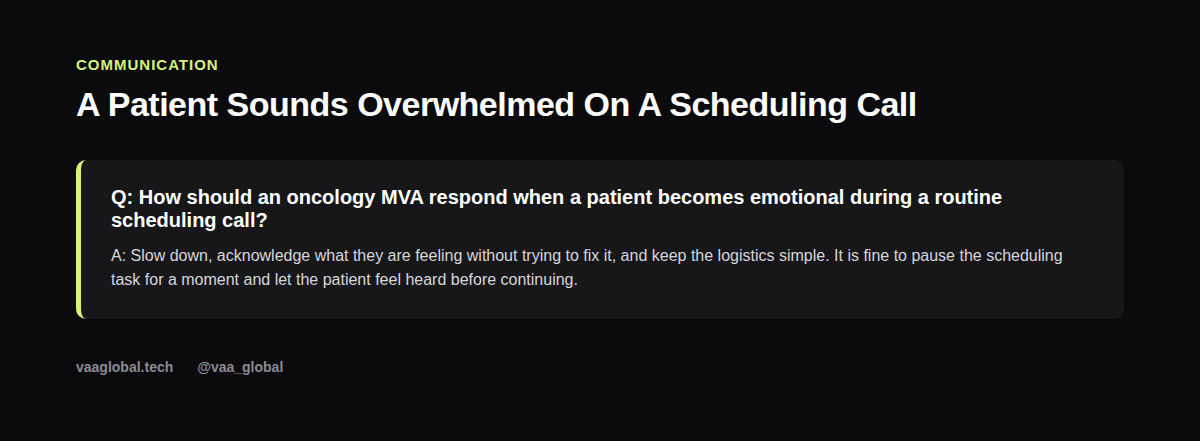
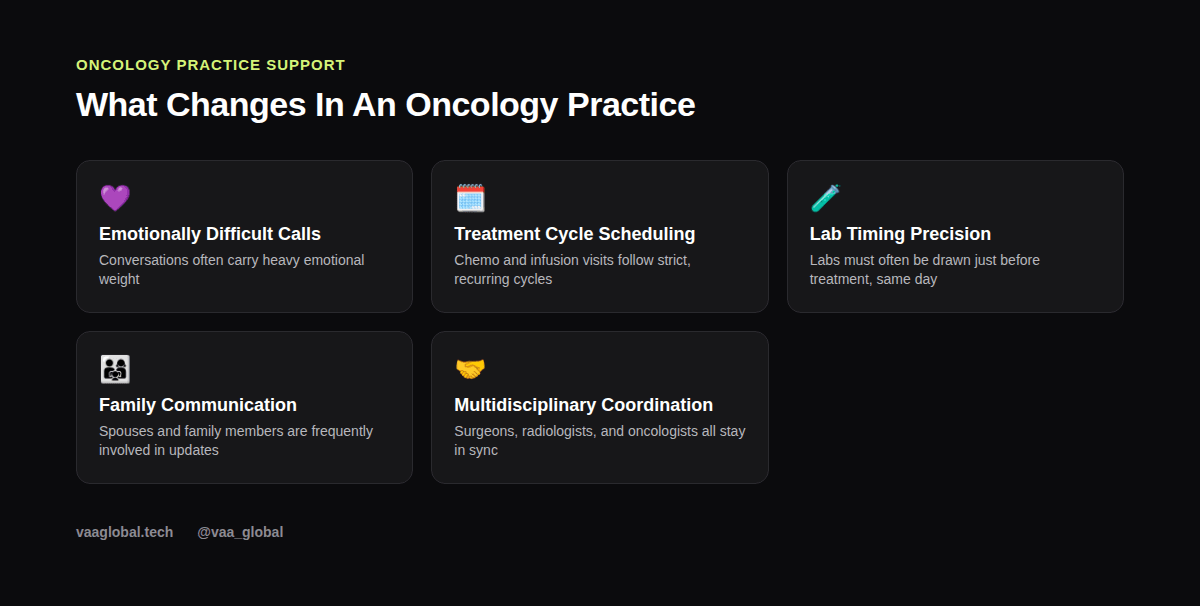
A simple scheduling call in oncology can turn emotional fast, a patient worried about results, a family member asking questions out of fear rather than logistics. As the medical virtual assistant for oncology practices, you need patience and a calm, steady tone more than almost any other specialty requires. This is an intensified version of phone etiquette for patient calls, where the goal shifts from efficiency to making a frightened person feel heard while still getting the logistics handled.
Treatment Cycles Dictate A Strict Scheduling Rhythm
Chemotherapy and infusion treatments typically follow a fixed cycle, every two or three weeks, for example, and missing or delaying a scheduled cycle can affect treatment effectiveness. Scheduling in oncology is far less flexible than the general medical virtual assistant appointment scheduling guide describes, because the cycle timing itself is part of the clinical plan, not just a convenient slot on the calendar.
Labs Often Need To Be Drawn The Same Day, Just Before Treatment
Many oncology treatments require fresh labs, often the same day, to confirm the patient's blood counts are safe for that cycle's treatment. Coordinating lab timing precisely, and flagging quickly if a result delays or changes a treatment plan, is one of the more time-sensitive tasks in this specialty, and it needs tighter coordination than most routine lab follow-up elsewhere.
Family Members Are Often Part Of The Communication Loop
Cancer treatment affects a whole family, and spouses, adult children, or caregivers are frequently involved in appointments, questions, and updates. At the same time, consent still matters: an oncology MVA needs to confirm who is authorized to receive specific information, especially test results, before sharing anything, which connects directly to broader patient data protection habits applied in a more emotionally charged setting.
Multidisciplinary Coordination Is The Norm, Not The Exception
Cancer care usually involves more than one specialist, a surgeon, a radiation oncologist, a medical oncologist, working together on the same patient. An oncology MVA often helps keep appointments, test results, and care plan updates moving between these providers so nothing falls through the cracks in a case where timing can genuinely matter.
Terminology Specific To Oncology Comes Up Constantly
Terms like remission, staging, infusion, and biopsy results appear regularly in notes and patient questions. The American Society of Clinical Oncology publishes patient-facing cancer care resources that are a genuinely useful, carefully worded reference for learning this vocabulary respectfully.
Common Questions New Hires Ask About This Specialty
People exploring this path often ask what does an oncology medical virtual assistant do day to day, and the honest answer is a mix of careful scheduling, lab coordination, and emotionally aware communication rather than clinical treatment decisions. Others ask how treatment cycle scheduling works in oncology, and the short version is that visits follow a strict, clinically determined rhythm that cannot be moved casually. A third common question is how to talk to patients about a cancer diagnosis, and the honest answer is that an MVA is not explaining the diagnosis itself, but is often the calm, steady voice helping with everything logistical around it.
Protecting Your Own Wellbeing Matters Too
Supporting patients through cancer treatment every day can take a real emotional toll on the person doing the supporting, and that includes you. Many experienced oncology support staff build small habits, a short pause between difficult calls, talking things through with a colleague, to avoid carrying one patient's hard day into the next conversation. This is not a weakness to push through silently, it is a normal and expected part of working in this specialty long-term.
How This Differs From General Practice Support
If you have read about the differences between a specialty clinic and a general practice, oncology is the clearest example of emotional skill mattering just as much as logistical skill, well beyond the steadier pace of general medical virtual assistant daily tasks.
The Bottom Line
Working as a medical virtual assistant for oncology practices means pairing careful treatment-cycle scheduling and lab coordination with real compassion for patients and families going through one of the hardest experiences of their lives. A beginner-friendly medical virtual assistant training course covering terminology, HIPAA, and EHR basics is a solid starting point, and emotional steadiness is something worth deliberately practicing before stepping into this specialty.



