
A medical virtual assistant for OB-GYN practices has to move faster and more carefully than in most other specialties, because a share of the patients on any given day are pregnant, and a share of the calls that come in could be genuinely urgent. Getting comfortable with that mix of routine and urgent is the core skill in this specialty.
Prenatal Visits Follow A Predictable But Accelerating Schedule
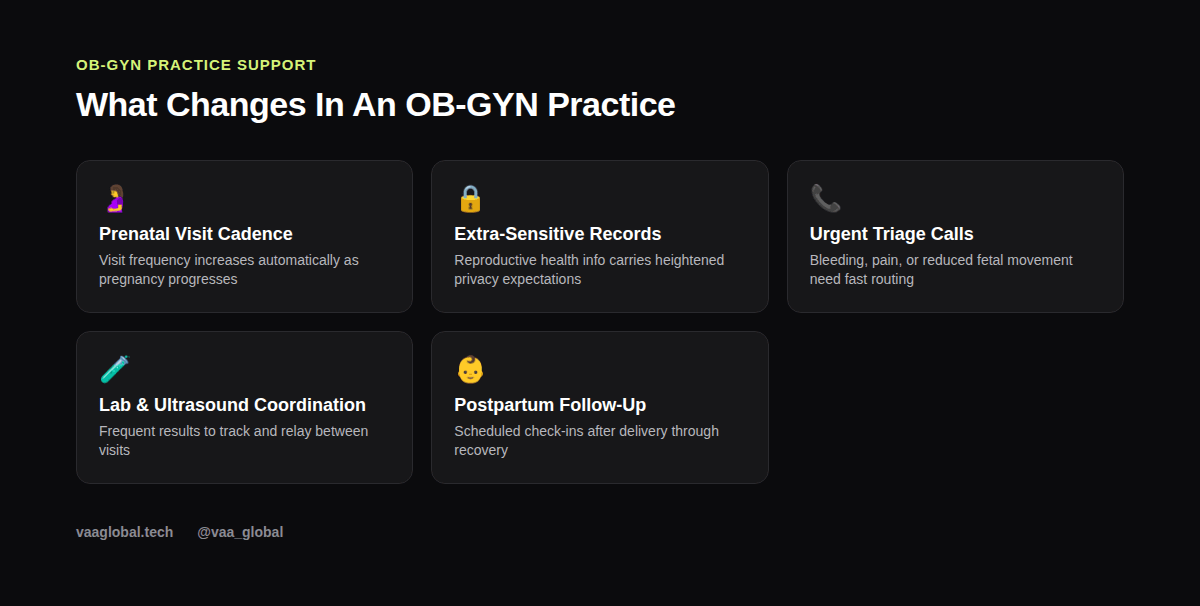
Pregnant patients typically move through a well-known visit cadence, monthly early on, then every two weeks, then weekly as they approach delivery. As the medical virtual assistant for OB-GYN practices, you need to know this pattern well enough to schedule the next visit correctly without waiting for the provider to specify it every single time. It is a more rigid and faster-moving version of the general medical virtual assistant appointment scheduling guide most medical VAs learn first.
Call Triage Has Real Stakes

Not every call from a pregnant patient is routine, and a handful of symptoms, heavy bleeding, severe abdominal pain, or reduced fetal movement, need to be escalated immediately rather than scheduled into a normal callback queue. You are not making clinical judgments, but you are the first point of contact who decides whether a message waits for the afternoon or gets flagged right now. This builds on phone etiquette for patient calls, with a sharper escalation layer added on top.
Lab And Ultrasound Results Arrive Constantly
OB-GYN patients generate a steady stream of labs and imaging, routine prenatal bloodwork, glucose screening, anatomy scans, and more, and someone needs to track which results have come in, which are still pending, and which need a provider's attention before being released to the patient. This coordination role sits close to general insurance verification work in spirit, since both require careful tracking of time-sensitive items across many patients at once.
Reproductive Health Records Carry Extra Privacy Weight
Information about pregnancy, fertility treatment, or reproductive health in general is considered especially sensitive by most patients, and in some regions carries additional legal protections beyond standard health privacy rules. A good grasp of patient data protection fundamentals matters in every medical VA role, but OB-GYN raises the stakes further, particularly around who is allowed to receive updates about a patient's pregnancy status.
Postpartum Follow-Up Is Its Own Scheduling Track
After delivery, patients move into a postpartum follow-up schedule, typically a check-in within the first couple of weeks and another around six weeks out. Keeping this track separate from the prenatal schedule, and not letting postpartum patients fall through the cracks after the excitement of delivery has passed, is a task that is easy to overlook if nobody owns it deliberately.
Terminology Specific To OB-GYN Shows Up Everywhere
Terms like gestational age, trimester, prenatal panel, and postpartum check will appear constantly in scheduling notes and charts. The American College of Obstetricians and Gynecologists publishes patient education materials that are a solid plain-language starting point for learning this vocabulary before you need it on a live call.
Common Questions New Hires Ask About This Specialty
People exploring this path often ask what does an OB-GYN medical virtual assistant do day to day, and the honest answer is a mix of fast-moving scheduling, careful call triage, and heavy lab coordination rather than clinical care. Others ask how urgent OB-GYN symptoms get handled over the phone, and the short version is that certain red-flag symptoms get escalated immediately rather than placed in a normal callback queue. A third common question is why OB-GYN visit frequency increases during pregnancy, which comes down to monitoring both mother and baby more closely as the due date approaches.
Gynecological Visits Add A Second Patient Population
Not every patient in an OB-GYN practice is pregnant. Routine gynecological care, annual exams, contraception counseling, and fertility concerns run alongside the obstetric caseload, and each type of visit needs its own scheduling logic and intake questions. A medical virtual assistant working here learns to quickly tell which track a patient belongs to before booking, since a routine annual exam and a prenatal visit are not interchangeable even though they happen in the same office, and mixing them up on the calendar wastes the provider's time and confuses the patient.
How This Differs From General Practice Support
If you have read about the differences between a specialty clinic and a general practice, OB-GYN is one of the clearest examples of urgency and routine care sitting side by side in the same schedule, which is different from the steadier pace of many medical virtual assistant daily tasks elsewhere.
The Bottom Line
Succeeding as a medical virtual assistant for OB-GYN practices means staying calm under a faster pace, recognizing which calls need to be escalated immediately, and keeping prenatal, lab, and postpartum tracks organized without letting anything slip. A beginner-friendly medical virtual assistant training course covering terminology, HIPAA, and EHR basics gives you a strong starting point before you specialize further.



