
A medical virtual assistant for dermatology practices has to juggle two very different kinds of visits under one roof: medically necessary skin checks covered by insurance, and elective cosmetic procedures that patients pay for out of pocket. If you are considering this specialty, that split is the first thing to understand, because it changes scheduling, billing, and even the tone of your messages.
Two Visit Types Mean Two Scheduling And Billing Paths
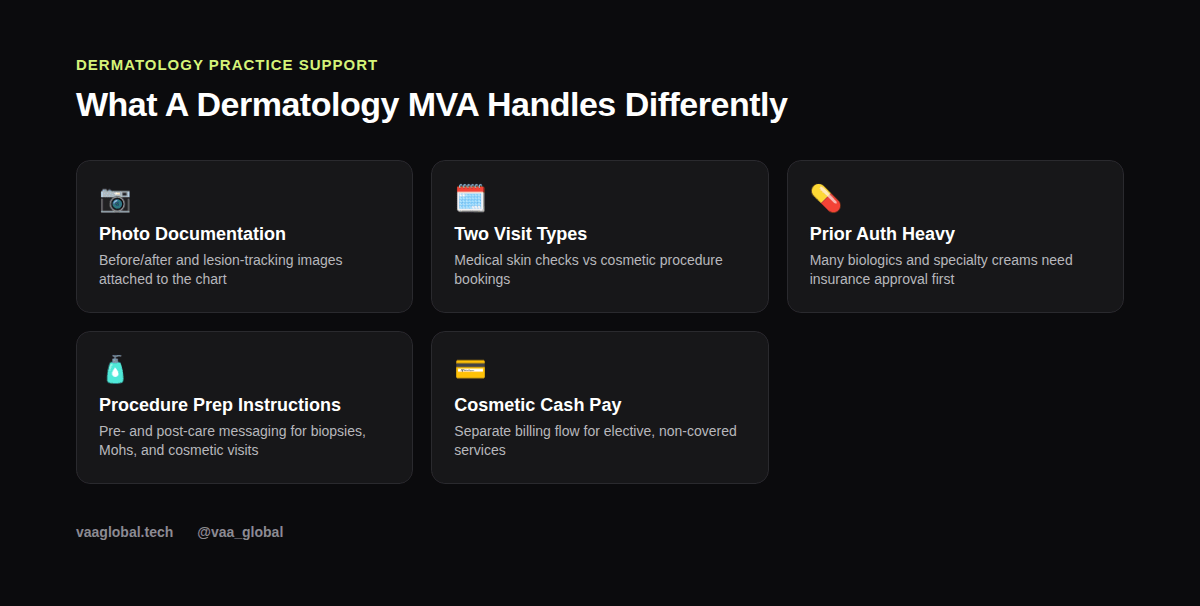
A dermatology office runs medical visits, like mole checks, eczema follow-ups, or biopsy results, alongside cosmetic visits, like Botox, filler, or laser treatments. Medical visits go through insurance; cosmetic visits are typically cash-pay or card-on-file. As the medical virtual assistant for dermatology practices, you need to know which bucket a call falls into before you even open the scheduling screen, because booking a cosmetic consult into a medical slot (or the reverse) throws off the provider's whole day. This is a more pronounced version of the general medical virtual assistant appointment scheduling guide principles, just split across two distinct patient journeys.
Prior Authorization Comes Up More Than In Many Other Specialties
Biologic medications for conditions like psoriasis or severe eczema, along with certain specialty creams, frequently require insurance sign-off before a pharmacy will fill them. That means a dermatology MVA spends real time on the prior authorization process, following up with insurers, and letting patients know when a medication is delayed pending approval. Pairing this with a solid grasp of insurance verification basics makes the whole workflow much smoother.
Photo Documentation Is Part Of The Chart
Dermatology relies heavily on visual tracking: before-and-after photos for cosmetic procedures, and lesion or rash photos taken over time to monitor change. You are not taking or interpreting these photos, but you may be responsible for confirming they were uploaded to the chart correctly, flagging missing images ahead of a follow-up visit, or helping a patient understand how to submit a photo securely through a patient portal rather than texting it.
Pre- And Post-Procedure Instructions Need To Go Out On Time
Biopsies, Mohs surgery, and many cosmetic procedures come with specific pre-visit instructions, like stopping certain supplements, and post-visit care guidance, like wound care or avoiding sun exposure. Sending these at the right time, and confirming the patient actually received and understood them, is a recurring task that directly affects how smoothly a visit goes and how few confused callback calls land on the clinical team's desk afterward.
Dermatology Terminology Has Its Own Vocabulary
You will encounter terms like lesion, biopsy, Mohs surgery, dermatitis, and various "-osis" and "-itis" condition names in notes and referral letters. You do not need to diagnose anything, but recognizing this vocabulary helps you route messages correctly and avoid mislabeling a routine dermatology term as an emergency, or missing one that actually needs faster attention. The American Academy of Dermatology maintains public-facing condition resources that are a genuinely useful reference while you are building this vocabulary.
Cash-Pay Cosmetic Billing Runs On A Different Track
Cosmetic consultations usually involve quoting a price, collecting a deposit or card on file, and handling cancellation policies that are stricter than typical medical visits, since the practice is holding a procedure slot that cannot be billed to insurance if the patient no-shows. This is a different skill set from the insurance-driven side of your medical billing tasks, and a dermatology MVA has to be comfortable switching between both.
Referral Intake Needs A Clear Triage Step
Dermatology practices get a steady stream of referrals from primary care for "something on the skin," and these referrals vary wildly in urgency, from a cosmetic mole concern to a lesion that needs to be seen quickly. Building a simple intake habit, confirming visit type and urgency before scheduling, keeps the calendar honest and keeps truly time-sensitive cases from getting buried behind routine bookings.
Common Questions New Hires Ask About This Specialty
People exploring this path often ask what does a dermatology medical virtual assistant do on a typical day, and the honest answer is a mix of scheduling, insurance follow-up, and message triage rather than anything clinical. Others want to know how do dermatology offices handle cosmetic billing, and the short version is a separate cash-pay flow with deposits and firmer cancellation rules. A third common question is why do dermatology medications need prior authorization so often, and that comes down to the cost and specificity of biologic drugs used for chronic skin conditions. Getting comfortable answering these questions for yourself, before a hiring manager asks them, is a good sign you are ready for the role.
How This Compares To General Practice Support
If you have looked at the differences between a specialty clinic and a general practice before, dermatology is a strong example of a specialty with two distinct patient populations sharing one clinic. The underlying medical virtual assistant daily tasks, like confirming appointments and managing messages, stay the same in shape, but the content behind them is specific to skin medicine.
The Bottom Line
Succeeding as a medical virtual assistant for dermatology practices comes down to tracking two parallel workflows cleanly, staying on top of prior authorizations, and handling photo documentation and procedure instructions without clinical guesswork. A beginner-friendly medical virtual assistant training course covering terminology, HIPAA, and billing basics is enough preparation to start, and the specialty-specific habits build quickly from there.



