

A medical virtual assistant for concierge medicine works in a model built almost entirely around service, where a smaller group of patients pays a membership fee for faster access and a more personal relationship with their doctor. That shift away from volume and toward relationship changes nearly everything about how you communicate and what patients expect from you.
Smaller Patient Panels Mean A Deeper Relationship
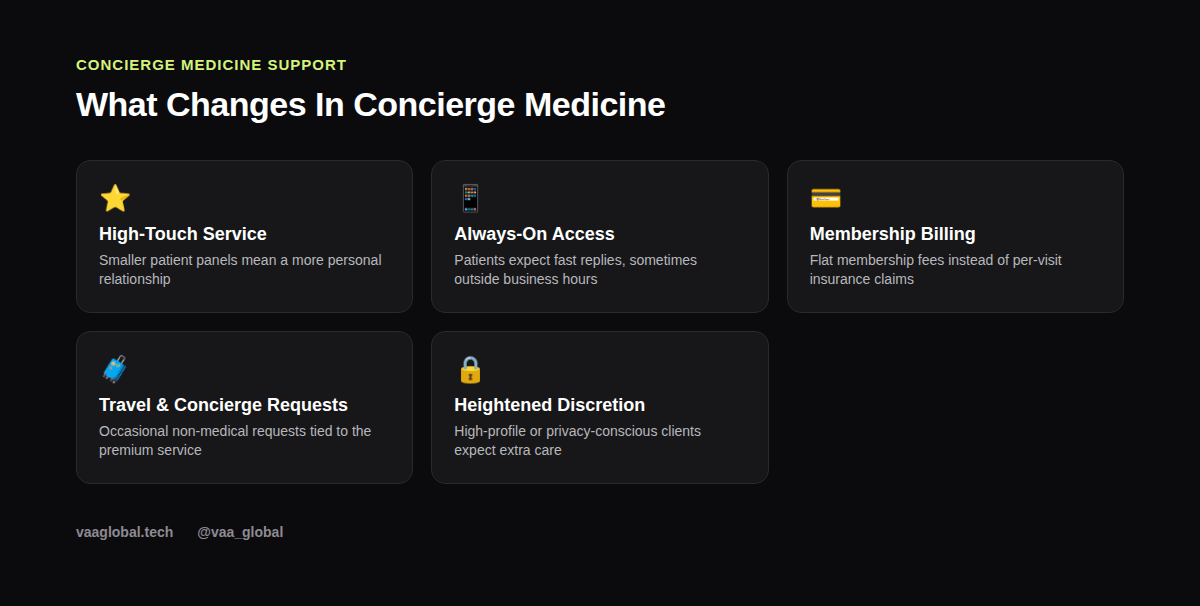
Concierge physicians typically manage far fewer patients than a standard practice, which lets them, and you, know each patient far better than in a high-volume setting. As the medical virtual assistant for concierge medicine, you are not juggling hundreds of unfamiliar names, you are building an ongoing relationship with a smaller group of people who expect you to remember their context from one interaction to the next.
Response Speed Expectations Are Higher
Part of what members are paying for is access, which often means faster replies than a typical practice, sometimes including evenings or weekends depending on the practice's policy. This goes well beyond the standard medical virtual assistant appointment scheduling guide pace, and a concierge MVA needs to be clear with themselves and the practice about what response times are actually realistic and sustainable.
Billing Runs On Membership, Not Per-Visit Claims
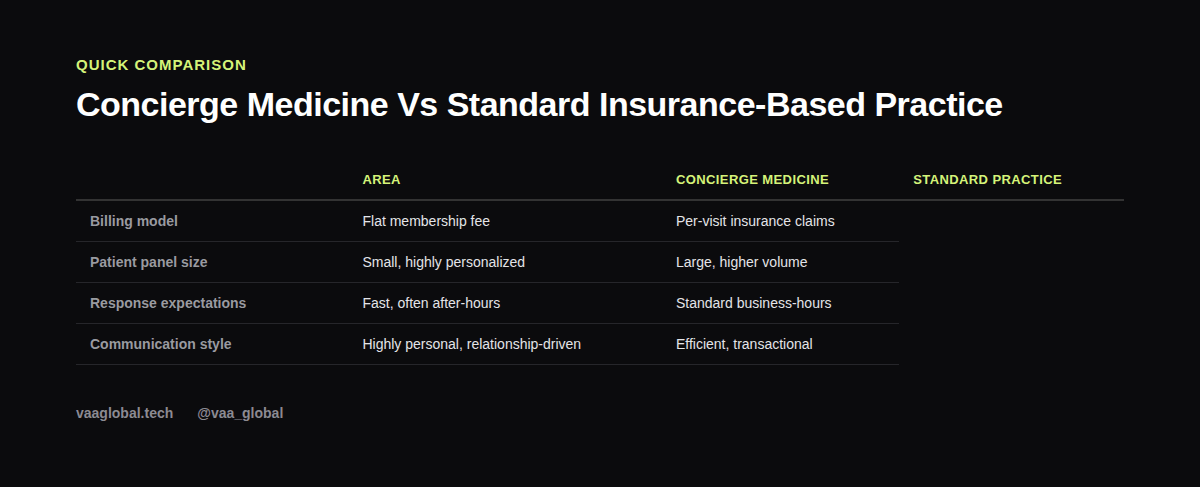
Instead of submitting a claim for each visit, concierge practices typically charge a recurring membership fee that covers a defined set of services. This is a fundamentally different workflow from the standard medical billing tasks most medical VAs learn first, with far less insurer back-and-forth and far more focus on membership renewals, billing cycles, and occasionally services that fall outside what the membership covers.
Occasional Concierge-Style Requests Go Beyond Medical Tasks
Some concierge practices lean into the name literally, helping coordinate things like travel medical documentation, expedited specialist referrals, or arranging care while a patient is away from home. These requests are not part of standard medical VA training, but they show up often enough in this specialty that a flexible, resourceful mindset matters as much as medical knowledge.
Discretion And Privacy Expectations Run Higher
Concierge patients, some of whom may be high-profile or simply value their privacy highly, often expect a noticeably higher level of discretion than a typical practice. This builds on the same foundation as general patient data protection principles, with an added expectation that you handle even routine scheduling details with extra care and never mention a patient's involvement with the practice casually.
Communication Style Shifts Toward Relationship, Not Volume
In a high-volume practice, efficiency is often the main goal of every message. In concierge medicine, the tone shifts toward warmth and personal attention, since the entire value proposition is a closer relationship. The Direct Primary Care Coalition describes how membership-based, direct-care models like concierge medicine are built specifically around this kind of patient access, which is a useful way to understand what members actually expect.
Common Questions New Hires Ask About This Specialty
People exploring this path often ask what does a concierge medicine medical virtual assistant do day to day, and the honest answer is relationship-focused communication, membership administration, and fast, flexible response handling rather than high-volume scheduling. Others ask how concierge medicine billing is different from insurance billing, and the short version is a flat recurring membership fee instead of per-visit insurance claims. A third common question is why concierge patients expect faster responses, which comes down to the access and personal attention being central to what the membership fee is actually paying for.
Preventive Care And Wellness Get More Attention
Because concierge physicians carry smaller patient panels, they often have more time for longer visits, detailed wellness planning, and proactive preventive care than a typical insurance-based practice allows. Scheduling tends to reflect this too, with longer appointment slots and more room for follow-up conversations than the tightly packed calendar of a high-volume clinic, which changes how you think about what a "full day" even looks like.
How This Differs From General Practice Support
If you have read about the differences between a specialty clinic and a general practice, concierge medicine is a clear example of a business model, not a medical condition, reshaping the entire role, well beyond the usual medical virtual assistant daily tasks.
The Bottom Line
Working as a medical virtual assistant for concierge medicine means becoming the warm, discreet, responsive point of contact for a smaller group of patients who are paying specifically for that kind of attention. A beginner-friendly medical virtual assistant training course covering terminology, HIPAA, and billing basics is still the right starting point before this service-first specialty becomes second nature.



