
A medical virtual assistant for cardiology practices works with a patient population that rarely "graduates" from care, because heart conditions are usually managed for years, not resolved in a single course of treatment. That long-term relationship changes almost every workflow in the office, from scheduling to refill requests to how a phone call gets triaged.
Cardiology Care Is Chronic, Not Episodic
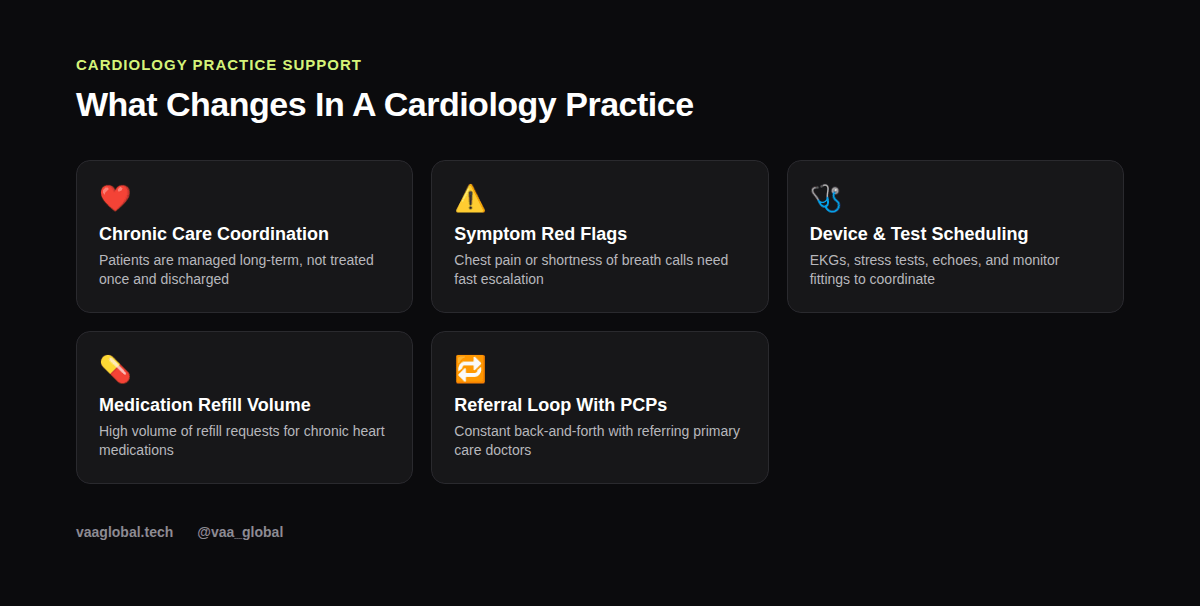
Most cardiology patients are managed for conditions like hypertension, arrhythmia, or heart failure over years, which means the relationship between patient and practice is ongoing rather than a single problem solved and closed. As the medical virtual assistant for cardiology practices, you are tracking recurring check-ins, medication adjustments, and test schedules for the same patients visit after visit, which rewards good record-keeping far more than one-off scheduling skills.
Call Triage Has Genuine Urgency Built In
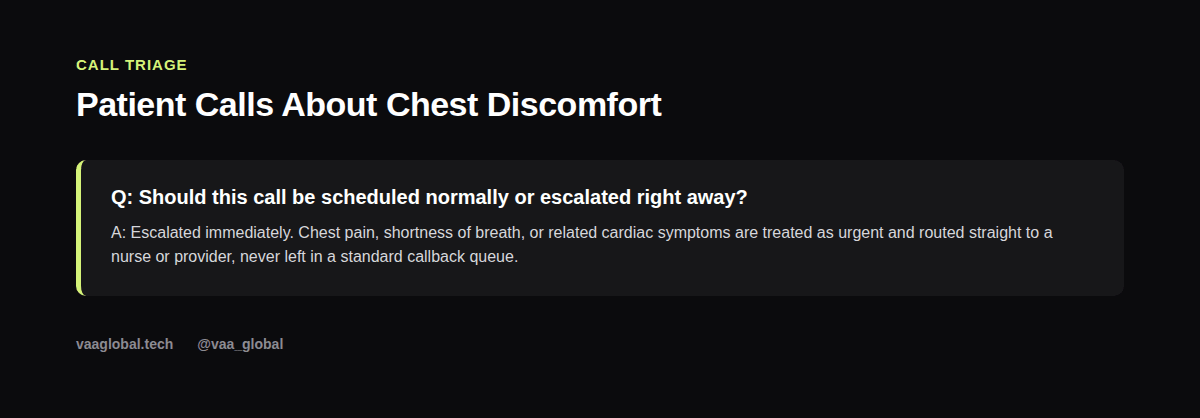
Certain symptoms, chest pain, shortness of breath, fainting, or irregular heartbeat complaints, need to be escalated immediately rather than scheduled into a normal callback queue. You are not diagnosing anything, but you are often the first voice a worried patient reaches, and recognizing which symptoms require urgent routing is one of the most important skills in this specialty. This extends the general principles in phone etiquette for patient calls into a setting where getting the triage wrong has real consequences.
Diagnostic Test Scheduling Is A Constant Workflow
EKGs, echocardiograms, stress tests, and Holter monitor fittings are routine in cardiology, and each has its own prep instructions and scheduling quirks. A cardiology MVA needs to know, for example, that a stress test might require a patient to hold certain medications beforehand, and that this kind of instruction has to reach the patient clearly and early. This builds directly on the standard medical virtual assistant appointment scheduling guide, with specialty-specific prep instructions layered in.
Medication Refill Requests Arrive In High Volume
Because so many cardiology patients are on long-term medications, like blood pressure or cholesterol drugs, refill requests make up a large share of daily messages. Managing this volume well, routing requests to the right provider, flagging ones that need a visit before renewal, and keeping patients from running out of medication, is a core and often underestimated part of the role.
Referral Coordination With Primary Care Runs Both Ways
Cardiology patients are almost always referred in by a primary care doctor, and results, updates, and care plan changes need to flow back out to that same doctor regularly. A cardiology MVA often spends real time making sure referral letters, test results, and care summaries move between offices without getting lost, which connects closely to the general medical billing tasks and documentation habits you would build in any medical VA role.
Terminology Specific To Cardiology Comes Up Often
Terms like arrhythmia, hypertension, echocardiogram, and ejection fraction will appear regularly in notes and referral letters. The American College of Cardiology publishes patient-facing educational resources that are a solid plain-language reference for building this vocabulary before you need it live on a call.
Privacy Around Chronic Conditions Still Needs Care
Heart conditions are sensitive health information like any other diagnosis, and the usual patient data protection principles apply fully here. With long-term patients, you may also be fielding calls from family members who are not authorized to receive updates, which makes confirming consent on file a routine, not occasional, habit.
Common Questions New Hires Ask About This Specialty
People exploring this path often ask what does a cardiology medical virtual assistant do day to day, and the honest answer is mostly chronic-care coordination, refill management, and careful call triage rather than clinical work. Others ask how urgent symptoms get handled in a cardiology office, and the short version is that red-flag symptoms like chest pain are escalated immediately rather than queued normally. A third common question is why cardiology generates so many medication refill requests, which comes down to the sheer number of patients managing long-term heart conditions with daily medications.
Device Follow-Up Adds Another Layer
Some cardiology patients wear devices like pacemakers or cardiac event monitors, and these generate their own stream of check-in calls, data downloads, and troubleshooting messages. You are never adjusting a device yourself, but you often coordinate the logistics, scheduling a device check, confirming a monitor was returned, or routing a technical question to the right specialist, which adds one more recurring task to an already busy chronic-care workload.
How This Differs From General Practice Support
If you have read about the differences between a specialty clinic and a general practice, cardiology is a strong example of chronic-care volume reshaping daily workflow, well beyond the standard medical virtual assistant daily tasks most new hires expect.
The Bottom Line
Working as a medical virtual assistant for cardiology practices means becoming comfortable with long-term patient relationships, recognizing urgent symptoms quickly, and keeping diagnostic tests, refills, and referrals organized across a large recurring patient base. A beginner-friendly medical virtual assistant training course covering terminology, HIPAA, and billing basics is a solid starting point before specializing further.



