
Every remote healthcare role eventually touches medications in some way, which is why medical virtual assistant e-prescribing basics matter even for an administrative role. E-prescribing simply means a provider sends a prescription electronically to a pharmacy instead of handing a patient a paper slip. As an MVA, you won't write or approve prescriptions yourself, but you'll likely support the process around the edges, and understanding the boundaries keeps you useful and compliant at the same time.
What E-Prescribing Actually Replaces
Before e-prescribing became standard, providers wrote paper prescriptions or called pharmacies directly. Electronic prescribing reduces errors from illegible handwriting and speeds up the process, since the pharmacy receives the order directly through a secure connection tied to the EHR. This shift has been encouraged in part by federal health IT policy, which you can read more about through HealthIT.gov.
Where the MVA Role Fits
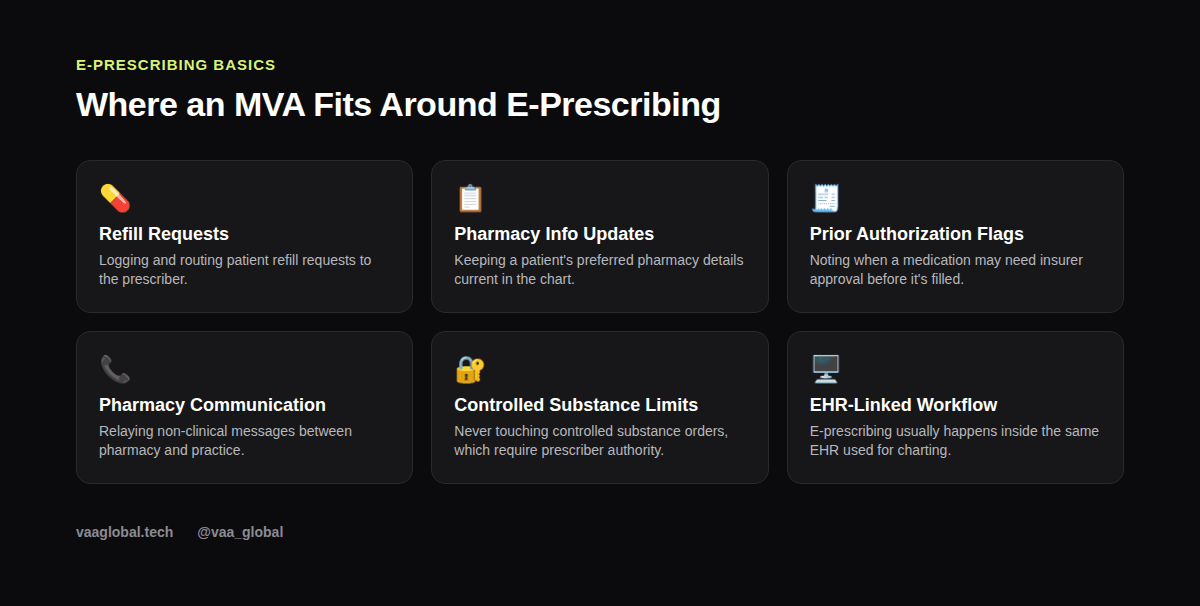
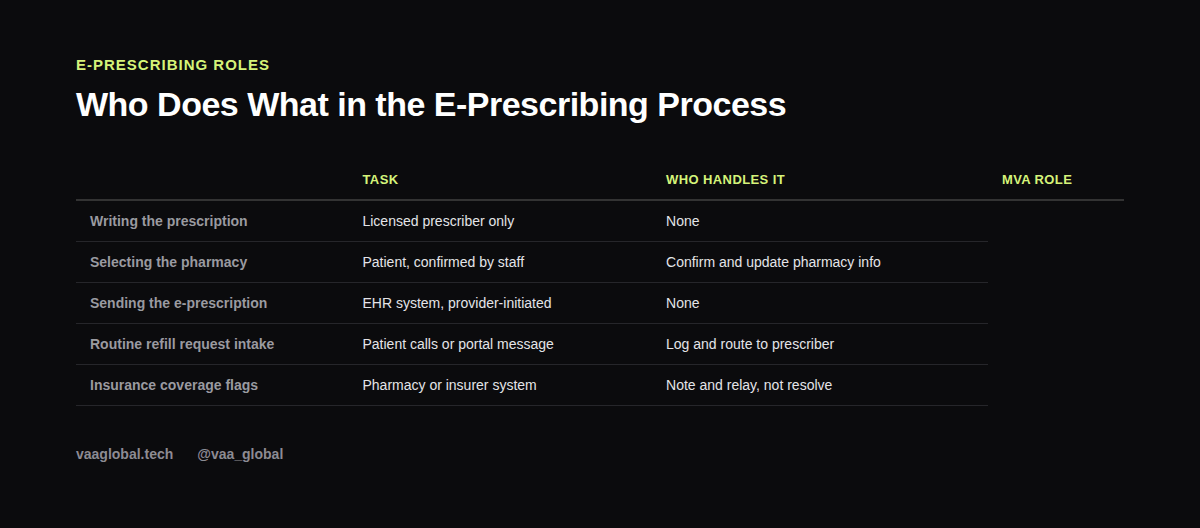
An MVA generally supports e-prescribing indirectly rather than directly. That might mean logging a patient's refill request, confirming which pharmacy they prefer, or passing along a message from the pharmacy about a coverage question. None of this involves actually prescribing or modifying a medication order, since that authority belongs strictly to the licensed provider.
Handling Refill Requests the Right Way
Refill requests are one of the most common tasks an MVA touches in this area. Typically, a patient calls or messages through the portal, and the assistant logs the request, checks basic details like which pharmacy to send it to, and routes it to the provider for approval. The assistant never decides whether a refill should be approved; that judgment call stays clinical.
Why Controlled Substances Are Off-Limits
Controlled substances, like certain pain medications, carry extra legal restrictions because of their potential for misuse. An MVA should never attempt to handle, approve, or relay instructions about controlled substance prescriptions beyond basic logistics like confirming a pharmacy address. These orders require strict prescriber authority and often additional identity verification steps that go well beyond administrative support.
Pharmacy Communication Without Overstepping
Sometimes a pharmacy calls the practice with a question about an order, maybe a coverage issue or a request for clarification. An MVA can often take that call, note the details, and pass them along to the right staff member. However, any decision about changing the prescription itself has to come from the provider, not the assistant relaying the message.
How Does E-Prescribing Work With Insurance?
So, how does e-prescribing work with insurance when a medication isn't covered? Typically, the pharmacy flags the issue back to the practice, sometimes signaling that a prior authorization request is needed before the insurer will pay for it. An MVA can note that flag and route it appropriately, but resolving the authorization itself usually requires clinical input from the provider. Our guides on insurance verification and prior authorization both explain how these coverage checks fit into the bigger administrative picture.
What Is E-Prescribing in Healthcare, Really?
If you're still wondering what e-prescribing in healthcare really means beyond the basic definition, think of it as one piece of the larger digital shift happening across clinics everywhere. Paper prescriptions are increasingly rare, replaced by systems that connect providers and pharmacies directly, which also reduces the chance of a patient losing a paper slip before reaching the pharmacy.
Keeping Prescription Data Private
Prescription details count as protected health information just like any other medical record, so HIPAA rules apply fully here. Never discuss a patient's medications outside approved channels, and always follow your practice's specific rules for handling this kind of sensitive data. Our article on patient data protection covers these habits in more depth.
Can a Medical Virtual Assistant Handle Refill Requests Alone?
Not entirely alone, no. Can a medical virtual assistant handle refill requests from start to finish? Not quite, since final approval always needs the provider's sign-off. But an assistant can absolutely own the administrative front end: taking the request, confirming the pharmacy, and making sure it reaches the right person quickly, which keeps the whole process moving without creating any clinical risk.
What to Say in an Interview
If asked about e-prescribing experience, it's fine to be direct: explain that you understand the general process and your role's boundaries within it, even without hands-on prescribing software experience. That honesty, paired with a clear sense of where your responsibility ends, tends to land better than vague overstatement.
The Bottom Line
Medical virtual assistant e-prescribing basics come down to supporting the process without ever crossing into clinical decision-making. Understand the workflow, respect the boundaries around controlled substances, keep patient medication data private, and stay comfortable saying no when a task crosses into clinical territory, and you'll handle this part of the job confidently. VAA Global's Medical Virtual Assistant Training is a 6-module, beginner-level course covering EHR concepts, HIPAA compliance, and medical billing basics, with no prior medical background required, plus job assistance after graduation.



