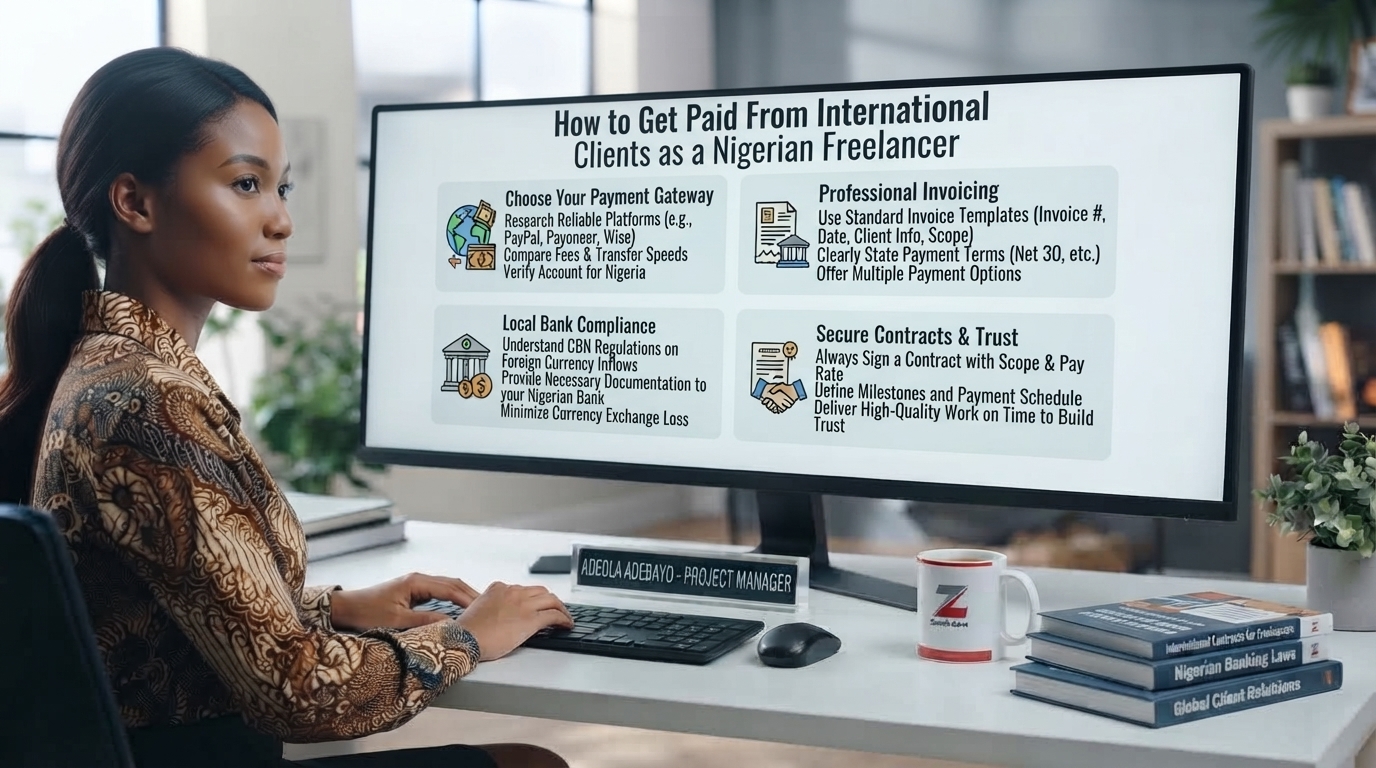
One of the more practical questions that stops beginners from confidently pursuing international freelance clients is genuinely not knowing how the money actually gets from a client's account into their own, a mechanical question with a clearer answer than it might seem.
Payoneer: A Common Starting Point
Payoneer is widely used among Nigerian freelancers specifically because it integrates directly with major freelance platforms like Upwork and Fiverr, letting you receive payments in USD or other currencies into a Payoneer account, then transfer to your local Nigerian bank account, with the conversion happening automatically as part of that transfer.
This established integration with major platforms is exactly why many freelancers start here, it's a well-trodden path with clear, documented processes rather than something you're figuring out entirely on your own.
Wise: Often Favored for Direct Client Payments
Wise, formerly TransferWise, is particularly useful when a client is paying you directly rather than through a platform like Upwork, since it offers competitive exchange rates and transparent fee structures for international transfers. Many freelancers with direct client relationships, rather than purely platform-sourced work, favor Wise for this specific use case.
Comparing the actual fees and exchange rates between Wise and Payoneer for your specific typical transaction size is worth doing directly, since which one comes out ahead can genuinely vary based on the currency pair and amount involved.
Platform-Specific Payment Systems
If most of your work comes through a specific platform like Upwork, that platform's own built-in payment processing is often the simplest starting point, since it's designed to work smoothly with the platform's escrow and dispute systems, giving you an added layer of protection specific to that platform's ecosystem.
What to Actually Compare Before Choosing
Beyond fees, consider processing time, how quickly funds actually reach your usable Nigerian bank balance, and reliability, established, widely-used services generally offer more predictable, well-documented experiences than newer or less common alternatives you might come across.
It's also genuinely worth using more than one method if your client base is varied, since different clients may prefer different payment routes, and having options ready rather than scrambling to set up a new account when a specific opportunity arises saves real time and hassle.
How VAA Global's Freelancing Course Covers This
VAA Global's Freelancing course includes practical guidance on receiving international payments as part of its broader curriculum, alongside client acquisition, proposal writing, and pricing strategy, so you're not left figuring out the payment mechanics entirely alone once you land your first client.
Comparing Costs and Reliability Directly
Before settling on one payment method, it's worth doing a direct, practical comparison for your own typical transaction size, sending a small test amount through two different services and comparing the actual amount that lands in your Nigerian account after fees and conversion, rather than relying solely on each platform's advertised rates.
Keeping simple records of which payment method you used for which client also helps you track patterns over time, some clients may have platform preferences of their own, and having flexibility across more than one method genuinely serves you better than being locked into a single option.
This kind of direct comparison, done once early on, genuinely saves meaningful money over the course of a freelance career built on international client payments.
Beyond payment methods themselves, understanding roughly how long a typical transfer takes for your chosen method also helps with realistic cash flow planning around client payments.
Building this habit of periodic comparison, rather than setting a payment method once and never revisiting it, genuinely pays off as fee structures and exchange rates shift over time.
Building a System That Scales With You
As you take on more international clients over time, having a genuinely reliable, tested payment system in place removes one more variable you'd otherwise have to figure out under time pressure when a new opportunity arrives. Setting this up properly early, rather than scrambling when your first international client is ready to pay, is a small investment that pays off repeatedly.
It is also worth keeping simple, organized records of your international income for your own reference, useful both for your own financial planning and for meeting any tax obligations that apply to your specific situation as your freelance income grows.
For anyone still deciding between this and another path, the free Career Compass quiz at vaaglobal.tech/career-compass is worth trying before you commit.
VAA Global Talent at talent.vaaglobal.tech is specifically built to connect graduates like you with employers actively hiring for these roles.
When you're ready to start applying, VAA Global's free CV and LinkedIn review tool at vaaglobal.tech/cv-review is worth using to make sure your application actually lands well.
According to National Association of Colleges and Employers (NACE), this trend has held steady across multiple years of tracking, not just a short-lived shift.
U.S. Bureau of Labor Statistics has published research specifically on this, and it lines up closely with what's described here.
Research from LinkedIn Hiring Insights backs this up, consistently finding that this pattern holds across the wider remote job market, not just as an isolated trend.
Getting Started With International Payments
The mechanics of getting paid internationally are genuinely well-established and manageable once you understand the actual options. You can apply to VAA Global's Freelancing course to build both the client-winning skills and this practical payment knowledge together.