Knowing how to follow up after a job application without being annoying comes down to two things most people get wrong: they follow up too soon, or they follow up too often. A well-timed, well-written follow-up can genuinely nudge your application back to the top of a pile, while a pushy one, sent too early or too frequently, can quietly work against you before you ever get a response.
Why Following Up Is Worth Doing At All
Applications get buried fast, especially for remote roles that can attract hundreds of candidates within days. A short, polite follow-up email sometimes simply resurfaces your name. It lands at a point where a hiring manager is actively reviewing a shortlist. That alone is reason enough to send one, even if you never hear back from most applications you send.
How Many Days Should I Wait To Follow Up After Applying
How many days should I wait to follow up after applying has a fairly consistent answer across hiring advice: 5-7 business days for a first application with no listed timeline. If the job posting mentions a specific response window, like "we'll be in touch within two weeks," respect that window before reaching out. Following up the next day reads as impatient rather than enthusiastic.
4 Rules For Following Up Without Being Annoying
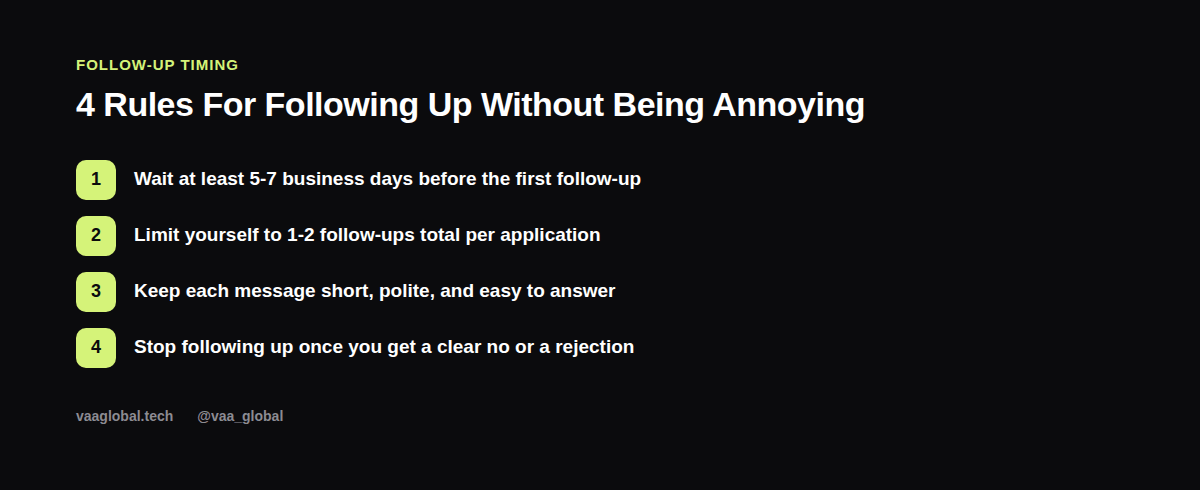
Wait at least 5-7 business days before sending your first follow-up. Limit yourself to one or two follow-ups total per application; beyond that, you've gotten your answer even if it's silence. Keep each message short, polite, and easy to respond to with a quick yes, no, or update. And stop following up entirely once you receive a clear rejection, since continuing after that point crosses from persistent into annoying.
Job Application Follow-Up Email Template
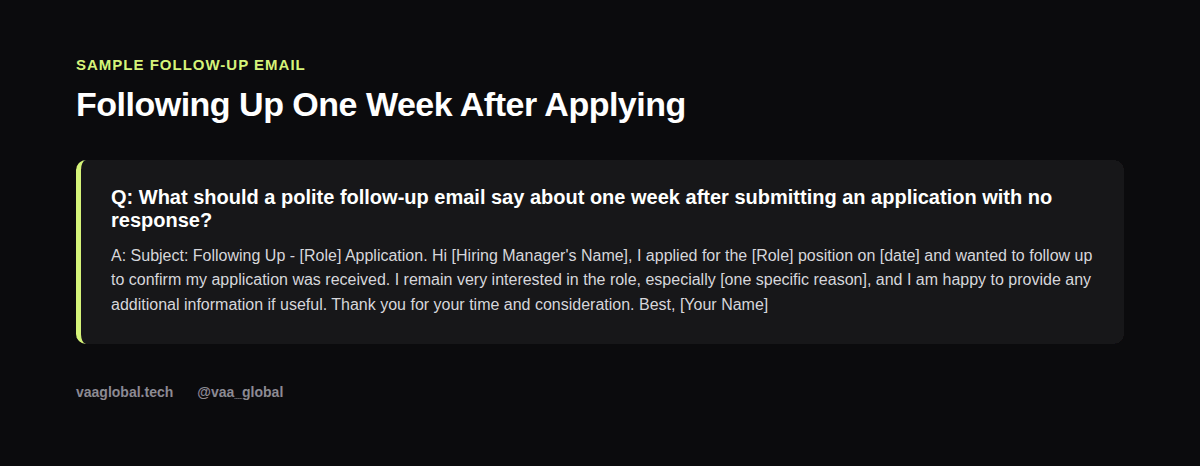
Here's a job application follow-up email template you can adapt: "Subject: Following Up - [Role] Application. Hi [Hiring Manager's Name], I applied for the [Role] position on [date] and wanted to follow up to confirm my application was received. I remain very interested in the role, especially [one specific reason], and I'm happy to provide any additional information if useful. Thank you for your time and consideration. Best, [Your Name]." This stays short, polite, and gives the reader an easy opening to respond.
A Second Follow-Up, If Needed
If a reasonable amount of time has passed since your first follow-up, usually another week or two, with still no response, a brief second message is acceptable: "Hi [Name], just wanted to check in once more on the [Role] application, as I'm still very interested. No worries if the role has moved forward with other candidates, I just wanted to close the loop on my end. Best, [Your Name]." After this, it's time to move on and focus your energy elsewhere.
Is It Okay To Email A Hiring Manager Directly
Is it okay to email a hiring manager directly depends on how you found their contact. If a job posting lists a direct email or includes a named contact, use it. If you had to dig through LinkedIn or a company directory to find someone's personal email, a more cautious approach, like a brief LinkedIn message instead, usually reads better than an unsolicited cold email to someone who never shared that contact publicly for this purpose.
How Many Times Can I Follow Up On A Job Application
How many times can I follow up on a job application has a practical ceiling: two attempts total is the generally accepted limit. Beyond that, repeated messages stop reading as diligence and start reading as pressure, which can actively hurt your chances rather than help them, even with a qualified candidate.
Patience And Persistence, Not Pressure
The line between helpful persistence and annoying pressure is mostly about patience. A recruiter or hiring manager juggling dozens of open roles isn't ignoring you out of malice; your message is likely sitting behind a long queue of application status updates they haven't gotten to yet. Checking in once, calmly, respects that reality, while repeated messages assume your application deserves priority over everyone else's, which rarely lands the way it's intended. Treat each follow-up as a small, considerate nudge rather than a demand for an answer, and you'll come across as organized and interested instead of impatient.
What To Do While You Wait
Rather than refreshing your inbox, use the waiting period productively: keep applying elsewhere, and check whether your job search strategy needs adjusting if silence is a consistent pattern across many applications. If a thank-you note is still owed from a completed interview, see our guide on how to write a thank-you note after a job interview, and if rejection does come, our post on how to handle rejection during a remote job search can help you reset. LinkedIn's help center also has general etiquette guidance for reaching out to recruiters on the platform.
The Bottom Line
You can follow up after a job application without being annoying by respecting a reasonable timeline, keeping your message short and polite, and knowing when to stop. One or two well-timed, well-written follow-ups show genuine interest; more than that tends to work against you instead.