Building a project management portfolio with no experience feels contradictory at first, because most job listings ask for prior project experience you do not technically have yet. However, project management is a set of skills, planning, communicating, tracking risk, that you can practice and document outside of a formal job title. This guide shows you exactly how to build proof of those skills from scratch.
Can You Be a Project Manager With No Degree or Job Title?
Yes. Many successful project managers moved in from adjacent roles, such as operations, customer service, or admin work, where they were already coordinating people and deadlines without the formal title. What actually matters to employers is whether you can demonstrate the core skills: planning, communication, risk management, and follow-through, regardless of where you practiced them.
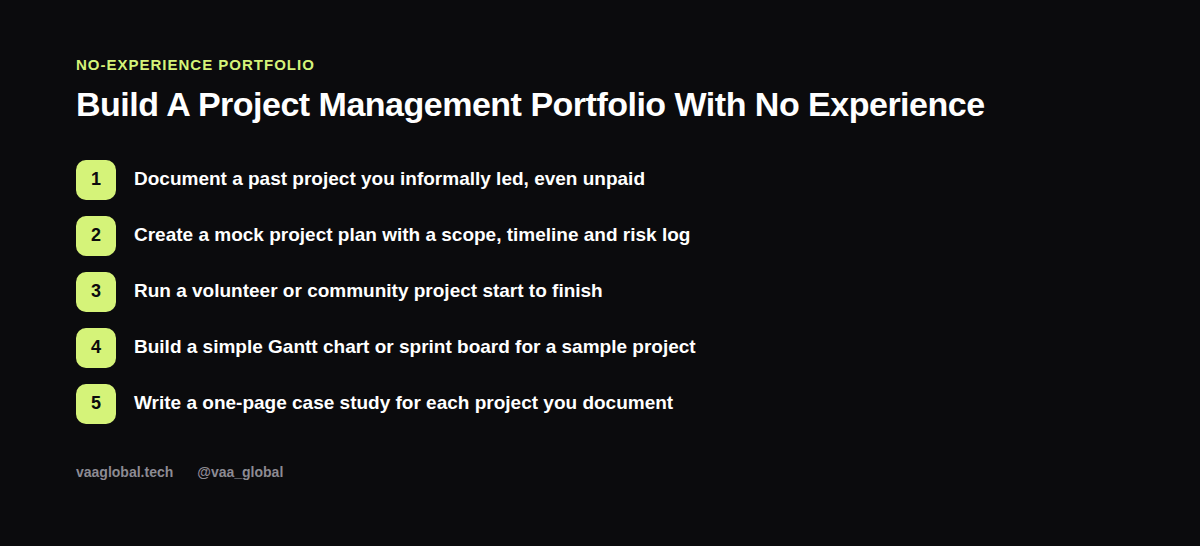
Step 1: Mine Your Past for Hidden PM Experience
Think back over jobs, school, church groups, or community work for anything you organized with multiple moving parts: an event, a fundraiser, a group project with a deadline. Write down what the goal was, what could have gone wrong, what actually went wrong, and how you handled it. This becomes raw material for your first entry level project manager portfolio piece, even though no one called it project management at the time.
Step 2: Build One Realistic Mock Project Plan
Pick a hypothetical but realistic project, such as planning a small product launch or organizing a community training event, and build a full mock project plan: scope, timeline, budget estimate, and a risk log naming at least three things that could go wrong and how you would respond. This single exercise, done properly, demonstrates more real PM thinking than a vague bullet point on a CV ever could.
Step 3: Run One Real Project, Even a Small One
Theory only goes so far; actually running something, even a small volunteer initiative, a fundraiser for a local cause, or coordinating a group assignment, gives you real stories for interviews. For example, offer to coordinate logistics for a community event or help a small business organize a project with a deadline. The goal is a genuine, finished project you can describe honestly, not a perfect one.
Step 4: Learn the Tools, Then Show You Used Them
Build your mock or real project using actual PM tools, such as Trello, Jira, or a simple Gantt chart in a spreadsheet, so your portfolio reflects tools employers actually use. Our roundup of common tools every project manager should know is a good starting checklist if you are not sure which ones to practice with first.
Step 5: Write Clear, Honest Case Studies
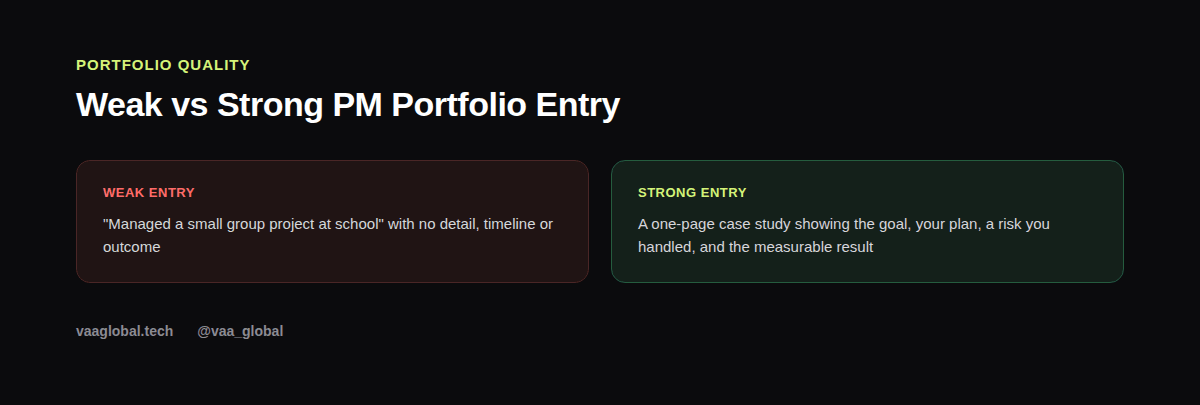
For each project, mock or real, write a one-page case study: the goal, your plan, one specific challenge or risk, and the outcome. Keep it concrete and avoid vague claims like improved efficiency without a specific example attached. A project management case study with real detail is far more convincing in an interview than a generic list of responsibilities.
Step 6: Learn the Methodology Behind Your Projects
Knowing whether your project followed an Agile, Scrum, or Waterfall approach, and being able to explain why that fit the situation, shows real understanding rather than memorized vocabulary. If you are unclear on the differences, our guide on Agile vs Scrum vs Waterfall explained simply breaks it down in plain language.
What Should a Project Management Portfolio Include?
At minimum, include two to three case studies, a sample project plan or Gantt chart, a short personal statement about why you want to work in project management, and links to any relevant certificates in progress. Keep the whole portfolio easy to scan; a hiring manager should understand your skill level within two minutes of opening it.
How to Talk About This in Interviews
When you lack formal experience, be upfront about it, then immediately pivot to your mock and real projects as proof of capability. This pairs well with general preparation for project manager interview questions and answers, since many of those same questions can be answered using the projects in your new portfolio.
How Do I Get Project Management Experience With No Job?
If you are stuck on how do I get project management experience with no job in the first place, the honest answer is you create it. Volunteer to coordinate a small event, offer to organize a church or community initiative, or ask a small business owner if you can help structure one upcoming project for free. The Project Management Institute also has free guides and community resources that can help you practice the vocabulary and process before you try it on a real project.
The Bottom Line
Building a project management portfolio with no experience is entirely possible once you treat it as a documentation problem rather than a credentials problem. Mine your past for hidden examples, build one mock plan, run one real project, and write it all up clearly. If you want structured support building these skills from the ground up, VAA Global's project and programme management training is a 10-week, beginner-friendly remote course with job assistance included.