The first 90 days job search after certification is the window where most new graduates either build real momentum or quietly drift into frustration. Having a certificate in hand is a strong start, but what you do in the first three months after that determines a lot about how quickly things actually move. A loose plan, broken into weekly chunks, beats vague ambition every time.
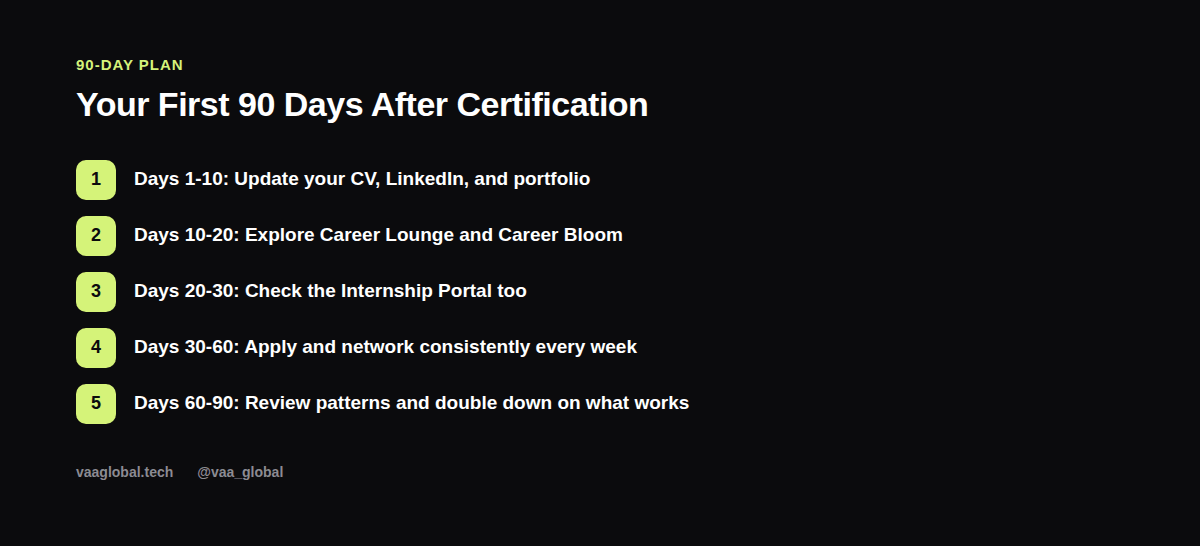
Days 1-10: Get Your Materials in Order
Before you apply to anything, make sure your CV, LinkedIn profile, and portfolio actually reflect your certificate and new skills. Use VAA Global's CV and LinkedIn review tool and Portfolio Builder during this window. Skipping this step and applying with stale materials wastes some of your best early momentum.
Days 10-20: Open Career Lounge and Explore Career Bloom
Log in to Career Lounge in your student portal and start reviewing what Career Bloom is surfacing. Since Career Bloom matches verified opportunities to your exact skill set, this early review helps you understand realistically what's out there before you commit to a specific application strategy. For details on how the matching works, see how Career Bloom job matching actually works.
Days 20-30: Consider the Internship Portal Too
If full roles feel out of reach right away, the VAA Global Internship Portal gives you a lower-friction way to build real experience. Many students use this window to apply for internships alongside full-time roles, keeping multiple paths open rather than betting everything on one approach.
Days 30-60: Apply Consistently, Not Sporadically
This is the heart of your 90 days. Set a weekly target for applications — quality over sheer volume — and stick to it even on weeks when nothing seems to be working. Pair applications with networking through the alumni network, since a meaningful share of real opportunities move through people rather than cold applications alone. Resources like CareerOneStop's job search guidance consistently back a steady weekly rhythm over sporadic bursts of effort.
Days 60-75: Watch for Patterns and Adjust
By now you should have enough applications behind you to notice patterns. Are you getting interviews but no offers? Revisit your interview prep. Getting no responses at all? Revisit your CV and how clearly it communicates your new skills. This is also a good moment to check whether your job search strategy needs rethinking — our article on whether a certificate is enough without a job search strategy is worth a re-read if things feel stalled.
Days 75-90: Double Down on What's Working
If a particular channel — Career Bloom, the Internship Portal, the alumni network, or direct applications — has produced responses, lean into it more heavily. If something clearly isn't working, don't keep repeating it out of habit. The final stretch of your 90 days should look different from the first, informed by actual data from your own search rather than assumptions you started with.
Handling the Emotional Side of a 90-Day Search
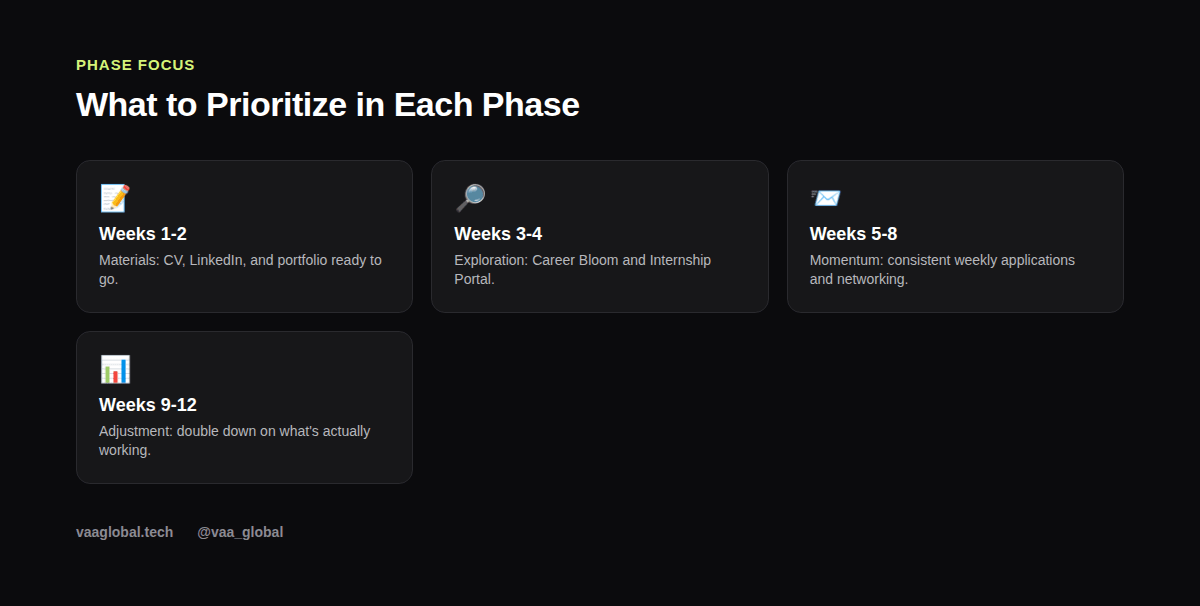
Ninety days is long enough that discouragement is normal, especially if early weeks don't produce results immediately. If rejection is piling up, our guide on handling rejection during a remote job search is worth reading honestly, not just skimming. The students who stick with a consistent plan through weeks 4 through 8, which tend to be the hardest emotionally, are often the ones who see results in weeks 9 through 12.
What If 90 Days Pass Without an Offer?
Ninety days is a useful planning window, not a hard deadline after which something is wrong. If you haven't landed a role yet, it's worth reassessing honestly rather than panicking — are you applying to the right level of roles, following up properly, and giving Career Bloom and your network enough attention? Adjust and keep going. A longer search doesn't mean your training was wasted; it often just means the plan needs tightening.
Specific Questions Worth Answering Directly
A question that comes up constantly is how many jobs should I apply to after certification, and there's no single magic number that fits everyone. What matters more is consistency: a steady, tailored weekly batch beats one huge burst followed by weeks of silence. Another common one is what should my first week of job search look like, and honestly, it shouldn't look like applying at all yet — it should look like getting your CV, LinkedIn, and portfolio into real shape first, since applying with weak materials wastes good opportunities before you've even started. And people frequently ask how long does it take to get a remote job after a course, hoping for a precise timeline. The honest answer is that it varies by field, effort, and a bit of timing, which is exactly why a 90-day structure is useful — it gives you checkpoints to measure progress against, rather than an open-ended wait with no way to tell if you're on track.
The Bottom Line
Treating your first 90 days job search after certification as a structured plan, rather than an open-ended waiting period, gives you real control over an otherwise uncertain process. Prepare early, use Career Bloom and the Internship Portal deliberately, apply and network consistently through the middle stretch, and adjust based on what the data from your own search tells you by the end.