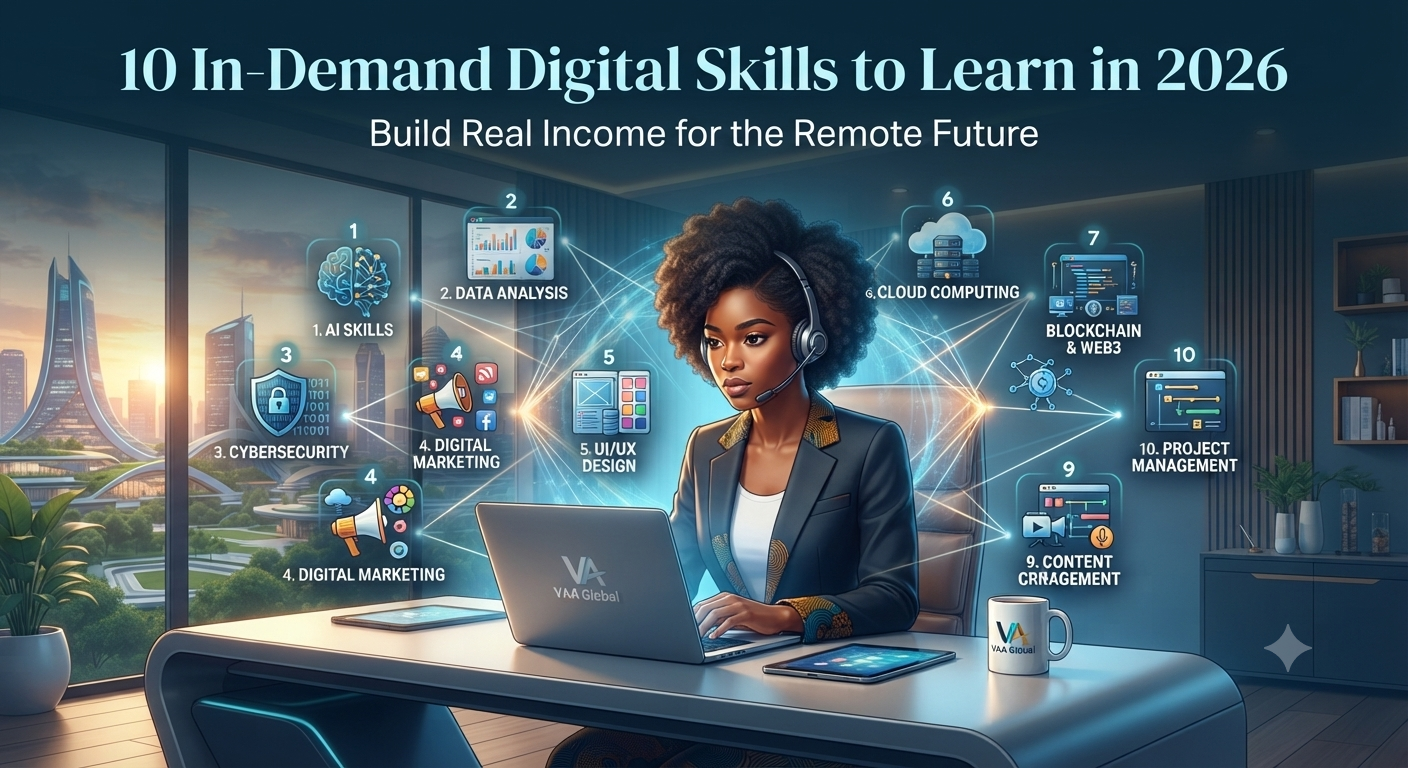
 The phrase "in-demand digital skills" gets thrown around so often it's lost specificity. Here's an actual, practical breakdown, what each skill really involves, and how to start.
1. Data Analysis
Cleaning, querying, and visualising data using Excel, SQL, and Power BI. Nearly every industry needs this now, and it's a strong analytical foundation whether you stay in analysis or move toward data science later.
2. Cybersecurity
Protecting systems and data through vulnerability assessment, network security, and incident response. Demand consistently outpaces trained talent globally, making this one of the more resilient technical fields.
3. Digital Marketing
Running measurable campaigns across ads, email, and funnels. Businesses of every size need this, and results are directly trackable, which makes skilled beginners genuinely competitive.
4. Artificial Intelligence (Applied)
Not building AI models from scratch, but using AI tools effectively, prompt engineering, workflow automation, evaluation. This is one of the fastest-growing practical skill categories right now.
5. UI/UX Design
Designing how digital products work and look, using Figma and related tools. Every app and website needs this, and it doesn't require a fine arts background.
6. Virtual Assistance
Managing admin work, email, calendars, coordination, remotely for international clients. One of the fastest, most accessible entry points into remote work.
7. Content Writing
Writing SEO-optimised, strategic content for businesses. A genuinely portable skill that pairs well with freelancing.
8. Project Management
Keeping projects organised, on time, and on budget. A flexible skill that transfers across nearly every industry.
9. HR Management
Recruitment, onboarding, and employee relations. A people-focused role that's increasingly remote-compatible.
10. Social Media Marketing
Managing brand presence strategically, not just posting. Combines creativity with measurable performance tracking. Every one of these is taught as a dedicated course at VAA Global, each including a 2-month internship, 2 certificates, and job placement assistance through VAA Global Talent.
A Closer Look at Why This List Isn't Just Trend-Chasing
It's worth distinguishing genuine, durable demand from short-lived hype cycles, since the tech and remote work space is genuinely full of both. What separates the ten skills above from a passing trend is that each addresses a real, structural business need, data needs interpreting, systems need securing, products need marketing, that isn't going away regardless of which specific tools or platforms are fashionable in a given year.
This distinction matters for how you should think about learning any of them: the underlying skill, analytical thinking for data analysis, strategic communication for PR, systematic problem-solving for cybersecurity, is what actually transfers and holds value over time, even as the specific tools you use to apply it inevitably evolve.
Putting This Into Practice
A useful exercise if you're still deciding: for each skill on this list that interests you, imagine actually doing that work every day, not just learning about it, but the daily reality of it. Does managing a calendar and inbox for someone else sound genuinely satisfying, or does the idea of hunting for security vulnerabilities sound more engaging? That gut reaction is often a more reliable guide than trying to reason abstractly about which skill is objectively "best."
Once you've narrowed to one or two genuine contenders, the free Career Compass quiz can help validate that instinct against a more structured set of questions about your actual goals and working style, giving you a second data point before committing real time to a specific path.
Worth noting too that several of these skills genuinely complement each other in practice, Digital Marketing and AI increasingly overlap as marketers use AI tools for campaign optimisation, and Data Analysis pairs naturally with Cybersecurity for anyone drawn to the more technical, analytical end of this list.
Whichever skill you land on, treating the learning period itself as the actual investment, not a delay before the real career starts, tends to produce steadier, more sustainable progress than rushing toward an end result.
VAA Global Talent at talent.vaaglobal.tech exists specifically to close this gap, connecting graduates directly with employers who are actively hiring.
Before you start applying, it's worth running your CV through VAA Global's free review tool at vaaglobal.tech/cv-review to make sure it actually reflects what you've built.
This isn't just anecdotal either, Upwork Freelance Forward Research has published findings that point in exactly the same direction.
According to National Association of Colleges and Employers (NACE), this trend has held steady across multiple years of tracking, not just a short-lived shift.
U.S. Bureau of Labor Statistics has published research specifically on this, and it lines up closely with what's described here.
Choosing the Right One for You
The World Economic Forum's Future of Jobs Report consistently ranks analytical thinking, technology literacy, and AI-related skills among the fastest-growing workplace priorities globally, reinforcing that most of this list isn't a passing trend. If you're unsure which fits you, the free Career Compass quiz can help you decide, then you can apply to start.