Getting familiar with the main tools every tech sales rep should know gives you a real edge in interviews. Even if you've never used the exact platform a company runs, understanding what each category does shows real knowledge. It proves you grasp how modern sales teams actually operate. You don't need to be an expert in any one tool. You just need to know the landscape and why each piece matters.
Why Tool Familiarity Matters Even Before Your First Job
You might assume tool knowledge comes later, once you're hired and trained. However, naming the right categories in an interview signals real homework. It's more than just a quick skim of a job description. So much of a rep's daily work happens inside these tools. As a result, basic familiarity shortens your ramp-up time dramatically once you start.
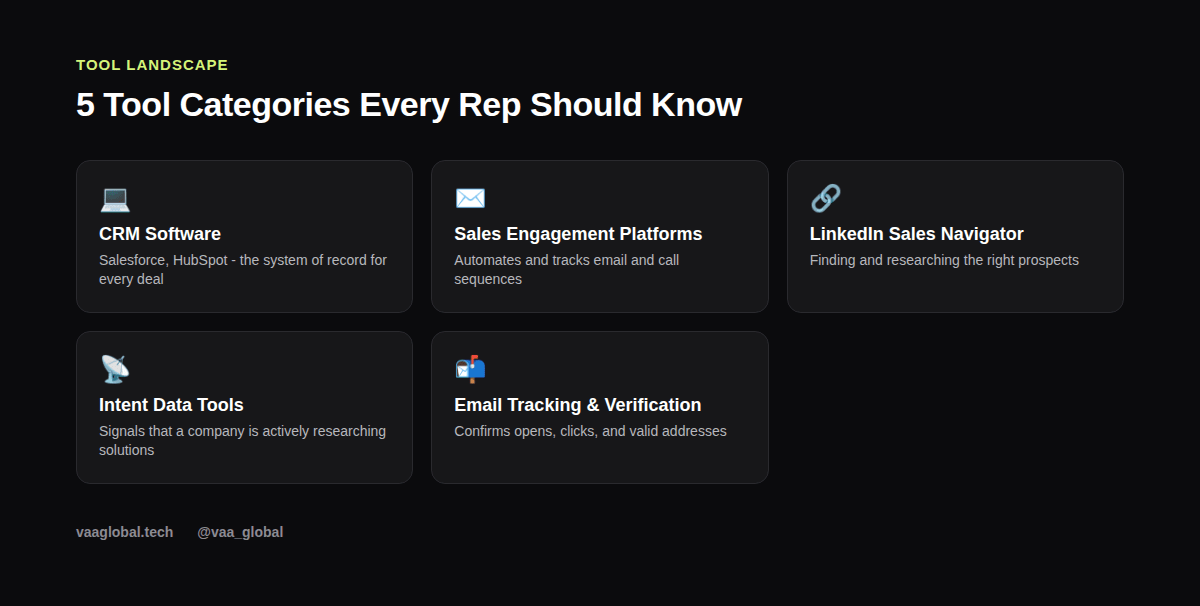
CRM Software: The System of Record
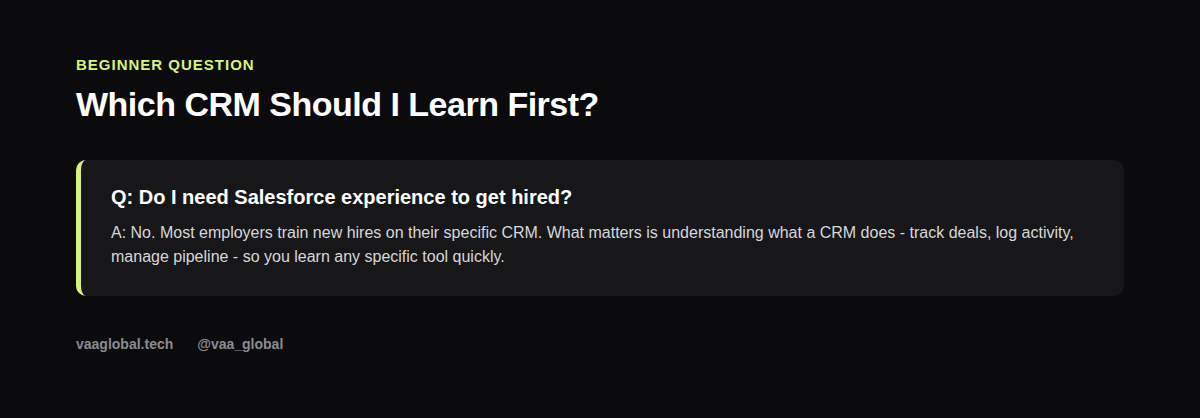
A CRM (Customer Relationship Management) system tracks every deal, every contact, and every interaction across your pipeline. What CRM do most tech sales teams use? Salesforce dominates at larger enterprises, while HubSpot is popular with small and mid-size companies, and smaller teams often use lighter tools like Pipedrive or Close. Do I need to learn Salesforce before applying? Not necessarily — most employers train you on their specific system, but understanding what a CRM does in general (track deals, log activity, manage pipeline stages) matters more than prior hands-on experience with one brand.
Sales Engagement Platforms
Sales engagement platforms automate and track outbound email and call sequences, so a rep isn't manually sending every single follow-up by hand. These tools typically show open rates, reply rates, and let you build multi-step sequences that combine emails, calls, and LinkedIn touches into one coordinated plan. This connects directly to building a strong follow-up habit, which is covered in how to write a cold email that gets replies in tech sales.
LinkedIn Sales Navigator
LinkedIn Sales Navigator is a paid research tool that helps reps find the right prospects by filtering on job title, company size, and recent activity, then track those prospects over time. For a beginner, even a free LinkedIn account used well — researching a prospect's recent posts before reaching out — captures much of the same value, just with more manual effort.
Intent Data Tools
Intent data tools track signals that a company is actively researching a solution — visiting certain websites, downloading relevant content, or showing other behavior that suggests they're in buying mode. Reps use this to time their outreach better, reaching out when a prospect is genuinely more receptive, instead of sending cold emails at completely random moments.
Email Tracking and Verification Tools
What tools help with cold outreach specifically? Alongside sales engagement platforms, email tracking tools confirm whether a prospect opened or clicked your message, while verification tools check that an email address is valid before you send anything. Sending to a large list of unverified addresses damages your sender reputation, so this step matters more than beginners usually expect.
How These Tools Connect in a Typical Day
In practice, a rep might pull a list of target accounts using LinkedIn, check intent data to prioritize who to contact first, launch a sequence through a sales engagement platform, and log every outcome in the CRM. Seeing this full chain is more valuable in an interview than naming individual software brands, because it shows you understand the actual sales process these tools automate.
Practicing Without Access to Paid Tools
You don't need a company budget to start learning. Most CRMs, including Salesforce's own free trial, offer free trial access, and a free LinkedIn account plus a spreadsheet can simulate most of the research and tracking workflow manually. This kind of hands-on practice pairs naturally with how to break into tech sales without experience and with preparing for tech sales interview questions and answers.
How This Connects to Pipeline and Prospecting
None of these tools work in isolation. Lead scoring inside your CRM helps prioritize who to contact first, which feeds your prospecting activity, which then fills your pipeline with real opportunities. A dashboard pulling all of this together is how sales managers track team performance, and getting comfortable reading one early will make you look considerably more prepared than most beginner candidates.
A Quick Self-Check Before Your Next Interview
Before your next interview, make sure you can answer three quick questions. First, what does a CRM actually track? Second, what's the difference between a sales engagement platform and a plain email inbox? Third, why would a rep care about intent data at all? If you can answer all three confidently, you're genuinely ahead of most candidates at this level.
The Bottom Line
You don't need to master every tool on this list to be job-ready. Knowing these tools every tech sales rep should know — what a CRM, sales engagement platform, LinkedIn Sales Navigator, intent data, and email tracking actually do — is enough to sound credible and learn fast once you're hired. VAA Global's 10-week Tech Sales course covers prospecting and lead generation, discovery and qualification, product demos, and account management and sales operations.