
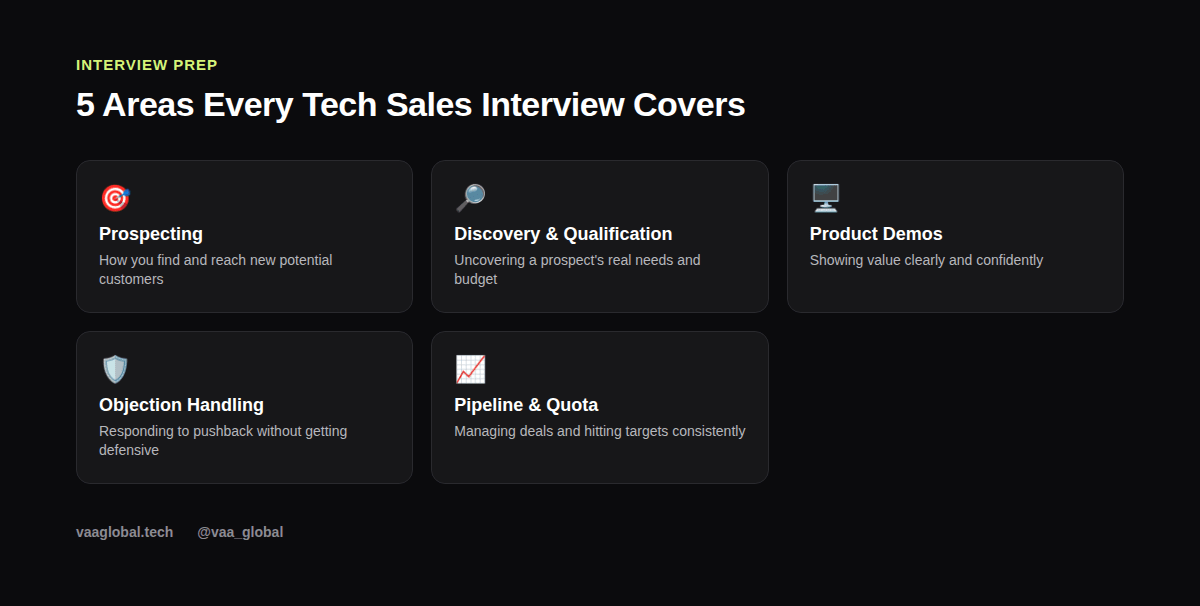
Preparing for tech sales interview questions and answers is more about demonstrating process than delivering a perfect pitch, because interviewers for SDR and junior sales roles are mostly testing whether you can prospect, qualify, demo, and handle objections with a repeatable structure. Once you understand the five core areas interviewers cover, the rest is practice.
Why Tech Sales Interviews Follow a Predictable Pattern
Because entry-level tech sales jobs genuinely revolve around prospecting, qualifying, demoing, and closing, interviewers test your grasp of these stages directly. If you prepare one structured talking point for each stage, you'll be ready for most of what comes up. The roleplay is usually where candidates get nervous, so we'll cover that in detail.
Question 1: "Why Do You Want to Work in Tech Sales?"
Interviewers ask this to check for genuine motivation, not a rehearsed answer. A strong response: "I'm drawn to the mix of structure and people skills — sales has clear metrics to improve against, and I like the challenge of understanding a prospect's problem well enough to show them a real solution." Avoid generic answers like "I'm a people person" without backing it up.
Question 2: "Walk Me Through How You'd Prospect for New Leads"
Here, interviewers want your process. Example answer: "I'd research the target account first, identify the right decision-maker, and reach out with a specific, relevant reason to talk — not a generic pitch. I'd follow up a few times across email and LinkedIn before moving on." This same research-first logic applies whether you're prospecting by email, LinkedIn, or phone.
Question 3: "What's the Difference Between Discovery and Qualification?"
Discovery is the conversation where you learn about a prospect's situation and problems. Qualification is deciding whether they're actually a good fit — do they have the budget, authority, need, and timeline to buy. A clean answer: "Discovery is asking good questions to understand the problem. Qualification is deciding, based on those answers, whether this is a deal worth pursuing."
Question 4: The Roleplay — "Sell Me This Pen"
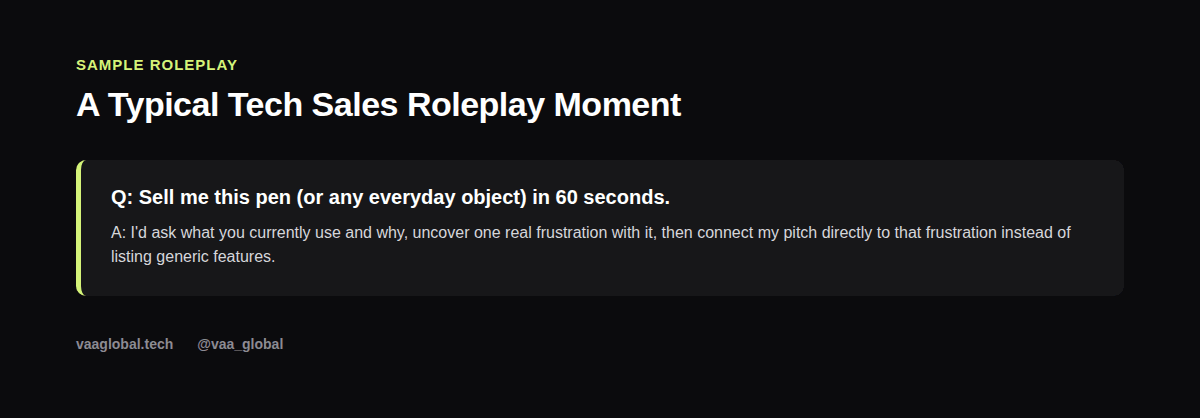
This classic exercise (or any variation of it) tests whether you ask questions before pitching. Example approach: "Before I sell you anything, can I ask what you currently use and why? What frustrates you about it?" Once you uncover a real frustration, connect your pitch directly to it rather than listing generic features. How do I pass a tech sales roleplay? By asking questions first, listening closely, and resisting the urge to pitch immediately.
Question 5: "How Would You Handle a Prospect Who Says It's Too Expensive?"
Interviewers want to see if you understand that price objections are usually about value, not actually about money. A good answer: "I'd ask what they're comparing the price against, then reconnect the conversation to the specific value or cost of inaction we discussed earlier, instead of immediately offering a discount." This same reframe-to-value approach works for most pricing objections, not just this specific one.
Question 6: "How Do You Stay Organized With Multiple Deals in Your Pipeline?"
This checks whether you understand pipeline discipline. Mention using a CRM (even a free one you've practiced with), setting clear next steps after every call, and reviewing your pipeline regularly to spot deals that are stalling versus genuinely progressing.
What Does an SDR Do Day to Day?
If you're interviewing for an SDR (Sales Development Representative) role specifically, expect questions about daily activity. A typical day mixes prospecting new accounts, sending outreach emails, making calls, booking discovery meetings for an Account Executive, and logging everything in a CRM. See SDR versus Account Executive for how these roles differ.
What to Do If You Have No Sales Experience
If you're applying with zero sales experience, lean on transferable skills: customer service, retail, hospitality, or any role involving persuasion or hitting targets. Build a simple practice project too, like writing three cold emails for a fictional product, and review how to break into tech sales without experience for a full roadmap.
What Questions Are Asked in a Tech Sales Interview, Overall?
To summarize, what questions are asked in a tech sales interview usually fall into three buckets: motivation and fit, process questions about each sales stage, and a live roleplay to see your instincts under pressure. Your quota history, if you have one, might also come up, so be ready to speak honestly about numbers even if they were modest. Meanwhile, sales and negotiation skills for business development covers transferable groundwork if you're coming from an adjacent field.
Questions to Ask the Interviewer Back
Strong candidates ask questions too. Try: "What does a typical ramp-up period look like for a new hire?" or "What tools and CRM does the team use day to day?" These show you're thinking about real contribution, not just getting hired. If you want to see how sales professionals talk about these fundamentals, Salesforce's own resources on the sales process are a solid, free reference.
The Bottom Line
The best way to handle tech sales interview questions and answers isn't memorizing a script — it's understanding how prospecting, discovery, demos, objection handling, and pipeline management connect, and being ready to demonstrate that process in a live roleplay. VAA Global's 10-week Tech Sales course covers prospecting and lead generation, discovery and qualification, product demos, proposals and pricing, objection handling, and account management.