Knowing how to structure a presentation that keeps people engaged matters more than having perfect slides or a polished voice, because even great content falls flat if the structure gives the audience no reason to keep listening. Attention is not something you demand once at the start; it is something you have to earn again every few minutes. This guide walks through a structure that genuinely holds attention from start to finish.
How Long Should a Presentation Be?
How long should a presentation be depends on the setting, but as a general rule, shorter is safer: aim for the minimum time that covers your material well, since audiences lose focus faster than most speakers expect. A focused 15-minute talk with a clear structure almost always lands better than a rambling 40-minute one. If you are given a time limit, plan to use about 80 percent of it, leaving room for questions and natural pauses.
How to Open a Presentation So People Actually Listen
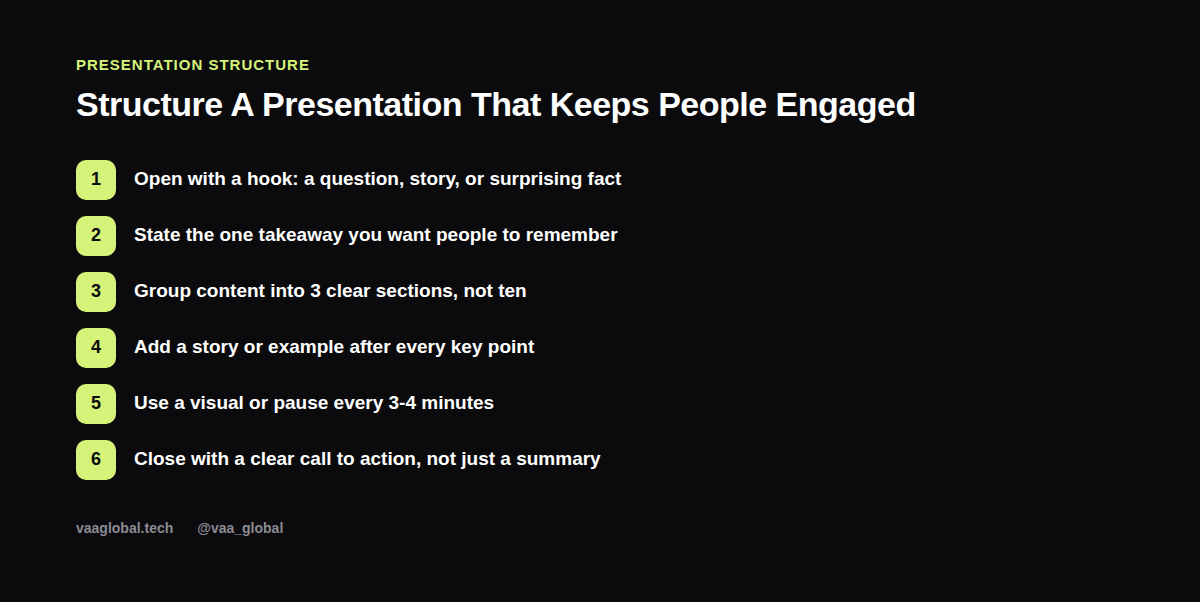
The first thirty seconds set the tone for everything after. Instead of starting with a flat line about what you will be talking about, open with a sharp question, a brief story, or a surprising fact connected directly to your topic. For example, a talk about remote work productivity might open with a quick story about a workday that went completely off the rails, before pivoting into the lesson behind it.
State Your One Takeaway Early
Decide on the single sentence you want your audience to remember if they forget everything else, and say it clearly near the start. This single-sentence takeaway acts like a compass for the rest of your talk; everything else you say should support or illustrate it. Presentations without a clear takeaway tend to blur together in listeners' memory, even if every individual point was interesting.

Organize the Body Into Three Clear Sections
Audiences can comfortably track three main points; beyond that, most listeners start losing the thread. Group your content into three sections, give each one a clear, simple label, and resist the urge to cram in a fourth or fifth point just because it is interesting. If something does not clearly support your core takeaway, cut it, or save it for questions afterward.
Use Storytelling in Presentations to Make Points Stick
Storytelling in presentations works because a concrete story is easier to remember than an abstract claim. After each key point, add a short, specific example, a mini case study, or a brief personal story that illustrates it in action. Even a single well-placed sentence describing a real moment a student told you about, such as how one approach changed their first interview, does more for audience engagement than another bullet point ever could.
Design Slides That Support, Not Compete With, You
Slides should support what you are saying, not repeat it word for word. Use one bold headline, a single supporting image, chart, or number per slide, and leave enough white space that the back row can actually read it. Dense, text-heavy slides pull attention away from you and onto the screen, which works against audience engagement rather than for it.
Build In Deliberate Pauses and Visual Breaks
Every three to four minutes, change something: show a new visual, ask a quick rhetorical question, or simply pause for a beat before moving on. This is not padding; it genuinely resets attention and gives people a moment to absorb what they just heard. If you struggle with nerves during these pauses, our guide on how to overcome stage fright step by step covers breathing and rehearsal techniques that help here too.
Close With a Call to Action, Not Just a Summary
Many presentations fade out with a weak, generic summary slide. Instead, close by telling the audience exactly what you want them to do next, whether that is trying a specific technique, following up with you, or reconsidering one assumption. A strong, specific closing line is often the single most memorable part of the entire talk, so it deserves real preparation, not an afterthought.
How Do I Keep My Audience's Attention Throughout?
How do I keep my audience's attention during a presentation is really a structural question, not a personality question; it comes down to varying your pace, checking in with questions, and never going more than a few minutes without a story, example, or visual shift. If you also present often over video, our guide on public speaking tips for virtual meetings covers engagement techniques specific to that format, including handling questions well, which we also cover in handling tough questions during a presentation.
What Is the Best Way to Structure a Presentation for Nerves Too?
If you are still wondering what is the best way to structure a presentation when nerves are part of the problem, the honest answer is that good structure itself reduces anxiety, because you always know what comes next. The free presentation guidance from Toastmasters International echoes this same principle: a clear, rehearsed structure is often the single biggest confidence booster available to any speaker, regardless of experience level.
The Bottom Line
Learning how to structure a presentation that keeps people engaged comes down to a few repeatable choices: open strong, state one clear takeaway, organize around three focused sections with real stories, and close with a specific action. If you want structured practice building and delivering talks like this, VAA Global's public speaking and media communication course covers speech structure and storytelling over a 10-week, fully remote program.