Learning how to handle tough questions during a presentation often matters more for your credibility than the presentation itself, because the Q&A is where the audience watches how you think on your feet. A single flustered answer can undo ten minutes of a polished talk, while a calm, specific answer to a difficult question can build more trust than the whole presentation combined. This guide walks through specific techniques for the moments that trip people up most.
Why Q&A Feels Harder Than the Presentation Itself
During your prepared remarks, you control the content completely. However, during Q&A, you lose that control entirely, and uncertainty is exactly what triggers nervousness for most speakers. Understanding that this discomfort is normal, rather than a sign you are unprepared, is the first step toward handling difficult audience questions with more composure.
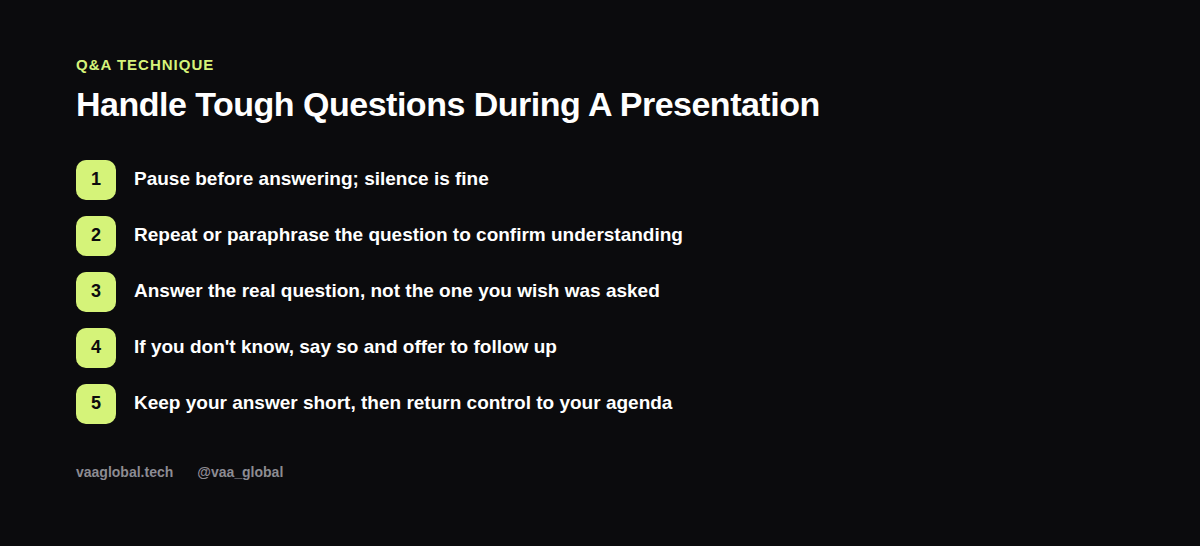
Step 1: Pause Before You Answer
Resist the urge to respond instantly. A short pause, even just two or three seconds, gives you time to understand the actual question and signals composure rather than panic. Silence feels much longer to the speaker than it does to the audience, so do not rush to fill it with a half-formed answer.
Step 2: Repeat or Paraphrase the Question
Repeating or paraphrasing the question serves two purposes: it confirms you understood it correctly, and it buys you a few more seconds to think. For example, confirming out loud that the question is about whether this applies to smaller teams too, both clarifies and gives you a clean entry point into your answer. This is one of the most reliable Q&A techniques because it works in almost every situation.
Step 3: Answer the Real Question, Not a Safer One
It is tempting to answer a question you wish had been asked instead of the one actually posed, especially under pressure. However, audiences notice this dodge quickly, and it damages trust more than an honest, direct answer would. If the real question is uncomfortable, answer it directly and briefly, then move on rather than circling back to it repeatedly.
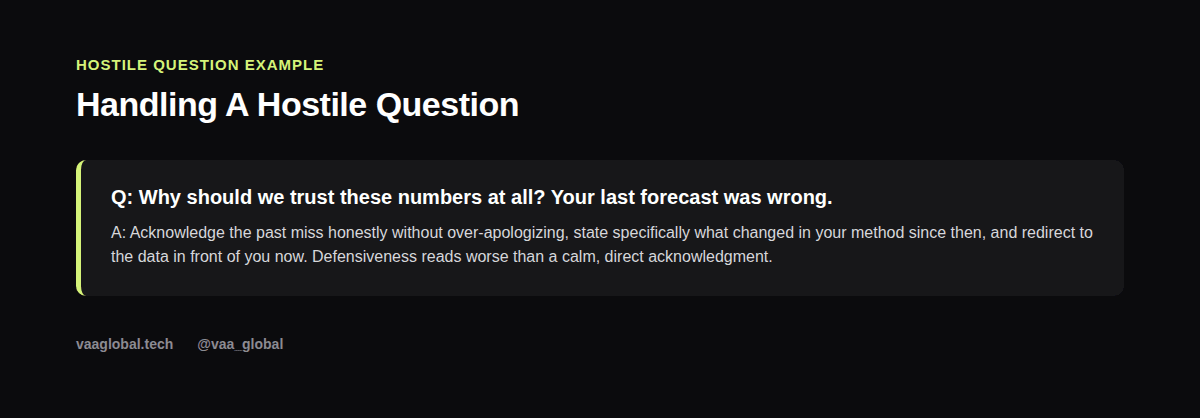
How Do I Handle a Hostile Question From the Audience?
How do I handle a hostile question from the audience is one of the most common worries speakers raise. The key is separating the tone from the content: acknowledge the legitimate concern underneath the aggressive delivery, respond to that concern calmly and specifically, and avoid matching the questioner's energy. Raising your own voice or getting defensive almost always makes you look worse than the original question did.
What Do I Say When I Don't Know the Answer?
What do I say when I don't know the answer in a presentation trips up a lot of speakers who feel pressure to appear all-knowing. The strongest answer is simple and honest: say you do not have that specific number or detail in front of you, and offer to follow up by email or after the session. Audiences generally respect honesty far more than a vague, made-up answer that risks being wrong later.
How Do I Stay Calm During Q&A?
How do I stay calm during Q&A often comes back to the same breathing and reframing techniques useful for the main talk itself, covered in detail in our guide on how to overcome stage fright step by step. Remind yourself that a tough question is not a personal attack; it is simply information the audience wants, and you are allowed to take a breath before responding.
Handling Off-Topic or Rambling Questions
Some questions wander far from your topic or combine three separate points into one long ramble. In these cases, politely identify the specific part you can answer, address that directly, and offer to discuss the rest separately after the session if time is limited. This keeps the Q&A moving without ignoring the person who asked.
Know When to End the Q&A
Decide in advance roughly how long your Q&A will run, and watch the clock rather than letting it drift indefinitely. Ending with a clear closing line, thanking the audience and restating your key takeaway from structuring a presentation that keeps people engaged, leaves a stronger final impression than letting the session fade out awkwardly.
Practice Answering Questions Confidently Before the Real Thing
Answering questions confidently is a skill you can rehearse in advance, not just something you either have or do not. Before a real presentation, ask a friend or colleague to throw three or four unexpected questions at you, including at least one tricky or hostile one, so the physical sensation of being caught off guard feels familiar instead of alarming. Because you have felt it once already in practice, the real moment carries noticeably less sting. The Toastmasters International community regularly runs table-topics exercises built around exactly this kind of unscripted, on-the-spot practice.
The Bottom Line
Learning how to handle tough questions during a presentation is really about staying calm, confirming you understood correctly, and answering honestly, even when the honest answer is that you do not know yet. If you want structured, guided practice handling live audience interaction, VAA Global's public speaking and media communication course covers facilitation and debate skills over a 10-week, fully remote program.