If you are learning to code, a coding portfolio project is the single fastest way to prove you can actually build something, not just follow along with a course. However, most beginners get stuck before they even start, because they are not sure what to build or how finished it needs to be. This guide walks you through the whole process, from picking an idea to putting a working link on your CV.
Why a Portfolio Project Matters More Than Certificates
Employers hiring junior developers in Nigeria and abroad are flooded with CVs that list the same bootcamp certificates. What separates candidates is proof of work. A coding portfolio project shows a recruiter, in under five minutes, that you can take an idea from nothing to something that runs in a browser. For example, a hiring manager scanning 50 CVs will almost always click a live demo link before reading a paragraph of text. As a result, your portfolio project often does more hiring work than your resume does.
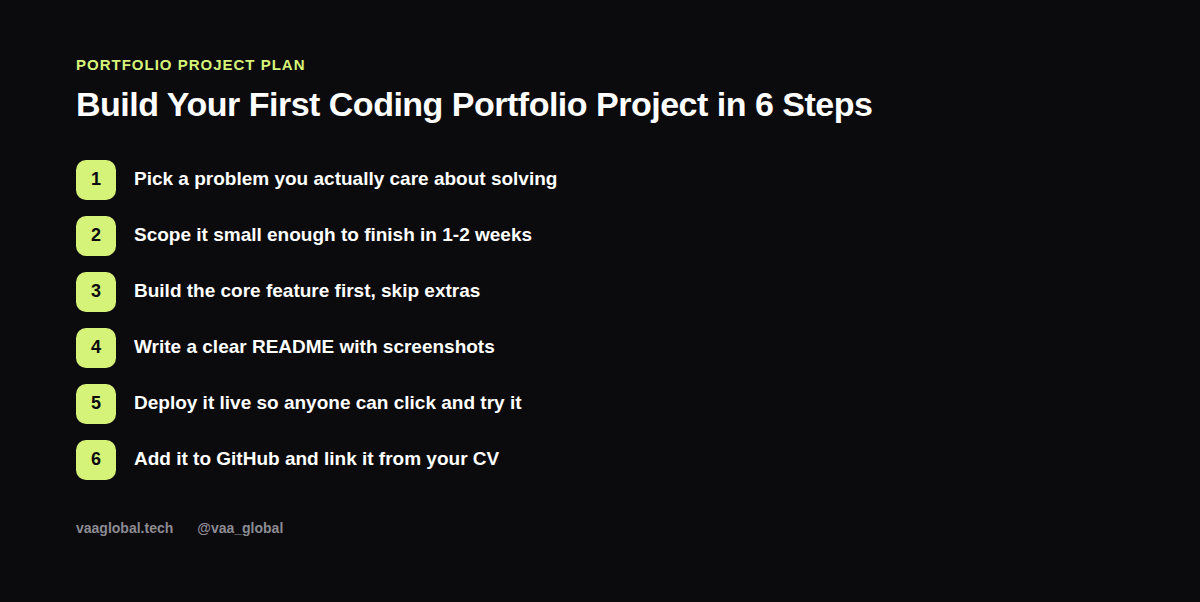
Step 1: Pick a Problem You Actually Understand
Do not start by asking what framework you should learn. Start by asking what small annoyance you could fix with code. Good first project ideas include a budget tracker for Naira expenses, a simple recipe organizer, a Nigerian public holiday countdown, or a tool that converts WAEC grades into GPA. Because you understand the problem personally, you will make better decisions about what the app actually needs, instead of guessing at requirements.
Step 2: Scope It Down Until It Hurts a Little
Beginners almost always plan something too big. If your plan includes user accounts, payments, an admin dashboard, and notifications, cut it down. Pick the single core feature that makes the project useful, and build only that first. For instance, a budget tracker's core feature is adding an expense and seeing the running total. Everything else, like categories or charts, is a bonus you add afterward if there's time. A finished, narrow project is far more valuable than an unfinished broad one.
Step 3: Choose Tools You Can Actually Finish With
If you are newer to programming, plain HTML, CSS, and JavaScript are enough for your first coding portfolio project; you do not need React on day one. The MDN Web Docs are a reliable, free reference for exactly how these core web technologies work, and they are worth bookmarking. Once you are comfortable, move to a framework for your second or third project. Trying to learn a new framework and finish a first project at the same time usually means neither happens.
Step 4: Build in Public, One Commit at a Time
Push your code to GitHub from day one, even before it works. Commit in small, logical steps rather than one giant upload at the end, because recruiters sometimes look at your commit history to see how you work, not just the final result. Along the way, resist the urge to polish endlessly; a working, slightly rough version beats a beautiful version that never ships. If you want a wider base of beginner-friendly exercises to build your fundamentals before tackling a bigger build, this list of free resources to practice coding as a beginner is a good next stop.
Step 5: Write a README That Sells the Project
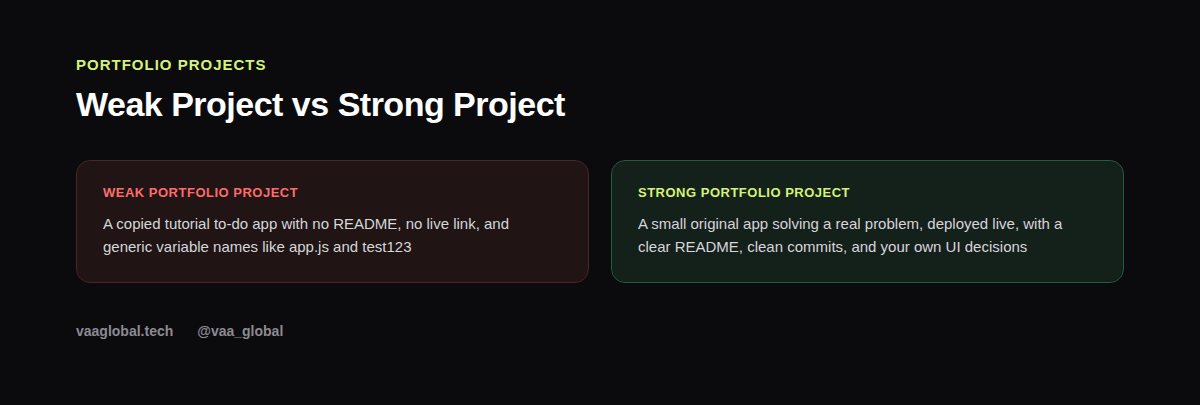
A README is not optional. It should include what the project does, why you built it, the tools you used, a screenshot, and a link to the live demo. Keep it short: three or four sentences of context plus a bullet list of features is usually enough. Many beginner programmers skip this step entirely, which is one of several common mistakes beginner programmers make that quietly cost them interview callbacks.
Step 6: Deploy It So Anyone Can Click a Live Link
A project that only runs on your laptop is not a portfolio project yet; it is homework. Free hosting options like Netlify, Vercel, or GitHub Pages let you deploy a static site in minutes, while something with a backend might need a free tier on Render or Railway. Once deployed, test the live link yourself on your phone before sharing it anywhere, because broken links are worse than no link at all.
How Many Projects Do You Actually Need?
Three well-finished projects, each showing a different skill, is typically enough for a junior role. For example, one project could show frontend UI skill, another could show working with an API, and a third could show basic backend logic with a database. Beyond that point, additional projects usually add diminishing returns compared to simply polishing the three you have and preparing for interviews, such as practicing how you would answer in a junior developer interview.
Common Project Ideas That Still Impress in 2026
Avoid the most overdone tutorial clones, like a basic to-do list with zero personal touch. Instead, consider a Nigerian transport fare splitter, a simple inventory tracker for a small shop, a personal expense dashboard, or a tool that pulls weather data from a public API and displays it cleanly. Whatever you choose, add at least one small original decision, such as a unique feature or design choice, so it does not read as a copy-paste tutorial. If you eventually want structured, mentor-guided practice building projects like these from scratch, VAA Global's programming and software development training is a fully remote, beginner-friendly option covering frontend, backend, and fullstack tracks with real project work built in.
The Bottom Line
Building your first coding portfolio project does not require a complicated idea or an advanced framework. It requires picking something small enough to finish, deploying it so it is actually clickable, and documenting it clearly enough that a stranger understands it in under a minute. Do that three times with three different kinds of projects, and you will have a portfolio that genuinely helps you get interviews, instead of one more unfinished folder sitting on your laptop.