Almost every new coder repeats the same common mistakes beginner programmers make, and most of them have nothing to do with intelligence or talent. They happen because learning to code rewards patience and specific habits that nobody explains clearly at the start. If you have ever wondered why is learning to code so hard, it is usually these habits, not raw ability, that are slowing you down. This article breaks down the mistakes that slow people down the most, and what to do instead, so you can stop making the same coding errors on repeat.
What Should New Programmers Avoid Most?
Before getting into each mistake individually, it helps to understand the pattern behind most of them: rushing past the step that builds understanding, in favour of the step that feels like progress. Pasting working code feels like progress. Starting a flashy new course feels like progress. However, none of these build the skill that actually gets you hired, which is being able to reason through logic, syntax, and variables on your own when nothing is written for you yet.
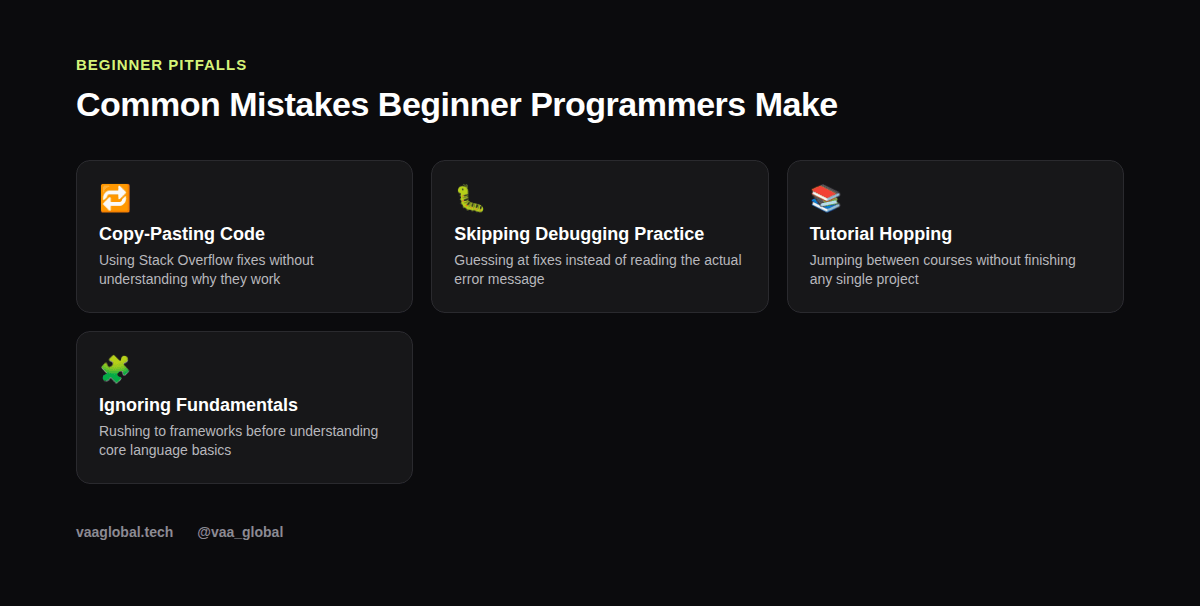
Mistake 1: Copy-Pasting Code Without Understanding It
It is tempting to grab a snippet from Stack Overflow, paste it in, and move on once it works. However, this habit quietly builds a portfolio of code you cannot explain, which becomes obvious the moment an interviewer asks you to walk through your own project. Instead, type the solution out by hand and ask yourself what each line does before continuing. Because you wrote it with intention, you will remember the pattern the next time you need it.
Mistake 2: Guessing Instead of Reading the Error Message
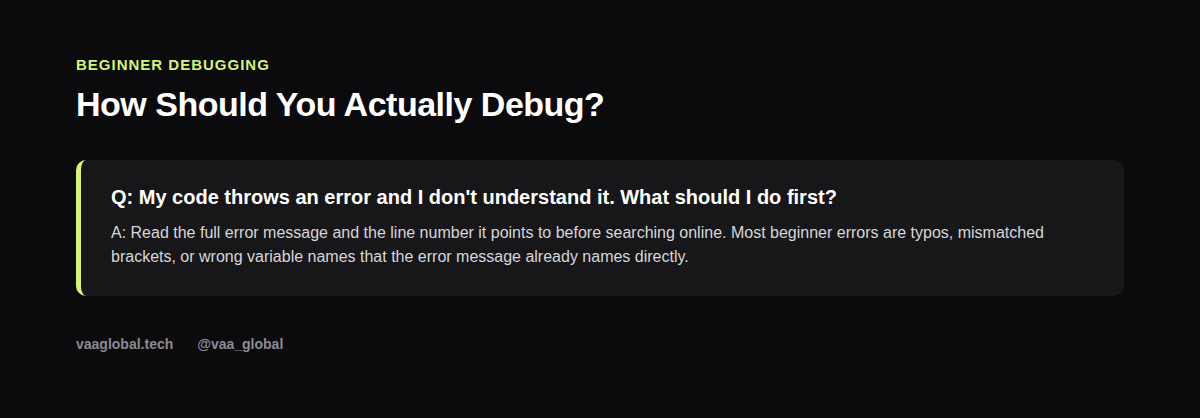
New programmers often panic at a red error message and immediately search online instead of reading what it actually says. Most beginner errors, such as a missing semicolon, a misspelled variable, or an unclosed bracket, point directly to the problem in the error text itself. The next time something breaks, read the error message twice and check the exact line number it mentions before searching for help. This single habit change solves a surprising share of beginner coding mistakes on its own.
Mistake 3: Tutorial Hopping Without Finishing Anything
Starting a new course every time the current one gets hard feels like progress, but it usually is not. You end up with a shallow familiarity with ten topics instead of real competence in one. For example, someone who finishes a 20-hour JavaScript course and builds three small projects will generally out-perform someone who sampled five different courses and finished none. If you are rebuilding momentum, these free resources to practice coding as a beginner are a solid place to commit to and actually finish.
Mistake 4: Rushing to Frameworks Before Fundamentals
React, Vue, and other frameworks are exciting, but they sit on top of core JavaScript concepts like functions, loops, and array methods. Skipping straight to a framework usually means you can follow tutorials but cannot debug your own code when something breaks in a way the tutorial did not cover. The MDN JavaScript guide is a dependable, free place to build that foundation properly before adding a framework on top.
Mistake 5: Not Building Anything of Your Own
Following along with a video is easier than building from a blank file, so many beginners stay in follow-along mode far longer than they should. Although tutorials are useful early on, you need to practice building something without a guide to actually learn problem-solving. Once you are ready to test that independence, try building your first coding portfolio project from a blank idea rather than a tutorial script.
Mistake 6: Comparing Your Timeline to Everyone Else's
Social media is full of people claiming they got a developer job in three months. In reality, timelines vary enormously based on prior experience, hours available, and the role being targeted. Comparing your week-four progress to someone else's month-twelve highlight reel is a fast way to quit for no good reason. Focus on whether you understood more this week than last week, not on anyone else's pace.
Mistake 7: Avoiding Version Control Until It Feels Necessary
Many beginners put off learning Git because it feels like an extra, confusing layer on top of actual coding. In practice, Git is also how you demonstrate your work process to employers, and learning it early prevents the painful experience of losing days of work with no backup. Set up a GitHub account and commit regularly from your very first project, even before you fully understand branching.
Debugging for Beginners: A Quick Framework
Good debugging for beginners comes down to a repeatable sequence rather than panic. First, read the full error and note the line number. Second, check that specific line and the lines just above it for a typo, a missing bracket, or a wrong variable name. Third, if it still fails, print the value of the variable in question right before the error to see what it actually holds, since it's often different from what you assumed. Following this sequence consistently, instead of randomly changing code until something works, builds real programming fundamentals rather than lucky guesses.
How to Actually Fix These Habits
None of these common mistakes beginner programmers make require starting over. They require small, consistent corrections: read error messages fully, finish before starting something new, and build something small without a tutorial every few weeks. If you want structure instead of figuring this out alone, VAA Global's programming and software development training is a beginner-friendly, fully remote program that builds fundamentals properly before moving into frameworks and real project work, which is also good preparation if you are eventually aiming for a junior developer interview.
The Bottom Line
The common mistakes beginner programmers make are rarely about intelligence; they are about habits that nobody points out clearly enough, early enough. Read your error messages, finish what you start, build without a tutorial sometimes, and learn Git from day one. Correct those few habits, and the rest of your coding progress gets noticeably faster.