You do not need to spend money to get good at programming, because some of the best free resources to practice coding exist precisely for beginners who are just starting out. The challenge is not a lack of options; it is picking a few good ones and sticking with them instead of bouncing between dozens. If you keep asking yourself what is the best free website to learn to code, or how do I practice coding without paying for a course, this guide walks through the most reliable free tools and how to actually use them, including where can beginners practice JavaScript for free.
Why Free Resources Are Genuinely Enough to Start
Many beginners assume they need a paid course before they can make real progress, but that is not true for the fundamentals. HTML, CSS, JavaScript, Python, and Git all have excellent free documentation and practice platforms. As a result, the real cost of learning to code for free is not money; it is the discipline to follow through on one resource consistently instead of collecting bookmarks.
A Short List of Free Coding Websites Worth Bookmarking
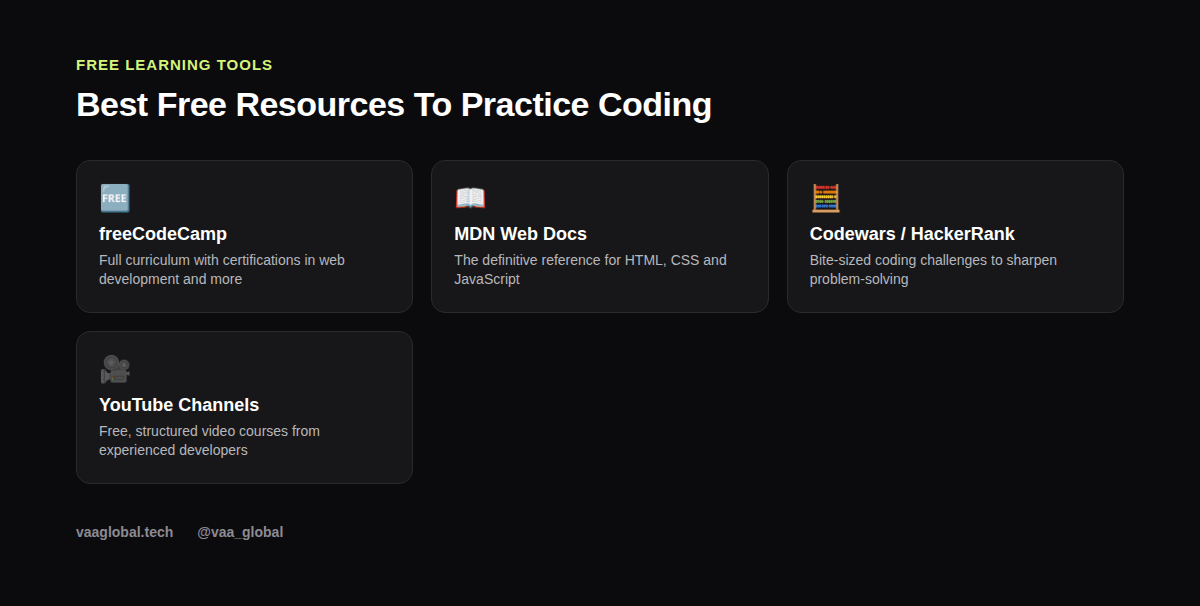
Beyond the main platforms covered below, keep a short list of free coding websites close at hand: freeCodeCamp, MDN, Codewars, HackerRank, and your own GitHub profile. Open these often, instead of searching for a new one every week. You will learn faster once you stop hunting for the perfect site and simply commit to the few good ones you already have.
freeCodeCamp: Full Curriculum With Certificates
freeCodeCamp offers a complete, free curriculum covering web development, data structures, and more, with projects and certifications along the way. Because it follows a clear order, you rarely skip the fundamentals, which, as covered in our piece on common mistakes beginner programmers make, is one of the most frequent reasons progress stalls. Work through a section, then immediately build something small using only what you just learned before moving on.
MDN Web Docs: The Reference You'll Keep Coming Back To
Mozilla maintains the MDN Web Docs, widely regarded as one of the most trustworthy references for HTML, CSS, and JavaScript on the internet. Unlike a tutorial, MDN is not meant to be read start to finish; instead, use it whenever you hit something you do not fully understand, such as how a specific array method works. Bookmarking it early builds a habit that experienced developers rely on daily.
Coding Challenge Sites for Deliberate Practice
Once you know the basics, sites like Codewars, HackerRank, and LeetCode offer small coding challenges sorted roughly by difficulty. These are excellent for coding practice for beginners because each challenge is short enough to finish in one sitting, which builds confidence quickly. However, do not spend all your time here; challenge sites train pattern recognition for puzzles, while portfolio projects train you to build complete, usable things, so you need both.
YouTube and Free Video Courses
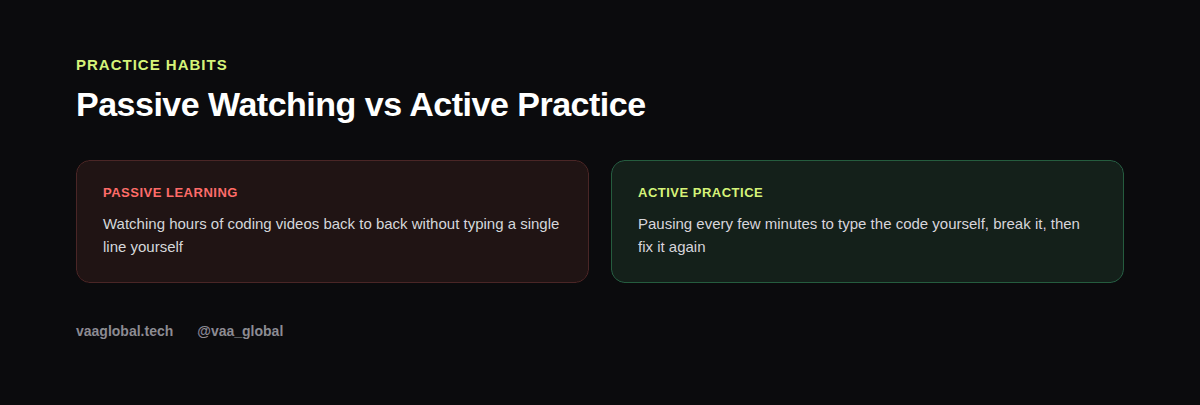
Channels run by experienced developers often publish full, free courses on specific topics, such as building a project with a particular framework from scratch. These work best when you pause frequently and type the code yourself rather than only watching, since passively watching a video rarely builds the muscle memory that actual practice does. Treat a video course the same way you would treat a book: actively, not as background noise.
GitHub as a Free Practice and Portfolio Tool
GitHub is free and doubles as both a place to practice version control and a visible record of your growth as a developer. Explore other beginners' public repositories to see how real projects are structured, and start committing your own work early, even if it feels rough at first. If you want a focused plan for turning this practice into something a recruiter will actually look at, see our guide on building your first coding portfolio project.
Online Coding Challenges in Communities and Forums
Communities like freeCodeCamp's forum, dev.to, and various Discord servers host online coding challenges and regular discussion threads where beginners share progress and get feedback. Participating, even just by reading how others solved a problem differently than you did, exposes you to approaches you would not think of alone. Just be careful not to let community browsing replace actual practice time; read with a purpose, then go build.
How to Structure a Free Learning Routine
A simple, sustainable routine looks like this: thirty minutes of structured lessons on freeCodeCamp, fifteen minutes of a small coding challenge, and whatever time is left spent building or extending your own project. Repeating this most days beats a single long weekend session, because consistency builds the kind of fluency that interviews and real jobs actually test, including a future junior developer interview.
When Free Resources Reach Their Limit
Free resources are excellent for fundamentals, but they rarely offer structured feedback, mentorship, or accountability, which many self-taught learners eventually find they need to push past a plateau. If you reach that point, VAA Global's programming and software development training is a beginner-friendly, fully remote program covering frontend, backend, and fullstack development with guided project work and job assistance.
The Bottom Line
The best free resources to practice coding as a beginner are not secret; freeCodeCamp, MDN, and coding challenge sites are widely known and genuinely effective. What separates people who make progress from people who stay stuck is consistency: pick two or three resources, use them actively instead of passively, and build something real along the way.