
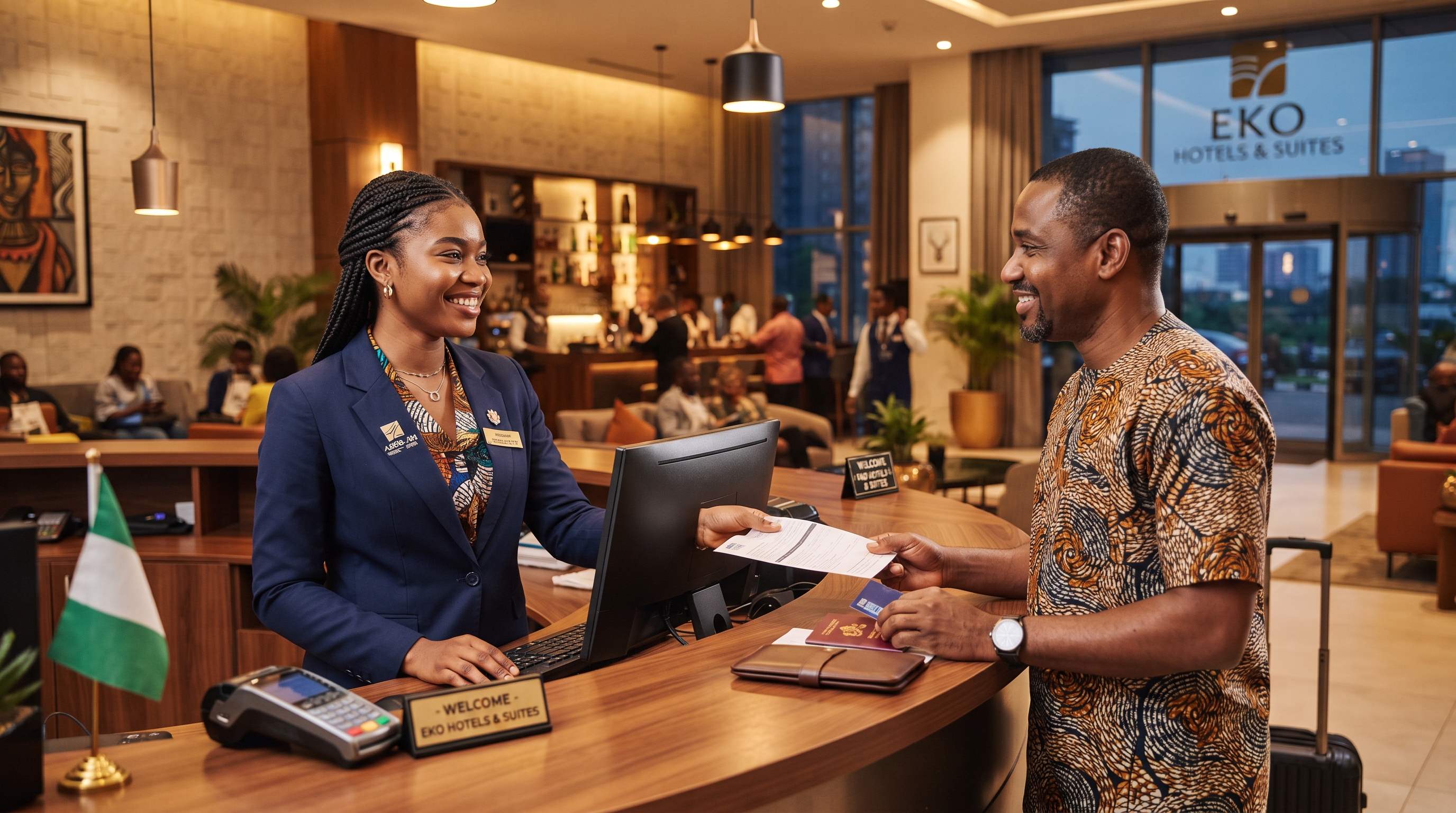
Walk into almost any new hotel opening in Lekki, Victoria Island, or Ikeja right now, and you'll hear the same complaint from management: they cannot find enough staff who already know how to do the job. Lagos hotels are struggling to find trained staff at a pace that is starting to slow down expansion plans across the city's fast-growing hospitality sector, and the reasons go far deeper than a simple labor shortage.
A Booming Sector Outpacing Its Talent Pipeline
Lagos has seen a wave of new hotels, serviced apartments, and short-let properties open in the last few years, driven by business travel, tourism, weddings, and the steady rise of the "detty December" season. Every one of these properties needs front office agents, housekeepers, food and beverage staff, and guest relations officers from day one. But Nigeria's formal education system produces very few graduates with direct, practical hospitality training. Most universities and polytechnics that offer hospitality-related courses focus on theory, leaving graduates unfamiliar with property management systems, service sequencing, or how to handle a difficult guest complaint in real time.
The result is a widening gap between how many hospitality jobs exist in Lagos and how many candidates can actually perform them from day one.
What "Untrained" Really Looks Like on the Job
When hotel general managers say staff are untrained, they usually mean specific, fixable gaps:
No exposure to PMS software like Opera or Cloudbeds, so new hires need weeks of hand-holding just to check a guest in or out correctly.
Poor grooming and communication standards that don't match international guest expectations, especially for properties serving expatriates and business travelers.
Weak food and beverage service etiquette, from table setting sequence to how drinks orders are taken and confirmed.
No understanding of revenue management or OTA/channel management, which matters even for supervisory-level hires, not just management.
Limited guest relations skills for handling complaints, upselling, or managing VIP guests without a manager stepping in every time.
These are not abstract soft skills. They are specific, teachable competencies that most job seekers in Lagos simply have never had the chance to practice before their first hotel job.
Why Experience Alone Isn't Solving the Problem
Some hotels try to solve this by only hiring "experienced" staff, poaching from competitors. But this just shuffles the same small pool of trained workers around the city rather than growing it. It also drives up salary expectations for a limited group of people while leaving thousands of capable, hardworking Nigerians unemployed simply because they never had access to structured hospitality training.
This is exactly the gap a proper hospitality management course is meant to close. Training someone in front office operations, housekeeping standards, F&B service, guest relations, and even PMS software before they walk into an interview means hotels spend less time and money on basic onboarding, and job seekers stop losing offers over avoidable skill gaps.
What This Means If You're Looking for a Hotel Job in Lagos
If you are trying to break into hospitality in Lagos, this staffing gap is actually good news for you, if you position yourself correctly. Hotels are actively looking for people who can hit the ground running. A candidate who understands how a front desk actually operates, who can speak confidently about guest relations scenarios, and who has even a basic grasp of hotel software and revenue concepts will stand out immediately against applicants with no formal preparation.
This is also why many Lagos hotels increasingly prefer candidates with a recognized hospitality management certificate over a general degree with no practical exposure. Employers are not necessarily looking for a four-year commitment; they're looking for proof that you understand how a real hotel runs.
Closing the Gap With Structured, Remote Training
VAA Global built its Hospitality Management course specifically to respond to this shortage. Over 10 weeks, delivered fully online so you can study from anywhere in Nigeria or across Africa, the course covers front office operations, housekeeping standards, food and beverage service, guest relations, revenue management, OTA and channel management, property management systems like Opera and Cloudbeds, hospitality marketing, and budgeting and cost control. Just as important, it includes a real internship component, so you graduate with actual hands-on exposure, not just theory.
For ₦150,000, this is a far more targeted investment than years of unrelated schooling, and it is built around the exact skills Lagos hotels say they cannot find in the local job market.
If you want to become one of the trained candidates that hotels are actively competing for, explore the full curriculum and enrolment details on the Hospitality Management course page and take the first step toward a hospitality career that starts you ahead of the pack.
Ready to become the candidate Lagos hotels are looking for? Visit the Hospitality Management course to enroll in VAA Global's Hospitality Management course today.