
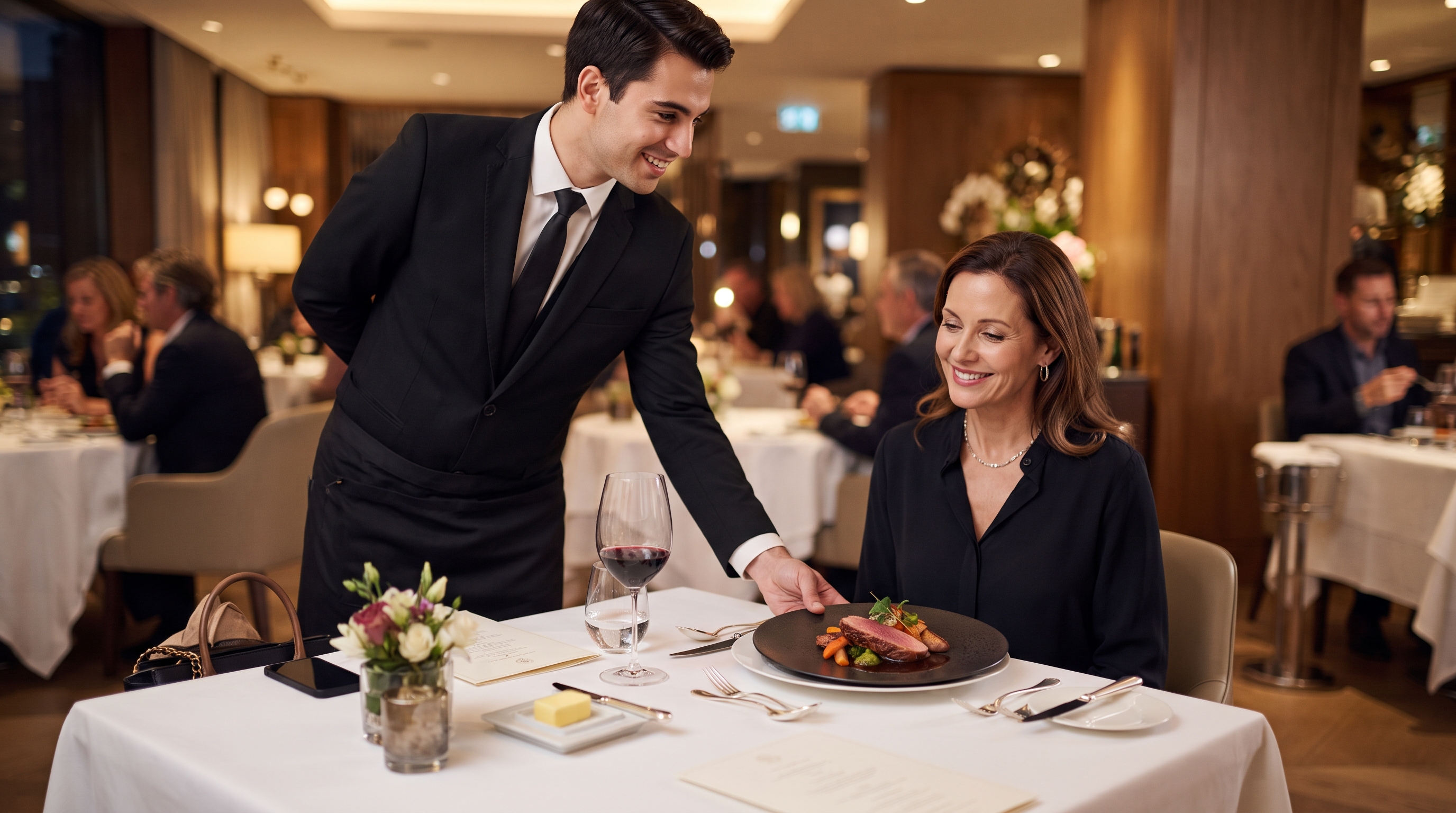
Every hotel restaurant, banquet hall, and room service department runs on a set of food and beverage service standards, the specific, repeatable procedures that ensure every guest gets the same high-quality experience regardless of who is serving them. For anyone building a career in hospitality, mastering these standards isn't optional. It's often the single biggest factor separating a confident, hireable candidate from someone who needs months of on-the-job correction.
Why Service Standards Matter So Much in Hospitality
Guests judge a hotel or restaurant on consistency. A five-star property can have beautiful décor and excellent food, but if service is slow, orders are mixed up, or staff seem unsure of themselves, guests notice immediately, and it affects reviews, repeat bookings, and revenue. This is why hotels train staff so rigorously on food and beverage service standards, and why job seekers who already understand these standards have a real advantage in interviews and on the job.
Core Table Setting Standards
Before a guest even sits down, the table setup communicates the level of service to expect. Standard practice includes:
Correct cutlery placement, arranged in the order of use, from the outside in.
Glassware positioning, typically above the knife, arranged by size and type of drink.
Napkin folding and placement, consistent with the property's style, whether formal or casual.
Condiments, menus, and centerpiece placement, kept clean, functional, and unobtrusive.
Getting table setup wrong is one of the fastest ways new staff lose guest confidence before service even begins.
Order Taking and Communication
Professional order taking follows a clear sequence: greeting the guest, presenting the menu, answering questions about ingredients or preparation, taking the order accurately (including any allergies or special requests), repeating it back to confirm, and communicating it clearly to the kitchen or bar. Common mistakes among untrained staff include forgetting to confirm special requests, mishearing orders in a noisy environment, and failing to inform guests of wait times or unavailable items before they've committed to an order.
Good food and beverage service also means reading the guest. Are they in a hurry for a business lunch? Celebrating an anniversary? Adjusting your pace and tone accordingly is a skill trained staff develop quickly, but it needs to be taught, not assumed.
Service Sequence and Timing
There is a standard sequence most hotels and quality restaurants follow: seating, water and bread service, drink orders, food orders, course delivery in the correct order (starters before mains, mains before desserts), clearing plates only once all guests at a table have finished, and presenting the bill only when requested or appropriate. Rushing this sequence, or serving dishes out of order, is one of the most common service failures in untrained staff, and one of the easiest to fix with proper training.
Hygiene and Presentation Standards
Food and beverage service standards extend well beyond how food looks on the plate. They include personal hygiene (clean uniforms, trimmed nails, tied-back hair), proper handling of plates and glassware (never touching the rim of a glass or the surface of a plate that touches food), correct carrying techniques for trays, and safe temperature handling for hot and cold dishes. These standards protect both guest health and the establishment's reputation, and hotels take them extremely seriously during hiring and probation periods.
Handling Complaints and Special Requests
No matter how well-trained a team is, complaints happen: a wrong order, a delayed dish, a guest with a last-minute dietary restriction. Professional F&B service standards include a clear process for this: listen without interrupting, apologize sincerely, offer a solution (replacement, discount, or complimentary item depending on the establishment's policy), and follow up to confirm the guest is satisfied. Staff who can handle this calmly and professionally are highly valued, because how a complaint is resolved often matters more to guest retention than the original mistake.
Buffet and Banquet Service Differences
Hotels frequently run banquet events, weddings, conferences, and buffet-style dining, each with its own service standards. Buffet service requires staff to monitor food levels, replenish quickly without disrupting guest flow, and maintain presentation throughout service. Banquet service often involves timed courses for large groups, requiring tight coordination between kitchen and service staff. Understanding these variations is essential for anyone hoping to work in larger hotels with active event and conference business, a major part of Lagos's hospitality economy.
How to Learn These Standards Properly
Reading about food and beverage service standards is a start, but hotels want to see that you can actually apply them. This is why practical, hands-on training matters so much more than theoretical study alone. VAA Global's Hospitality Management course includes a dedicated food and beverage service module covering table setup, order taking, service sequencing, hygiene standards, and complaint handling, reinforced through a real internship where you apply these standards in an actual hospitality environment, not just a classroom simulation.
For anyone serious about working in hotel restaurants, banquets, or room service in Lagos or anywhere in Nigeria, mastering these standards before your first job interview puts you well ahead of untrained applicants competing for the same roles.
Ready to master food and beverage service standards and build a real hospitality career? Visit the Hospitality Management course to enroll in VAA Global's Hospitality Management course today.