
Fullstack data is a career path that spans the entire data pipeline: collecting and cleaning raw data, analyzing it to find patterns and insights, and understanding the data science and engineering fundamentals that keep the systems behind that data running reliably. Rather than specializing narrowly in just analysis or just engineering, a fullstack data professional understands how data moves from raw source to usable insight end to end. That breadth is increasingly what companies want, especially smaller teams that can't afford to hire three separate data specialists.
The Three Layers of the Data Pipeline
Data work generally breaks into three connected layers. Collection and engineering covers gathering data from various sources, cleaning it, and building the pipelines and databases that store and move it reliably. Analysis covers exploring that data to find trends, patterns, and answers to specific business questions, usually using SQL, spreadsheets, or Python. Data science layers statistical modeling and, increasingly, machine learning basics on top, to predict outcomes rather than just describe what already happened.
A fullstack data professional doesn't need to be a world-class expert at every layer, but understands enough of each to move data from a messy raw source all the way to a clear, decision-ready insight without needing three different people to hand it off between them.
Why Companies Want Generalists, Not Just Specialists
Large tech companies can afford dedicated data engineers, data analysts, and data scientists as separate roles. Most companies, especially small and mid-sized businesses and startups, can't, and instead need one person or a small team who can handle the whole pipeline reasonably well. This is exactly the gap fullstack data skills fill, and it's a growing hiring category as more companies of all sizes try to become data-driven without building an entire specialized data department.
This generalist positioning also gives fullstack data professionals more career flexibility, since they can move toward deeper specialization in any of the three layers later, once they know which part of the pipeline they enjoy most.
The Core Tools and Skills You'll Need
SQL is non-negotiable, it's the standard language for querying and working with structured data across nearly every industry. Python is the second essential tool, used for data cleaning, automation, analysis, and the entry point into basic data science and machine learning concepts. Beyond these, familiarity with visualization tools like Tableau or Power BI, and a basic understanding of how databases and data pipelines are structured, rounds out the fullstack skill set.
Statistical thinking matters as much as any specific tool. Understanding what makes a trend meaningful versus coincidental, and how to frame a data question clearly before diving into analysis, is what separates useful data work from technically correct but unhelpful output.
How VAA Global's Fullstack Data Course Is Structured
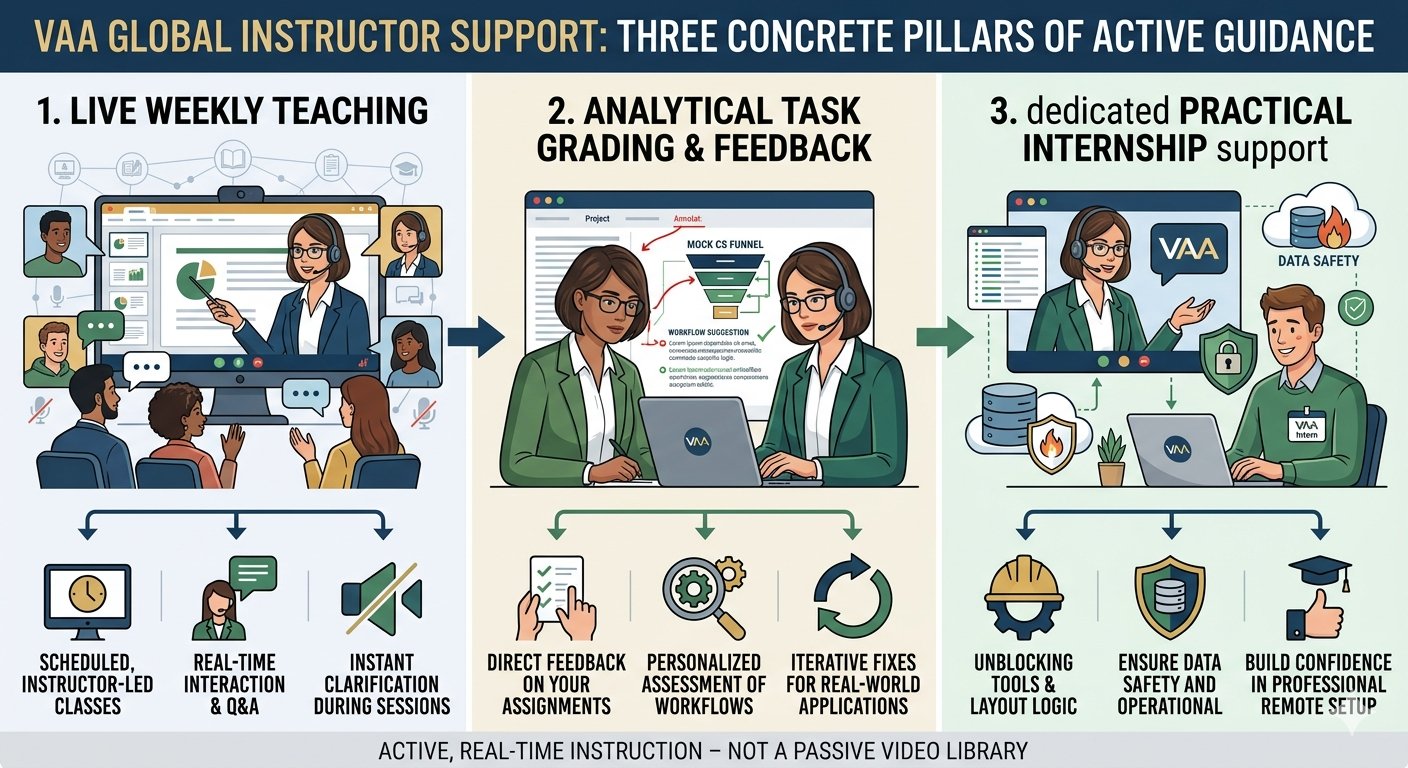
VAA Global's Fullstack Data course is built to cover the full pipeline rather than one narrow slice: data collection and cleaning, SQL and Python for analysis, data visualization, and an introduction to data science and engineering fundamentals so graduates understand how the systems behind the data actually work. It's delivered as live, instructor-led training, which matters for a technical field like this where getting unstuck quickly with real feedback speeds up learning significantly.
As with every VAA Global program, students receive a certificate, job placement assistance and interview coaching, access to remote job opportunities, job matching through VAA Global Talent, a 2-month internship, mentorship from industry experts, portfolio building, and LinkedIn and personal branding support.
Building a Data Portfolio That Proves You Can Do the Job
Data hiring is heavily portfolio-driven. A strong data portfolio shows two or three end-to-end projects: a messy raw dataset, the cleaning and analysis process, and a clear final insight or visualization that answers a real question. This end-to-end framing is exactly what makes a fullstack data portfolio stand out, since it proves you can handle the whole pipeline, not just run a formula in a spreadsheet.
The VAA Global internship gives students real project experience to build this kind of portfolio, which the portfolio builder tool then helps package for job applications.
Where the Remote Data Jobs Are
Fullstack data skills are in demand across e-commerce, fintech, logistics, and SaaS companies, essentially any business generating enough data to need someone making sense of it. Because the work happens through software, databases, and dashboards rather than in-person collaboration, it's one of the more naturally remote-friendly technical fields, and companies are increasingly comfortable hiring data talent from anywhere with strong English and technical communication skills.
Fullstack data is a strong path if you want technical, in-demand skills without narrowing yourself into just one part of the pipeline too early. Check out VAA Global's Fullstack Data course or apply now to start building an end-to-end data skill set employers are actively competing for.