SHRM-CP vs PHR is one of the first real decisions a new HR career switcher faces. Both are genuinely well-known HR certifications in the industry. However, only one of them is realistic if you do not have HR experience yet. This guide breaks down exactly why, in plain, simple terms anyone can follow.
Which HR Certification Should Beginners Get First?
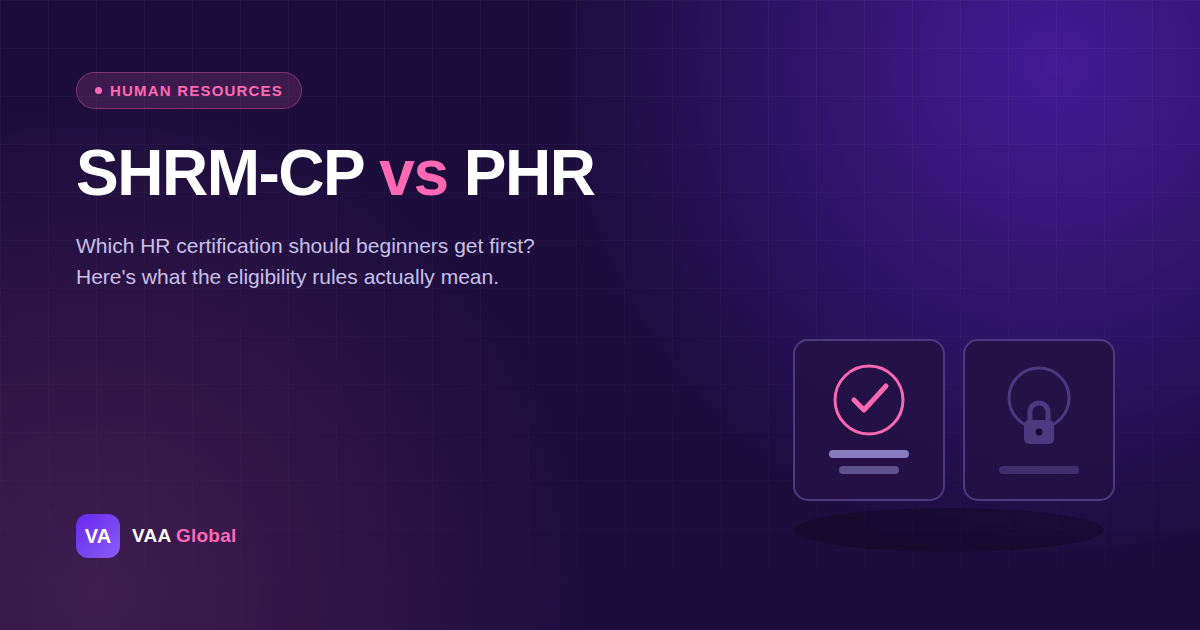
Get SHRM-CP first. Do I need experience for PHR? Yes, one to four years of it. SHRM-CP, on the other hand, has no degree or experience requirement at all. It tests how you would actually handle real workplace situations, which suits someone still building hands-on HR experience.
Why PHR Is Not a Realistic First Step
PHR requires one to four years of professional HR experience, depending on your education level. Because of this, most complete beginners simply do not qualify for it yet. Not on day one, and often not for a while after that. PHR is best treated as a future goal, not a starting point.
What Do I Need for PHR Versus SHRM-CP?
For PHR, you need documented HR experience first. For SHRM-CP, you need none. That single difference in eligibility explains why SHRM-CP is better for beginners. It also explains why beginners should start there, then move toward PHR once they have real HR work behind them.
How Do the Two Exams Actually Differ?
PHR tests knowledge mastery, such as employment law and HR operations. SHRM-CP tests behavioral competencies instead, meaning how you would respond to real workplace scenarios. As a result, SHRM-CP often feels more intuitive to beginners who have not yet memorized detailed HR regulations.
Is There an Even Easier Starting Point?
Yes. The aPHR certification exists specifically for people with zero HR background. Many beginners start there. They move to SHRM-CP once they have some exposure. Then, later, they pursue PHR once real experience finally qualifies them for it.
Does a Certification Actually Help You Get Hired?
Yes, especially for entry level HR jobs and HR generalist roles. It signals that you already understand core HR functions, from employee relations to basic compliance, even before you have years of practice behind you. According to detailed comparisons of the two certifications, SHRM-CP suits earlier-career, competency-heavy generalist roles well, which is exactly where most beginners start out.
How to Build These Skills in a Structured Way
You can prepare for SHRM-CP independently, but structured training builds the practical HR generalist skills that a certification alone will not teach you. If you want a guided path, explore VAA Global's Human Resource Management training, built for beginners with no prior HR experience. You can also take VAA Global's free Career Compass quiz to confirm this path fits you, browse the full list of 33 VAA Global courses if you are still deciding between tracks, or read about VAA Global's story and approach to training.
Is SHRM-CP Worth the Cost for Beginners?
For most beginners, yes. The exam fee is modest next to the doors it can open in entry level HR hiring. Think of it less as a piece of paper and more as structured proof that you can handle real workplace situations, not just recite policy. That proof genuinely matters when a hiring manager is comparing two otherwise similar candidates for the exact same HR generalist role.
What Is the Best HR Certification for Complete Beginners With No Experience?
If SHRM-CP still feels like a stretch, aPHR is the gentler option, built specifically for people with no HR background at all. Either one is a reasonable starting point, and neither one genuinely requires a business degree to attempt right away.
The Bottom Line
SHRM-CP vs PHR really comes down to eligibility. Most beginners do not have the years of HR experience PHR requires yet, and that is completely normal this early on. Start with SHRM-CP, or aPHR if you want an even gentler entry point, then move on to PHR once you genuinely qualify for it.