
What Is OTA Management, Really?
If you have ever booked a hotel room through Booking.com, Expedia, Hotels.com, or Jumia Travel, you have used an Online Travel Agency, or OTA. For the hotel on the other end, every one of those platforms is a sales channel that needs constant attention — and that attention is what we call OTA management.
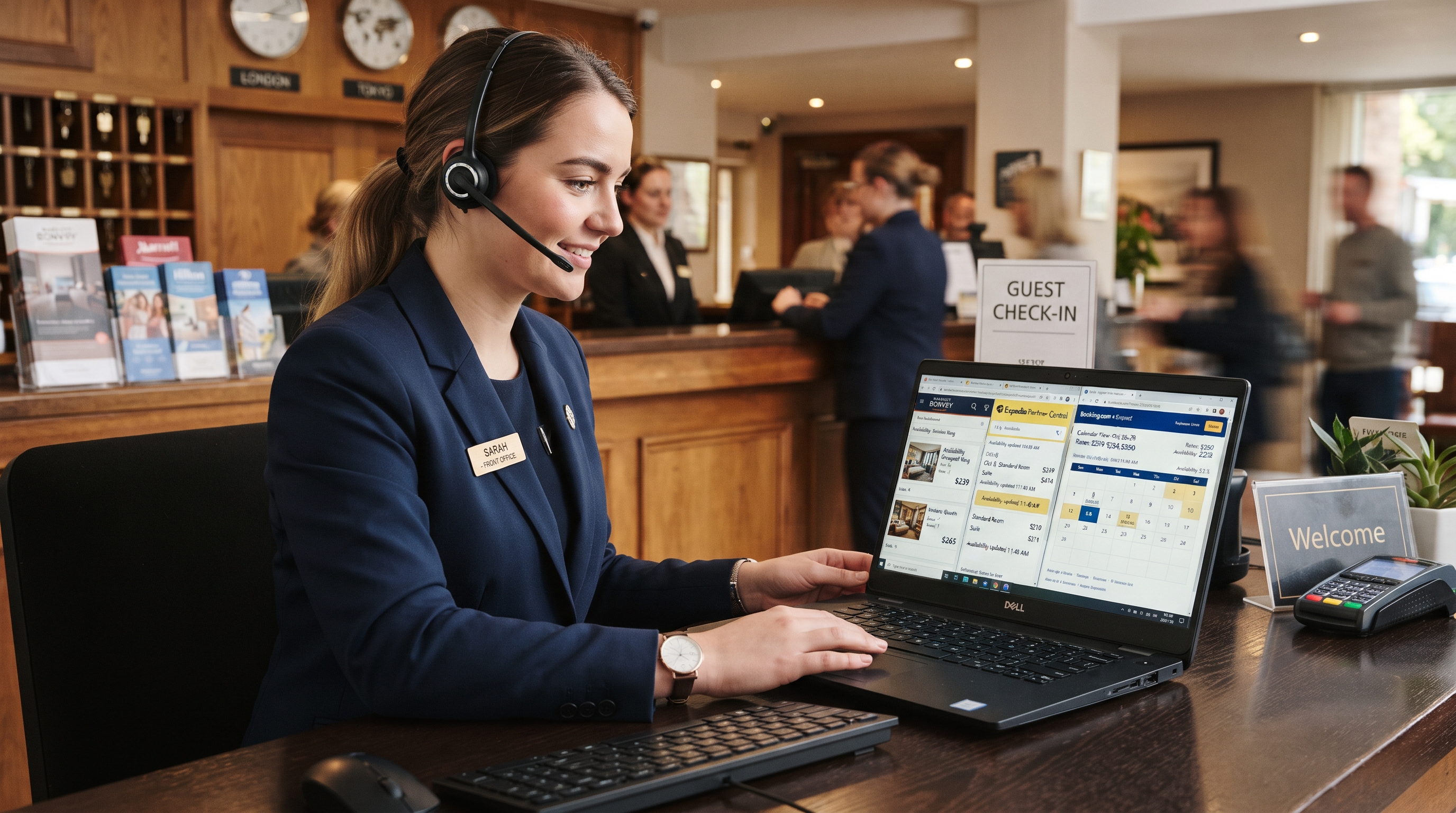
OTA management is the day-to-day work of listing your property correctly, setting the right prices, keeping room availability updated in real time, responding to guest messages sent through the platform, and making sure none of it contradicts what is happening on your own website or at the front desk. Get it wrong, and you either lose bookings to overbooking errors or lose money to outdated pricing. Get it right, and OTAs become one of your most reliable sources of guests, especially for independent hotels and guesthouses across Lagos, Abuja, and other Nigerian cities that do not yet have strong brand recognition on their own.
Why OTA Management Matters More in Nigeria's Hospitality Market
Nigeria's hotel industry is dominated by independent properties, small hotel groups, and short-let apartments rather than large international chains. Most of these properties do not have the marketing budget to drive direct traffic the way a Marriott or Hilton can. That makes OTAs a lifeline — a way for a 20-room hotel in Lekki or a boutique guesthouse in Enugu to appear next to bigger competitors in a traveler's search results.
But this visibility comes at a cost. OTAs typically charge commissions between 15% and 25% per booking. A property that mismanages its OTA presence — through pricing errors, poor review scores, or availability that does not match reality — pays that commission and still loses the guest's trust. Good OTA management is what makes the commission worth paying.
Core Components of OTA Management
1. Listing OptimizationYour OTA listing is often a guest's first impression of your property. Clear, high-quality photos, an accurate room description, and complete amenity information (Wi-Fi, breakfast, pool, generator/power backup — a detail Nigerian guests specifically look for) all affect click-through and conversion rates.
2. Rate and Inventory ParityRate parity means the price for a given room type and date is consistent across all your channels — your own website, walk-ins, and every OTA you use. Inconsistent pricing confuses guests, damages trust, and can even get a property flagged or penalized by OTA platforms.
3. Channel ManagersAs a hotel grows beyond two or three OTAs, manually updating each platform becomes unmanageable and error-prone. A channel manager is software that connects to your property management system (PMS) and pushes rate and availability updates to every connected OTA simultaneously. Platforms like Cloudbeds and Opera, which VAA Global students learn hands-on, often include or integrate with channel management tools.
4. Review and Reputation ManagementOTAs display guest reviews prominently, and review scores directly affect where your property ranks in search results. Responding to reviews — good and bad — professionally and promptly is now considered a core OTA management task, not an afterthought.
5. Commission and Contract OversightEvery OTA has its own commission structure, cancellation policy rules, and payment terms. Someone on the hospitality team needs to track which contracts are active, when promotional commitments expire, and whether a particular OTA is still delivering profitable bookings.
Common OTA Management Mistakes Hotels Make
Many small and mid-sized Nigerian hotels fall into avoidable traps: leaving outdated photos online for years, forgetting to close out availability during full-occupancy periods (leading to overbooking), setting the same flat rate all year regardless of demand, and ignoring guest messages sent through OTA inboxes until it is too late to salvage the booking. Each of these mistakes chips away at both revenue and reputation.
How OTA Management Connects to Revenue Management
OTA management does not exist in isolation. It works hand-in-hand with revenue management — the practice of adjusting prices based on demand, seasonality, and competitor rates. A hotel manager who understands both disciplines can use OTA data (search volume, booking pace, competitor pricing visible on the same platforms) to make smarter pricing decisions across every channel, not just the OTA itself.
Building a Career Around OTA and Channel Management
Demand for people who genuinely understand OTA platforms is growing fast in Nigeria's hospitality and short-let/Airbnb management space. Property owners increasingly outsource this work to skilled freelancers or remote staff who can manage listings for multiple properties from a laptop — meaning this is one of the more remote-friendly specializations within hospitality management.
If you are looking to build a practical, in-demand skill set, understanding OTA platforms, channel managers, and PMS integration is a strong place to start. It is exactly the kind of hands-on knowledge that separates candidates who can talk about hospitality from those who can actually run a hotel's digital front door.
Ready to learn OTA and channel management the practical way? VAA Global's 10-week, fully remote Hospitality Management course walks you through real OTA platforms, PMS tools like Opera and Cloudbeds, and revenue management strategy, with a hands-on internship component. Explore the Hospitality Management course.