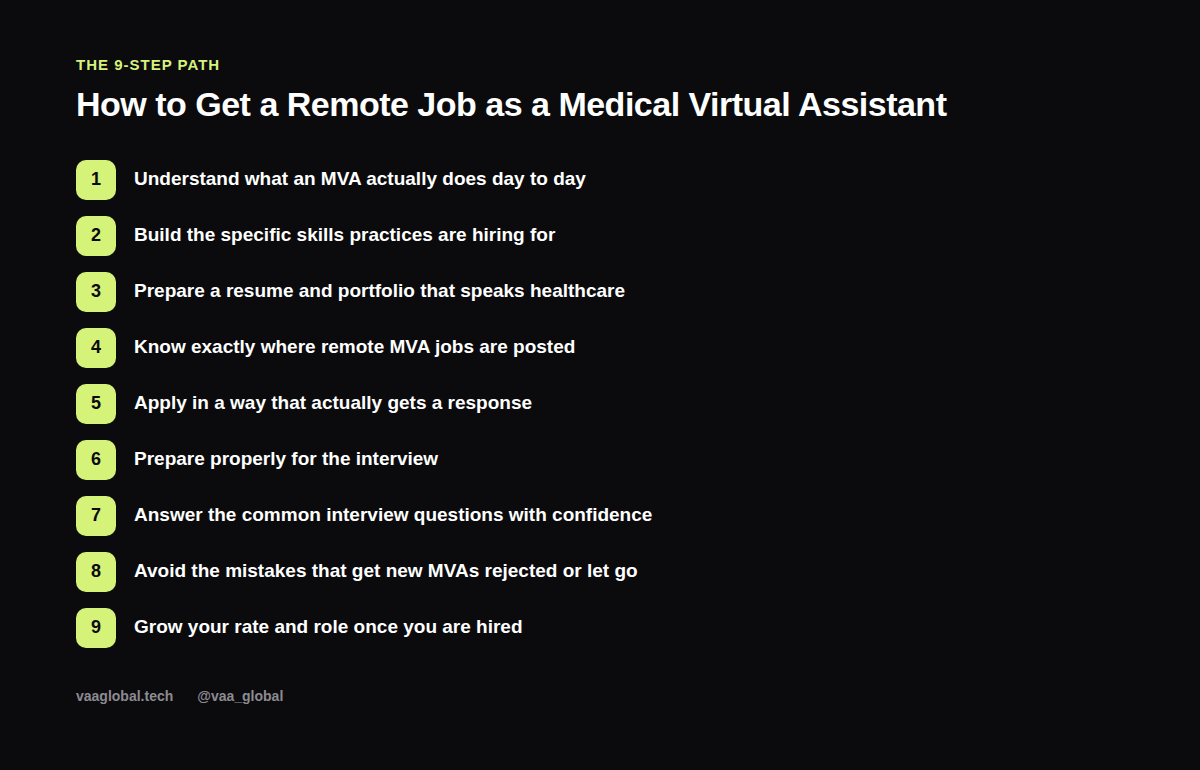
How to get a remote job as a medical virtual assistant (MVA) is a question with a realistic, achievable answer, but it's rarely a matter of just applying to a few postings and waiting. Practices hiring remote MVAs are trusting someone outside their building with patient information, scheduling, and sometimes billing, so they're looking for specific signals of readiness, not just enthusiasm. This guide walks through the entire remote medical virtual assistant job search process in nine steps, from understanding the role itself to negotiating your rate after you've proven yourself.
Step 1: Understand What an MVA Actually Does Day to Day
Before applying anywhere, it helps to know exactly what the job involves, because this is usually the first thing an interviewer probes for. A medical virtual assistant typically handles daily administrative tasks like appointment scheduling, patient intake forms, and managing a shared inbox, alongside more specialized work such as medical billing support and insurance verification. The exact mix depends heavily on the practice, a small dental office needs different support than a telehealth mental health clinic, so it's worth researching the specific practice type before you apply.
Step 2: Build the Specific Skills Practices Are Hiring For
Three skills come up in almost every remote MVA job posting: HIPAA awareness, comfort with an EHR (electronic health record) system, and clear written communication. Understanding what HIPAA actually requires in practice, not just in theory, and knowing the difference between an EHR and an EMR are both things hiring practices expect you to speak to confidently. A structured training path, such as VAA Global's 6-module Medical Virtual Assistant Training, covers HIPAA compliance, EHR systems, medical billing, telehealth support, and healthcare administration specifically, which closes this gap for people with no prior healthcare background. The U.S. Department of Health and Human Services' HIPAA resources are worth bookmarking as a reference you can cite confidently in an interview.
Step 3: Prepare a Resume and Portfolio That Speaks Healthcare
A generic virtual assistant resume undersells you for this specific role. Instead of listing "administrative support," be specific. Try: "Managed patient intake for a 3-provider telehealth practice, maintaining 100% HIPAA-aligned handling of patient records." If you're newer to the field and don't have direct healthcare experience yet, frame transferable experience honestly, for example, customer service work that involved confidential information handling is a legitimate, honest point to highlight. Our dedicated guide on building a medical VA resume walks through formatting and wording in more depth.
Step 4: Know Exactly Where Remote MVA Jobs Are Posted
Remote MVA roles are posted in more places than a single job board, so casting a wider net matters.
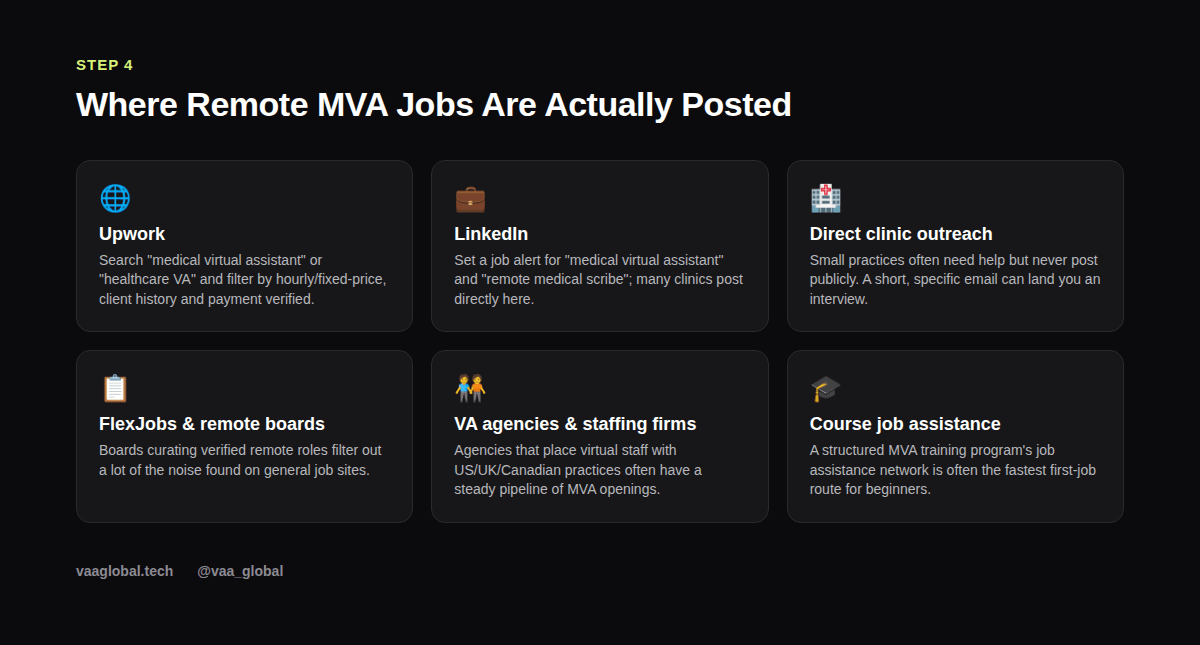
Of these channels, direct clinic outreach is the most overlooked, and often the least competitive, since most applicants only look at job boards. A short, specific email to a small practice's office manager, mentioning you understand HIPAA-aligned remote support, can lead to a conversation a crowded job posting never would.
Step 5: Apply in a Way That Actually Gets a Response
A generic cover letter gets ignored. Mentioning the specific practice type, referencing a real responsibility from the posting, and stating your availability clearly (time zone overlap matters a lot for this role) measurably improves response rates. For example, don't write "I am a hardworking virtual assistant." Instead, try something specific: "A solo-provider practice like yours needs someone who can independently manage scheduling and patient intake without heavy oversight. That's exactly the kind of support I provided during my training and practicum work."
Step 6: Prepare Properly for the Interview
Remote MVA interviews usually cover three areas: your understanding of confidentiality and HIPAA, your comfort with handling multiple tasks independently, and your communication style with patients. Preparing means a few concrete things. Review the specific EHR system the practice uses, if they've named it. Think through two or three real examples of handling a sensitive situation professionally. Test your internet connection and quiet workspace setup beforehand, since remote healthcare roles are less forgiving of technical interruptions than most remote jobs.
Step 7: Answer the Common Interview Questions With Confidence
A handful of questions come up repeatedly in MVA interviews. Here's a worked example of how to structure an answer.
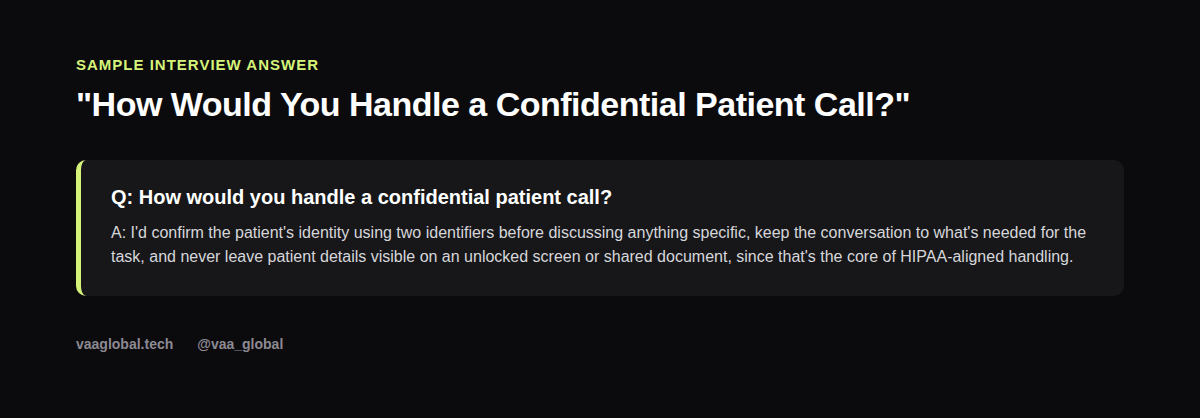
A few other common questions and how to approach them:
Step 8: Avoid the Mistakes That Get New MVAs Rejected or Let Go
The most common early mistakes aren't about skill gaps, they're about communication and boundaries. Our guide on common new-MVA mistakes covers this in detail, but the short version: discussing patient information outside approved channels (even casually), overpromising availability you can't sustain, and guessing instead of asking when unsure about a HIPAA-sensitive situation are the three that most often end a new MVA's contract early.
Step 9: Grow Your Rate and Role Once You Are Hired
Once you've built a track record, usually three to six months of reliable, error-free work, you're in a reasonable position to discuss a rate increase. You can also ask to take on higher-responsibility tasks, like insurance verification or prior authorization support. Our guide on negotiating your rate as a medical VA covers how to time and frame that conversation, and our piece on the medical VA career path after two years maps out where this role can lead long term.
The Bottom Line
If you've been wondering how to become a medical virtual assistant with no prior healthcare background, or specifically where you can find remote medical virtual assistant jobs and what questions are asked in a medical VA interview, this nine-step process covers all of it. Landing a remote medical virtual assistant job comes down to understanding the role deeply, building real HIPAA and EHR literacy, writing a strong medical VA resume positioned specifically for healthcare, and applying through the right channels with a response that shows you've actually thought about the practice's needs. VAA Global's Medical Virtual Assistant Training is a 6-module, fully remote program covering HIPAA compliance, EHR systems, medical billing, telehealth support, and healthcare administration, requiring no prior medical background, and including remote job assistance for graduates.