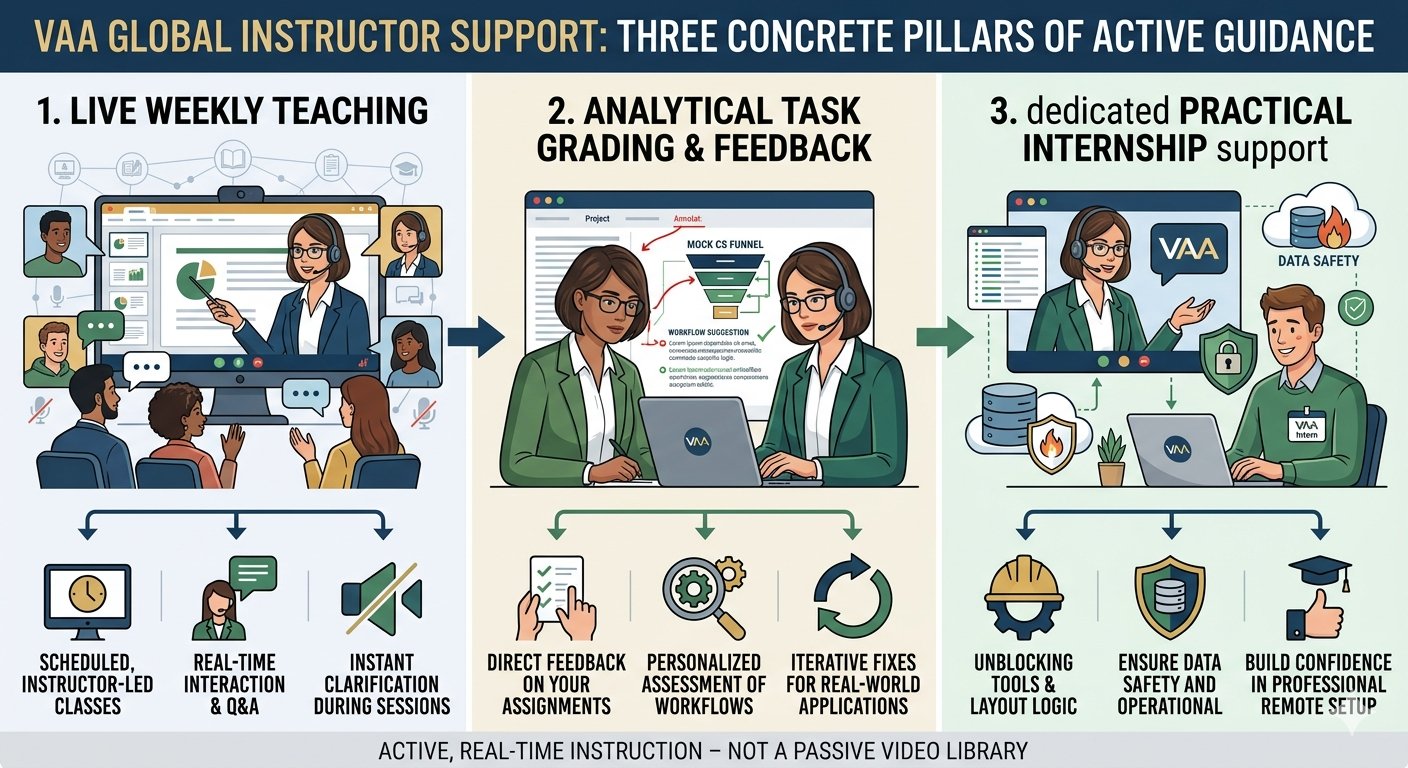

VAA Global courses are live and instructor-led, built around scheduled weekly class sessions rather than pre-recorded videos you watch whenever you feel like it. That means the honest answer to 'how many hours a week' is a range, not a single fixed number: expect a few hours of live class time each week, plus additional time for assignments and practical work outside of class. The exact figure depends on which course you take, so the most reliable answer is always to confirm the specific schedule for your chosen course before you enroll.
Why There's No Single Universal Number
Different courses on the VAA Global course catalogue have different structures. A data-heavy course might lean more on assignment time between sessions, while a course built around live practice might spend more time in the actual class window. Cohorts and schedules can also shift term to term.
Rather than publish one blanket number that ends up wrong for half the people reading it, the more useful approach is to treat the time commitment as two parts: scheduled live class time, and independent assignment or practice time, and to ask specifically about your course before you commit.
It also depends on where you are in the course. Early weeks introducing new concepts might feel lighter than weeks closer to a project deadline or an assignment review, so even within a single course the weekly load can shift from one week to the next.
What the Live Class Portion Looks Like
Because VAA Global runs on a live, instructor-led model, your weekly commitment starts with attending scheduled sessions with your cohort. This is not optional viewing on your own schedule. You're expected to show up at set times, which is part of what makes the training feel closer to an actual job than a passive video course.
This live structure is intentional. Remote jobs still involve meetings, deadlines, and real-time collaboration, and getting used to a scheduled commitment now is part of preparing for that reality later.
What Happens Outside of Class Time
Beyond the live sessions, you should expect assignments, practice exercises, and review work between classes. This is where a lot of the actual skill-building happens, since live class time alone rarely turns into mastery without practice attached to it.
Budget for this honestly. If you only account for the scheduled class hours and ignore the assignment time, you'll consistently underestimate how much of your week the course actually needs.
Fitting a Course Around a Job or Other Commitments
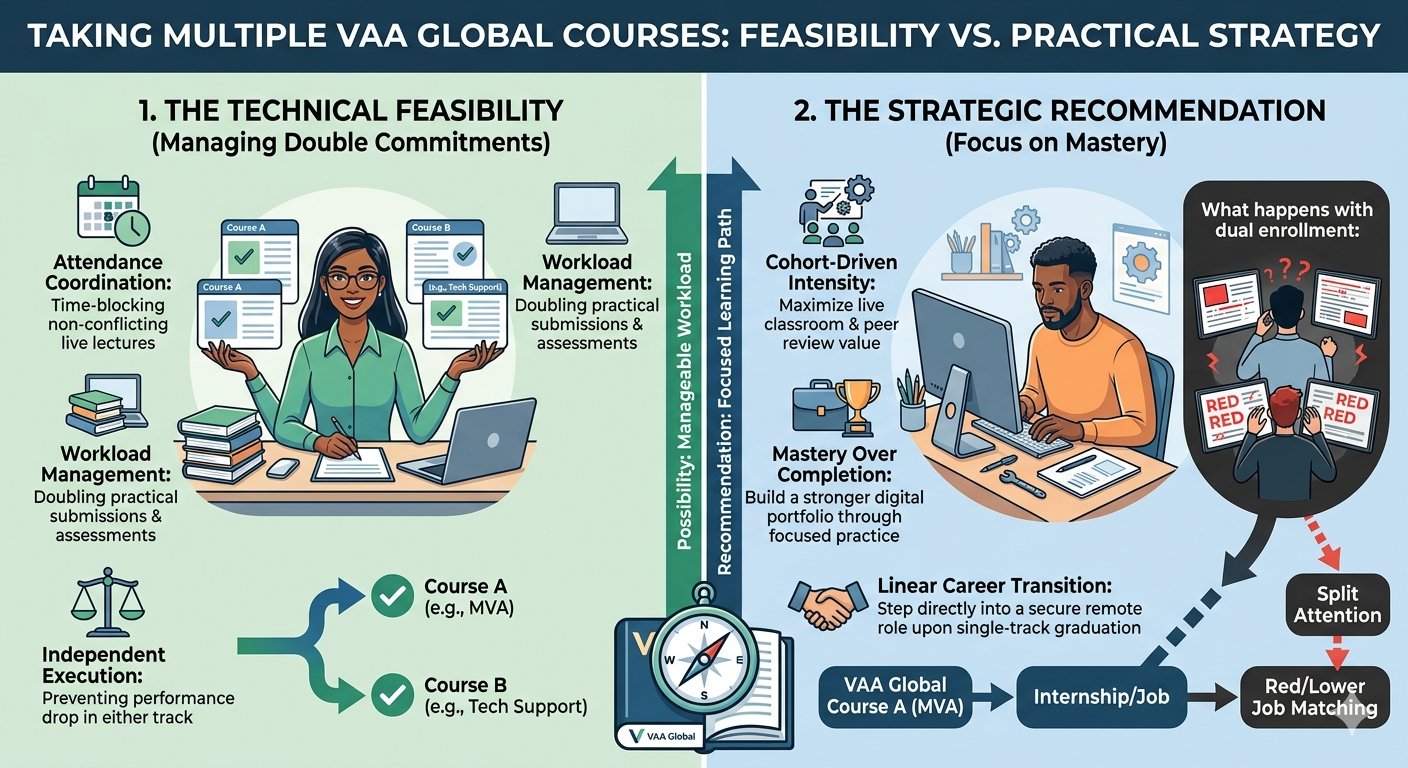
A large number of VAA Global students are working, job hunting, or managing other responsibilities while they train. It's a realistic setup, but it works better when you plan for it rather than assume you'll figure it out as you go.
Before you enroll, look at your actual weekly calendar and identify where the live class slots and assignment time will realistically fit. If your work schedule is unpredictable, it's worth raising that directly with VAA Global before you commit, rather than after you've already fallen behind.
It also helps to talk to your employer or family in advance if your schedule is genuinely tight, so that the live class windows are protected time rather than something you're constantly trying to defend or reschedule around at the last minute.
The Internship Adds Its Own Time Requirement
The weekly time question doesn't end when the training portion of your course finishes. The two-month internship that follows involves its own ongoing practical work, and you can review what that generally looks like on the internship page. Plan for that period too, not just the class weeks.
Students who treat the internship as a lighter, optional add-on tend to get less out of it than students who treat it with the same weekly seriousness as the training itself.
How to Get a Straight Answer Before You Enroll
The single best step you can take is to ask directly, before paying, what the specific weekly schedule looks like for the exact course you're considering: which days and times classes run, how much assignment time past students typically needed, and how the internship weeks are structured.
You can also use the Career Compass quiz to help narrow down which course actually fits your goals, and then confirm the time commitment for that specific course once you've applied through the application form.
If you're ready to see what the weekly commitment looks like for a specific course, apply now and ask for the exact schedule before your first class.