Why Housekeeping Standards Are the Backbone of Hospitality
Ask any experienced hotel general manager what department most directly determines guest satisfaction, and many will say housekeeping before they say front office or food and beverage. Guests rarely comment when a room is spotless — they simply expect it — but a single hair on the pillow, a dusty surface, or a lingering odor can undo an otherwise perfect stay and trigger a poor OTA review that damages bookings for months.
Housekeeping standards are the written, trainable procedures that make consistent cleanliness possible across every room, every day, regardless of which staff member is on shift. Without documented standards, cleanliness becomes a matter of individual habit rather than institutional reliability — and guests can tell the difference immediately.
Core Categories of Housekeeping Standards
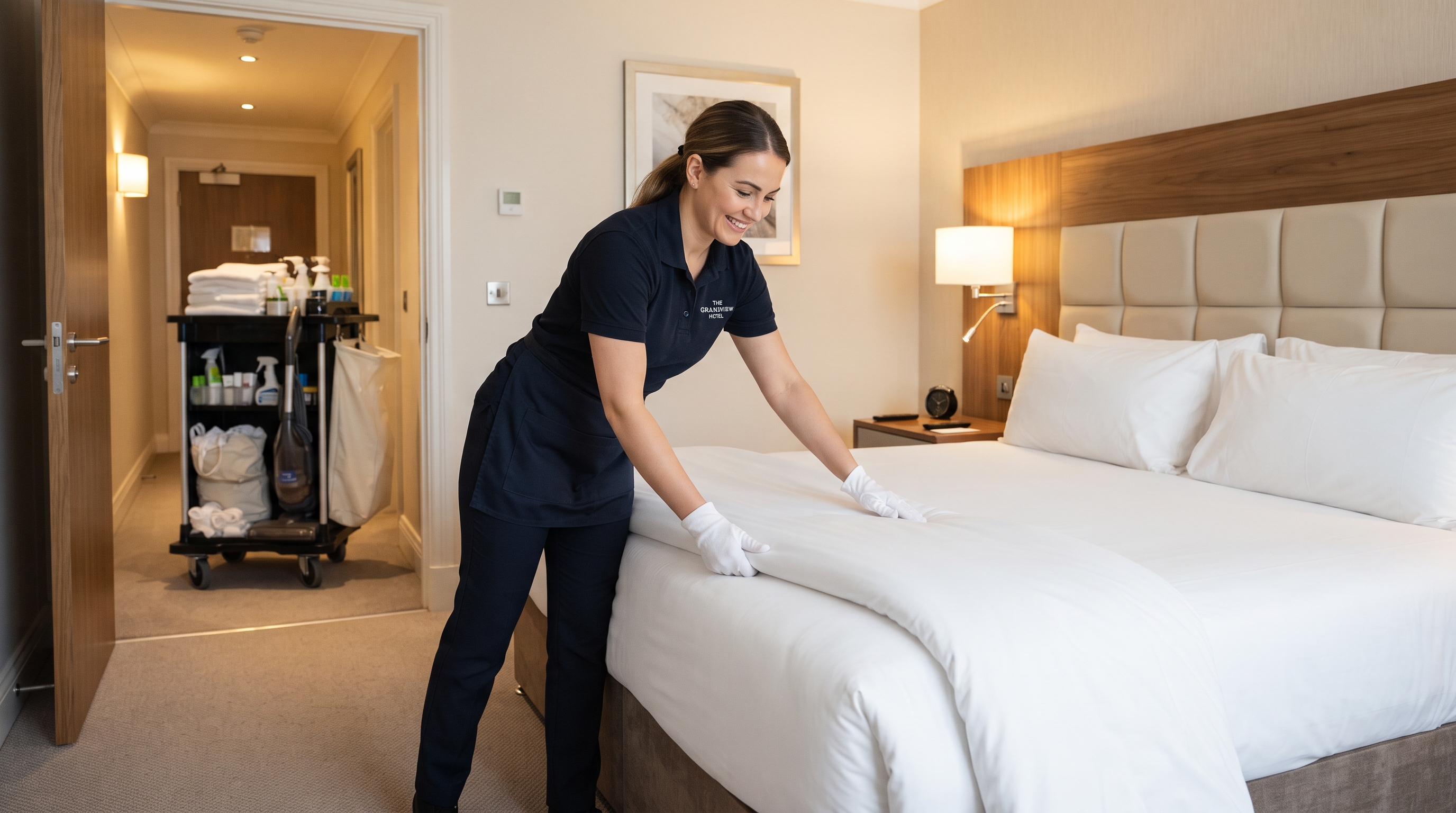
1. Guest Room Cleaning StandardsThis covers the detailed, room-by-room checklist: changing and properly tucking linens, sanitizing bathroom surfaces, restocking amenities (soap, toiletries, water), dusting all surfaces including hard-to-reach areas like lampshades and headboards, vacuuming or mopping floors, and checking that all electronics and fixtures function correctly.
2. Public Area StandardsLobbies, corridors, elevators, and restrooms need their own cleaning schedules, often more frequent than guest rooms because of higher foot traffic. Public area standards typically include hourly or twice-daily checks in high-traffic properties.
3. Laundry and Linen ManagementStandards here cover how linens are collected, washed, inspected for damage or staining, and stored, along with par-stock levels (how many sets of linens per room are kept in circulation) to avoid shortages during high occupancy.
4. Deep Cleaning SchedulesBeyond daily cleaning, hotels maintain deep cleaning calendars for tasks like mattress rotation, carpet shampooing, curtain washing, and air conditioning vent cleaning — usually scheduled monthly or quarterly to maintain long-term room quality.
5. Hygiene and Safety ProtocolsThis includes proper chemical handling and storage, staff protective equipment, cross-contamination prevention between rooms, and protocols for handling biohazards or unusual situations (like discovering pest issues), all of which protect both guests and staff.
6. Inspection and Quality ControlStandards are only useful if they're checked. Most well-run hotels use a room inspection checklist completed by a supervisor or executive housekeeper before a room is marked "guest ready," catching issues before they reach the guest.
Building a Housekeeping SOP: What Good Documentation Looks Like
A strong Standard Operating Procedure (SOP) for housekeeping breaks each task into clear, sequential steps, specifies the products or tools required, states the expected time to completion, and defines what "done" looks like in observable terms (for example, "mirror shows no streaks or spots" rather than "mirror is clean"). This level of specificity is what allows a new staff member to deliver the same quality as someone with years of experience.
How Housekeeping Connects to Guest Experience and Reviews
Housekeeping quality shows up directly in OTA reviews and star ratings — cleanliness is consistently one of the top categories guests rate and mention in written reviews. A hotel with strong revenue management and marketing but weak housekeeping will still struggle, because negative cleanliness reviews are hard to overcome with pricing or promotion alone.
Coordination With Front Office
Housekeeping does not operate in isolation. Effective hotels maintain tight communication between housekeeping and front office — using the property management system (PMS) to instantly update room status (dirty, clean, inspected, out of order) so front desk staff always know which rooms are ready to assign to arriving guests. Miscommunication here is one of the most common causes of check-in delays and guest frustration.
Housekeeping Standards in the Nigerian Hospitality Context
In Nigeria's climate and infrastructure context, housekeeping standards also need to account for practical realities: managing dust more aggressively during harmattan season, maintaining backup water and power arrangements for cleaning during outages, and ensuring pest control protocols suit the local environment. Properties that adapt international housekeeping standards to these local realities, rather than copying them blindly, tend to maintain higher guest satisfaction.
Building a Career in Housekeeping Management
Housekeeping offers a genuine, often underrated path into hotel management. Executive housekeepers oversee budgets, staff schedules, inventory, and quality control — skills that transfer directly into broader hotel operations roles. For career changers entering hospitality, housekeeping management combines hands-on operational skill with real leadership responsibility.
To learn housekeeping standards, SOP development, and quality inspection the practical way, VAA Global's 10-week, fully remote Hospitality Management course covers this alongside front office, F&B, and guest relations training, with a real internship component. Explore the Hospitality Management course.