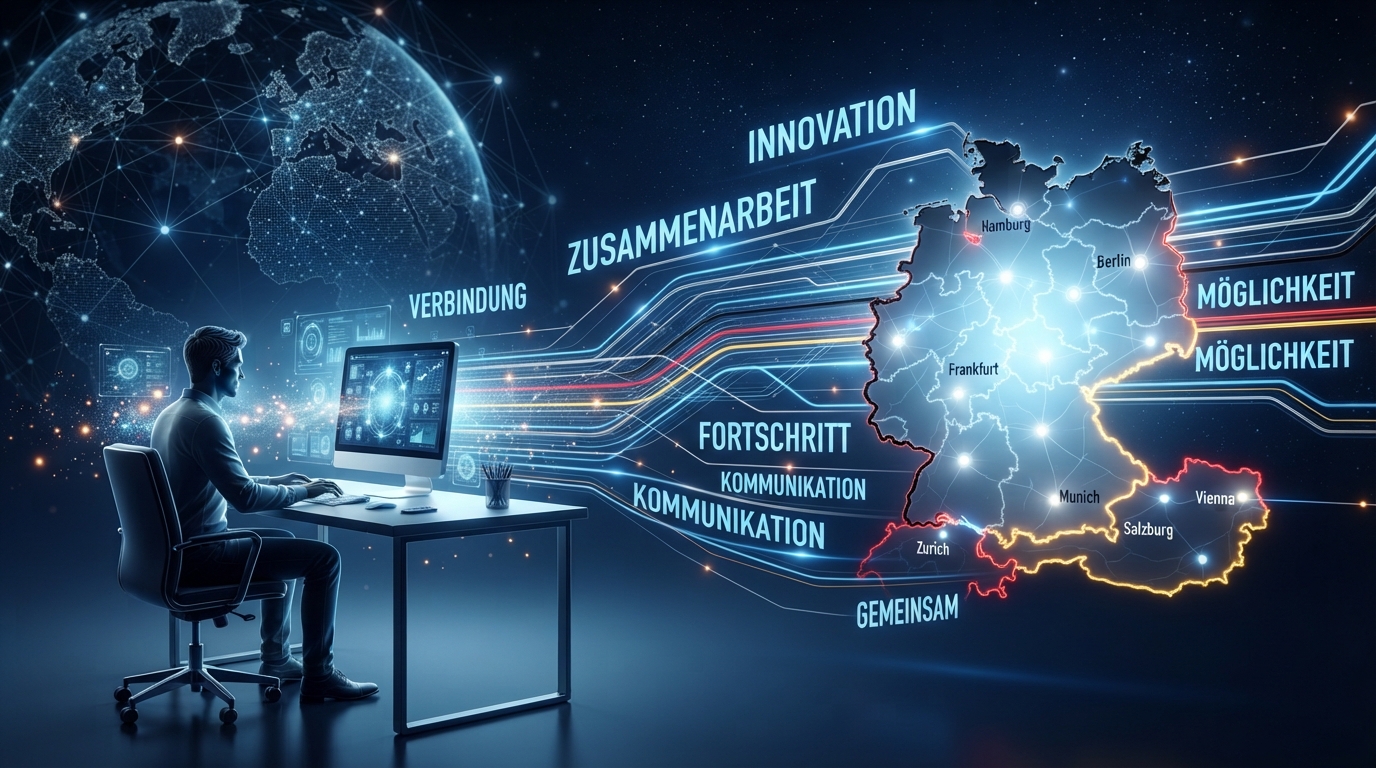
Yes, German can open up genuine remote job opportunities, particularly because Germany is Europe's largest economy and its businesses are under real pressure to outsource support and admin functions to keep costs manageable. A growing number of German and EU-facing companies hire remote workers for customer support, virtual assistance, and back-office roles, and having German on your CV, even at a working conversational level, puts you in front of opportunities that monolingual English speakers cannot access.
Why Germany Specifically Outsources Remote Roles
Germany has one of the highest labor costs in Europe, and its domestic talent pool for support and admin functions is tight, especially outside major cities. That combination pushes companies, from mid-sized Mittelstand businesses to larger corporates, to look outside Germany for remote administrative, customer service, and virtual assistant support that costs less to staff without sacrificing quality.
This is not a niche trend. Outsourcing and remote staffing for back-office and support functions has been a steady part of how German businesses manage costs for years, and it has only grown as remote work has become normalized across Europe.
The Roles Where German Actually Helps
Customer support and live chat roles for companies with German-speaking customers are the clearest opportunity, particularly for e-commerce, SaaS, and fintech businesses expanding into or operating within the DACH region (Germany, Austria, Switzerland).
Virtual assistant roles are another strong fit. German business owners and professionals hire remote VAs for scheduling, correspondence, and admin work, and a VA who can read and respond to German-language emails and calendars removes a real friction point for them.
There is also demand in localization and content adaptation, where English-language content, product listings, or documentation needs to be adapted for German-speaking markets, along with data entry and back-office roles that increasingly get outsourced to reduce operating costs.
What German Employers Actually Care About
German business culture tends to value precision, directness, and reliability in communication, and that extends to how candidates present their language skills. Employers want evidence that you can actually function in the language, not just a CV claim, so a certificate paired with demonstrated conversational ability matters more than it might in some other markets.
Practical, work-relevant German, the kind used in emails, scheduling, and customer interactions, is what gets used day to day. Academic grammar mastery is far less important for these roles than the ability to communicate clearly and professionally.
How VAA Global's German Language Course Approaches This
VAA Global's German Language course is structured around the kind of German that actually shows up in remote work: workplace vocabulary, professional email writing, and conversational scenarios relevant to customer support and virtual assistance. You can find it listed alongside VAA Global's other language and remote-skills courses on the course catalogue.
Pairing German With a Core Remote Skill
On its own, German is a language skill. Combined with virtual assistance, customer service, or another core remote programme, it becomes a specific, marketable combination that narrows the candidate pool you are competing against. If you are deciding whether to start with the language or a core skill first, the Career Compass is a free quiz built to help match your background and goals to the right course before you enroll.
The Support Structure After the Course
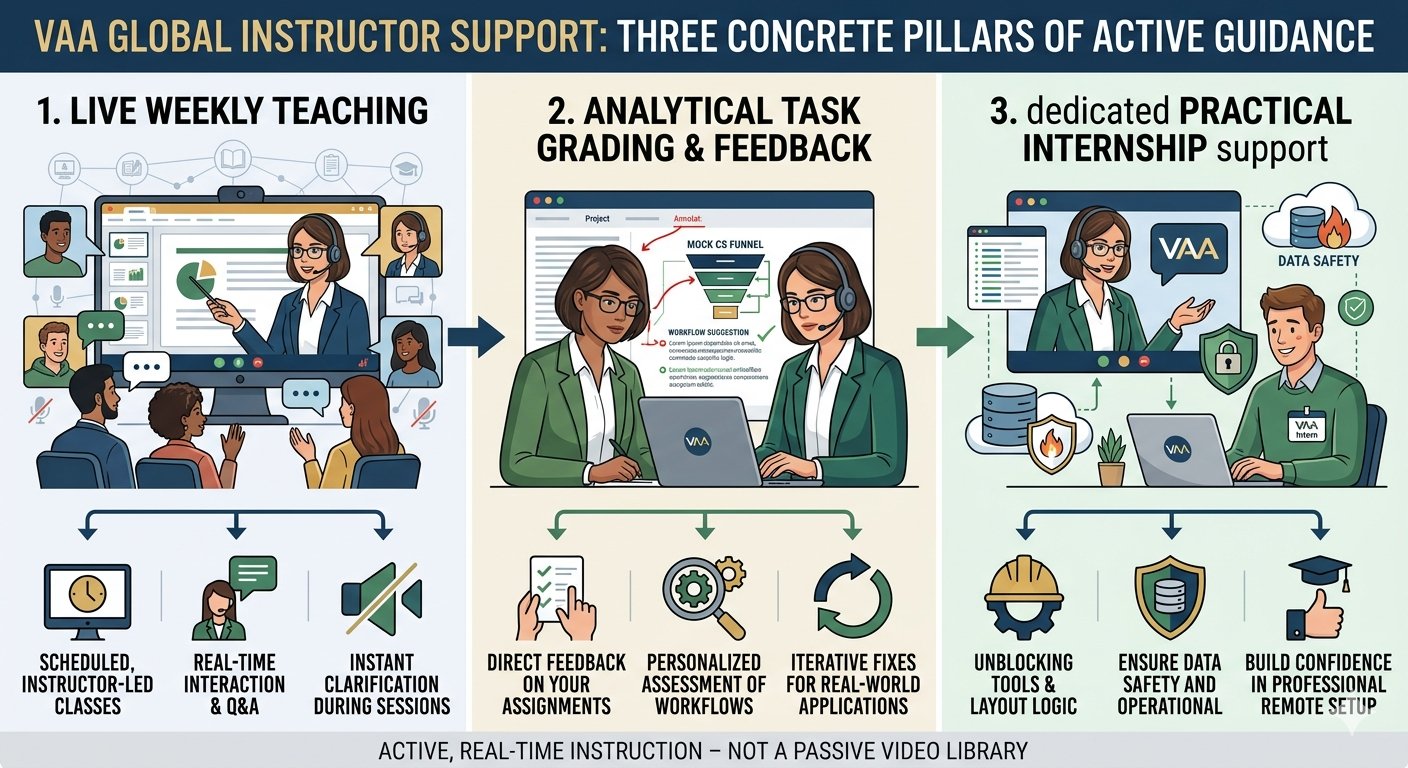
Every VAA Global course, including German Language, comes with the same job-focused support: a certificate, job assistance and interview coaching, access to remote job opportunities, job matching through VAA Global Talent, a 2-month internship, mentorship from industry experts, portfolio building, and LinkedIn and personal branding support. That structure exists so the language skill actually turns into applications and interviews, not just a line on your CV.
Keeping Expectations Grounded
German will not by itself hand you a job, and it will take real time and practice to reach a usable working level. What it does is put you in front of a segment of the remote job market that most candidates are not competing in, which meaningfully improves your odds when paired with an active, consistent job search.
It also helps to know that German fluency builds gradually and in a fairly predictable way once you start using it consistently in real scenarios rather than only studying vocabulary lists. Regular practice with actual conversations, even short ones, tends to move people forward faster than passive study alone.
Building a Long-Term Advantage, Not a Quick Fix
Because fewer Nigerians study German compared to French or Spanish, the advantage of speaking it can last longer before the market catches up. Candidates who invest in it now, while demand is rising and supply of bilingual talent is still relatively thin, are likely to stay ahead of the curve for years rather than facing quick saturation.
That long runway is part of why German is worth treating as a genuine career investment rather than a short-term trick to pad a CV.
If you want a language skill tied to one of Europe's strongest and most outsourcing-friendly economies, German is worth serious consideration, especially alongside a core remote skill. Check the course catalogue or go directly to the application form to start.