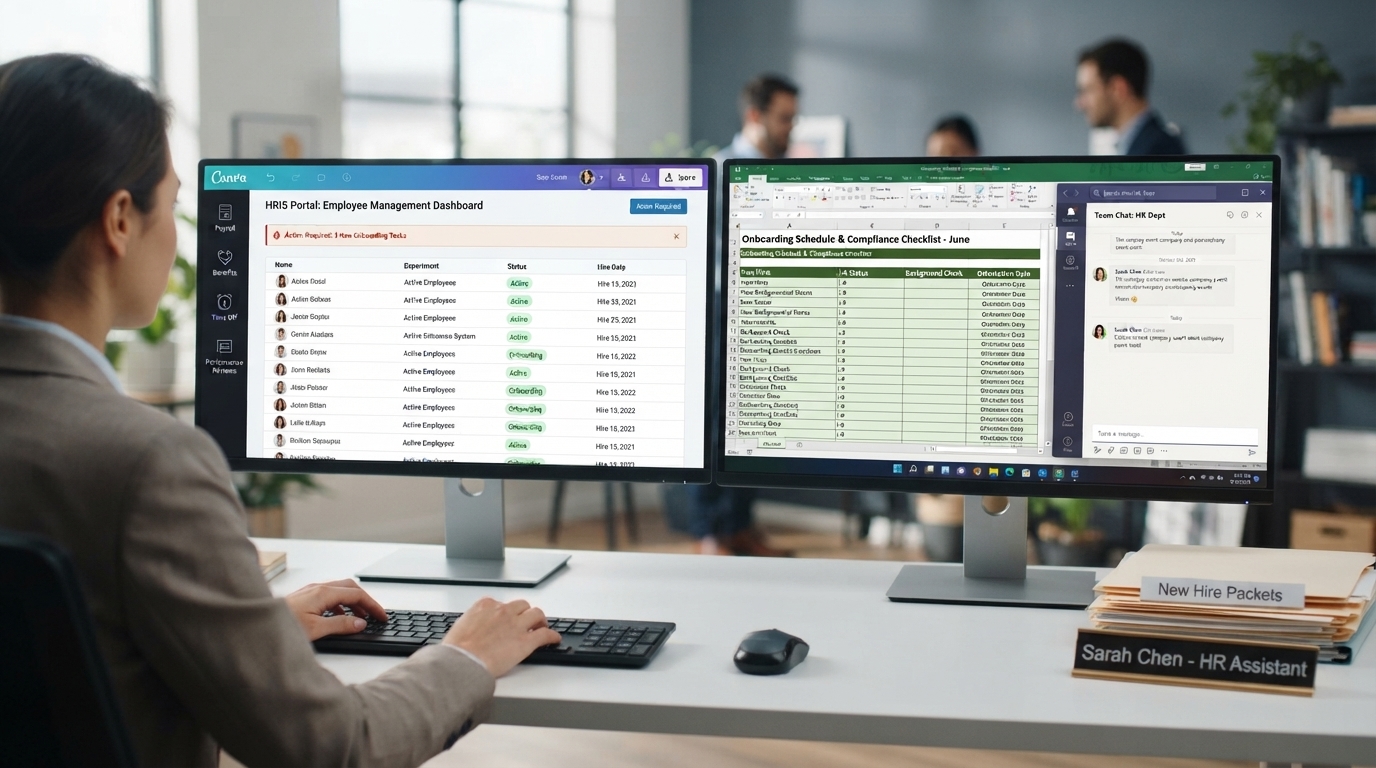
Job postings for HR Assistant roles tend to list generic bullet points, "support HR functions," "assist with recruitment", that don't really convey what the actual day-to-day work feels like, so here's a more honest, practical picture.
Morning: Checking In and Prioritizing
Most HR assistants start their day reviewing what's genuinely urgent, a candidate interview scheduled for that morning, an onboarding document that needs to go out before a new hire's start date, an employee question sitting unanswered since yesterday. This morning triage, deciding what genuinely needs attention first, is a real, practiced skill, not something that happens automatically.
This is also typically when coordination with the broader HR team happens, a quick check-in on shared priorities, confirming who's handling what for the day, since HR work is rarely done in complete isolation even in remote settings.
Midday: Recruitment and Onboarding Coordination
A significant chunk of many HR assistants' time goes toward recruitment support, scheduling interviews, communicating with candidates, and coordinating with hiring managers on next steps. Onboarding coordination for new hires, preparing documentation, setting up accounts, scheduling orientation, often happens alongside this, sometimes for several candidates or new employees at different stages simultaneously.
This is where genuine organizational systems matter most, juggling multiple candidates or new hires at different points in their process without anything slipping through the cracks requires real, deliberate tracking, not just good intentions.
Afternoon: Employee Support and Record-Keeping
Afternoons often bring employee-facing questions, someone asking about a benefits policy, a manager needing guidance on a process, which requires both accurate knowledge of company policy and genuine, clear communication. This is interspersed with record-keeping, updating employee files, ensuring documentation stays accurate and compliant, unglamorous but genuinely essential work.
The variety here is part of what makes the role both interesting and challenging, you're frequently context-switching between detail-heavy administrative work and genuine, real-time people interaction, which demands a specific kind of mental flexibility.
How VAA Global's HR Management Course Prepares You for This
VAA Global's Human Resource Management course runs 10 weeks and builds exactly these practical skills, recruitment and onboarding coordination, employee relations, policy knowledge, and HR compliance, through realistic scenarios rather than abstract policy theory alone.
You'll practice the actual juggling this role demands, coordinating multiple simultaneous priorities, communicating clearly with both candidates and employees, before facing it for real. The course includes a 2-month internship, 2 certificates, and job placement assistance.
Common Mistakes Beginners Make in This Role
A common mistake is underestimating how much the role depends on genuine organizational systems, trying to track multiple candidates or employee requests purely from memory rather than building a reliable, consistent tracking habit, which inevitably leads to something important being missed.
A second mistake is treating employee questions as interruptions to "real work" rather than recognizing that clear, helpful employee support is itself a core, valued part of the job, not a distraction from it.
What Your First Few Weeks Actually Look Like
Early weeks in VAA Global's HR Management course build the foundational knowledge of recruitment and onboarding processes, practiced through realistic scenarios that mirror the genuine variety and pace of a real HR assistant's day rather than isolated, abstract exercises.
The middle and final weeks bring in employee relations, policy, and compliance training, building the judgment and knowledge base that turns a genuinely organized person into someone who can actually handle the people-facing side of this role with real confidence.
A Closer Look at Why Variety Is the Real Appeal
For people who genuinely dislike routine, repetitive work, the sheer variety within a single day, coordination one hour, employee support the next, record-keeping after that, is often what makes this role satisfying long-term, even though it can feel overwhelming for a genuine beginner still building their own systems for managing it all smoothly.
Building your own reliable systems early makes that variety feel manageable rather than chaotic.
That structure is exactly what training deliberately practices before you need it for real.
It genuinely pays off from day one on the job.
For anyone still deciding between this and another path, the free Career Compass quiz at vaaglobal.tech/career-compass is worth trying before you commit.
VAA Global Talent at talent.vaaglobal.tech is specifically built to connect graduates like you with employers actively hiring for these roles.
When you're ready to start applying, VAA Global's free CV and LinkedIn review tool at vaaglobal.tech/cv-review is worth using to make sure your application actually lands well.
Research from LinkedIn Hiring Insights backs this up, consistently finding that this pattern holds across the wider remote job market, not just as an isolated trend.
Gallup Workplace Research has tracked this pattern closely, and their findings reinforce exactly the point made here.
According to Buffer State of Remote Work Survey, this trend has held steady across multiple years of tracking, not just a short-lived shift.
Starting Your HR Career
If this realistic picture, genuinely varied, detail-heavy, and people-focused, sounds appealing rather than daunting, you can apply to VAA Global's HR Management course to start building toward it.