
What Is a Property Management System?
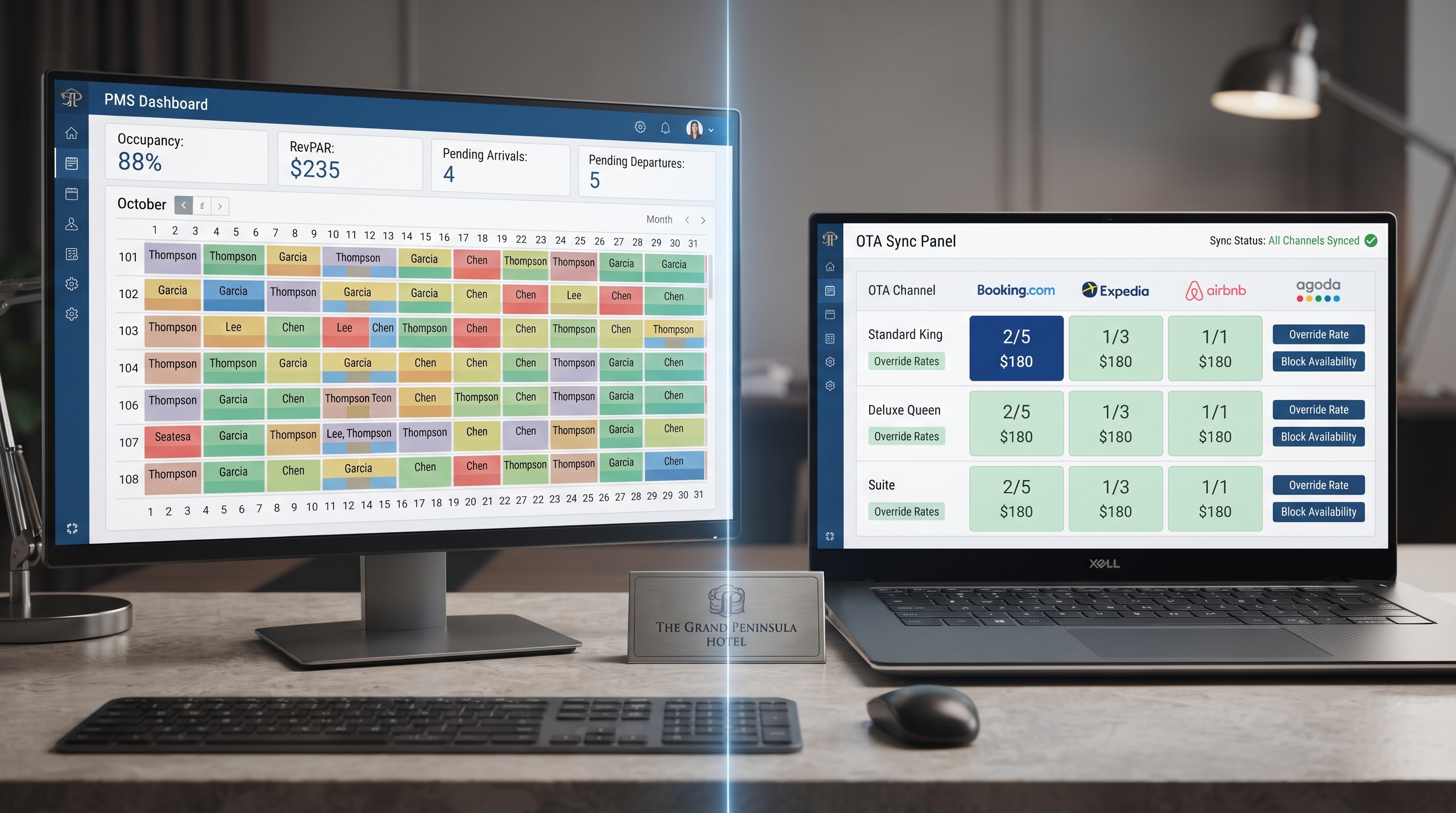
A property management system, almost always shortened to PMS, is the central software a hotel or short-let operation uses to manage its day-to-day operations: reservations, room inventory, check-in and check-out, guest profiles, billing, and housekeeping status updates. Before PMS software became standard, hotels tracked this information manually or across disconnected spreadsheets — a process prone to double-bookings and billing errors, both of which directly damage guest trust and online reviews.
Today, a PMS is considered non-negotiable infrastructure for any hospitality business beyond a handful of rooms, because it is usually the single system that connects front office, housekeeping, and OTA channel management together.
Core Features Every PMS Should Have
Regardless of which specific system a property chooses, a capable PMS should offer:
Centralised reservations across direct bookings and OTA channels.
Real-time room status tracking so front office and housekeeping stay synchronised.
Automated billing and invoicing, reducing manual errors at check-out.
Channel management or integration, syncing room inventory and pricing across Booking.com, Airbnb, and Expedia to prevent overbooking.
Reporting dashboards for occupancy, revenue, and performance tracking.
Guest profile storage, useful for repeat-guest recognition and personalised service.
Opera PMS: Overview and Best Fit
Opera, developed by Oracle Hospitality, is one of the most established property management systems globally and is widely used by large, branded, full-service hotels, including major international chains operating in Nigeria. It is known for its depth — extensive reporting, robust multi-property management for hotel groups, and deep integration with other hotel systems like point-of-sale and revenue management tools.
Opera's strength is exactly its complexity: it is built for hotels with many rooms, multiple revenue streams (rooms, F&B, events), and corporate-level reporting needs. That same depth means it typically requires more formal training and IT support to run well, and it is generally a heavier, costlier system than smaller independent hotels or short-let operators need.
Cloudbeds: Overview and Best Fit
Cloudbeds is a newer, cloud-based PMS built with a simpler interface and faster setup in mind, making it popular among independent hotels, boutique guesthouses, and short-let apartment operators. It bundles reservations, a built-in channel manager for OTA syncing, and a booking engine into one accessible platform, without requiring the heavier IT infrastructure Opera typically assumes.
Cloudbeds' strength is accessibility: a small hotel or a short-let operator managing a handful of units can get up and running quickly, sync listings across Booking.com, Airbnb, and Expedia without a separate channel manager tool, and manage everything from a browser rather than dedicated on-site software.
Opera vs Cloudbeds: Side-by-Side Comparison
Factor
Opera PMS
Cloudbeds
Best for
Large, full-service, branded hotels
Small to mid-sized hotels, guesthouses, short-lets
Setup complexity
Higher, often needs IT support
Lower, cloud-based and quicker to deploy
OTA channel management
Available, often via add-on integrations
Built-in channel manager included
Reporting depth
Very extensive, enterprise-grade
Solid, more streamlined
Typical Nigerian users
International chains, large city hotels
Boutique hotels, guesthouses, short-let operators
Which Nigerian Hotels and Short-Lets Should Choose Which
A branded, multi-department hotel in Victoria Island or Ikoyi with hundreds of rooms and complex F&B and events revenue genuinely benefits from Opera's depth and enterprise reporting. A boutique hotel, guesthouse, or a short-let operator managing a handful of units across Lekki or the mainland is usually far better served by Cloudbeds or a similarly lightweight cloud PMS, since it gets the essential OTA syncing and booking management without unnecessary complexity or cost.
The practical lesson for anyone entering hospitality is not to fixate on one system, but to understand PMS logic generally — reservations, room status, billing, and channel sync — since that knowledge transfers between Opera, Cloudbeds, and any other PMS you encounter on the job.
Why PMS Training Matters for Your Career
Job postings for front office and reservations roles in Nigeria increasingly list "PMS experience" as a requirement, and candidates who can demonstrate hands-on familiarity — even with a different system than the employer uses — have a clear advantage, since the underlying logic transfers quickly. VAA Global's Hospitality Management course includes CRM and OTA management training precisely so graduates are not learning these systems from zero on their first job.
Get Comfortable With the Tools Employers Expect
Understanding property management systems is no longer optional for anyone serious about a hospitality career in Nigeria. To build this skill alongside the rest of the hospitality curriculum, explore the Hospitality Management course or message VAA Global on WhatsApp at 09121158938 for details on the next class.